
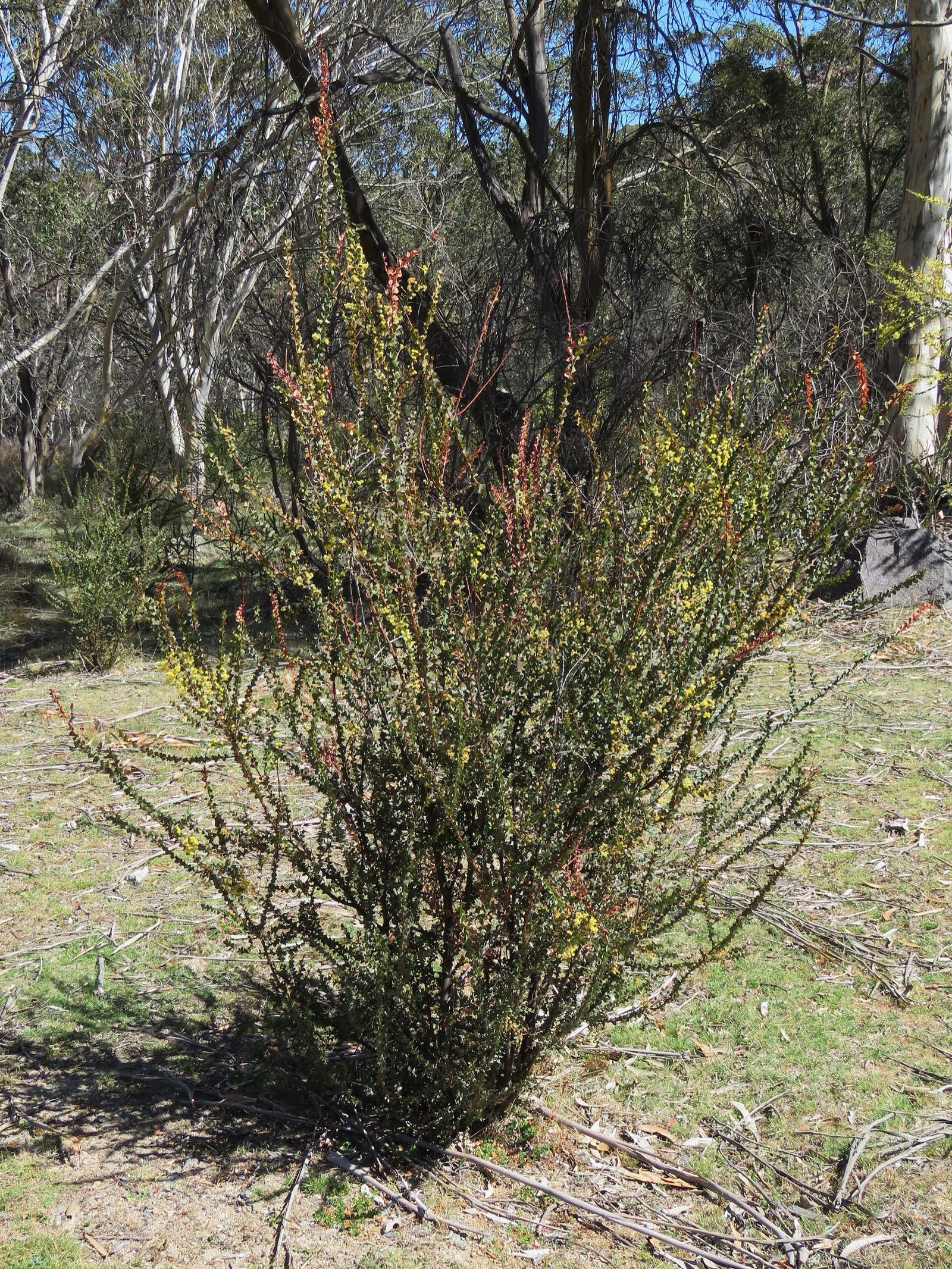
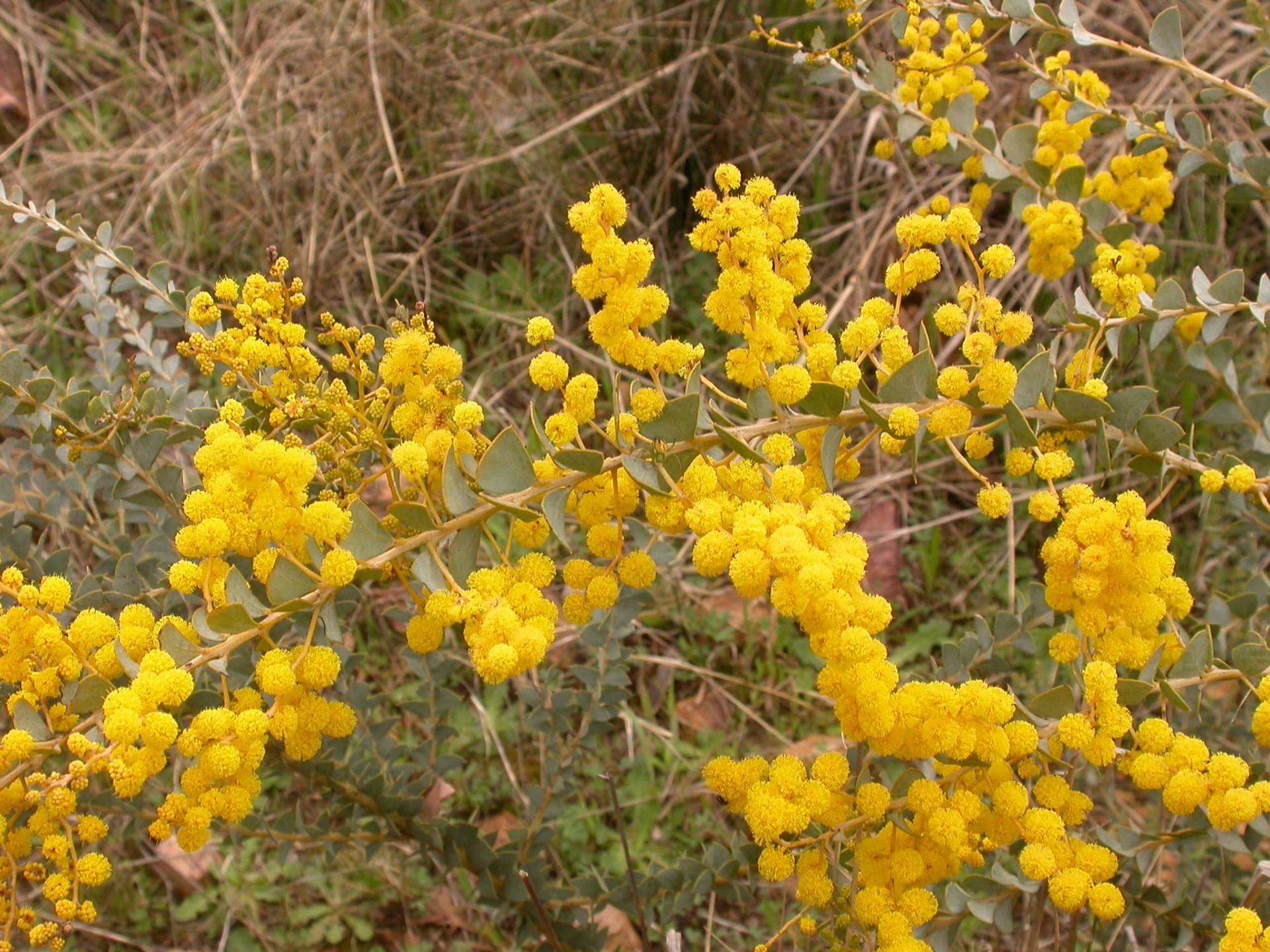
Acacia pravissima is a fast-growing evergreen shrub or small tree native to the mountains of southeastern Australia, prized for arching, cascading branches densely lined with small triangular phyllodes and masses of bright golden ball-shaped flowers from late winter through spring. The weeping structure and distinctive foliage provide strong year-round presence, making it effective as a specimen, screen, or windbreak.
It establishes quickly in full sun and well-drained soil and handles drought well once rooted. As a legume, it fixes atmospheric nitrogen and gradually enriches surrounding soil. Plants are relatively short-lived at 10–15 years but fill space rapidly. Sharp drainage is critical: in heavy or persistently wet soils, root rot is the primary cause of decline. It tolerates brief frosts to around 14°F. Suckers and self-sown seedlings may appear, and seed germination is improved by a hot-water soak before planting.
Ovens Wattle provides dense cover and nesting sites for birds. Its nitrogen-fixing root symbiosis makes it a practical pioneer on disturbed or nutrient-depleted ground, and its early-season pollen is a resource for native bees.
These dates are for Zone 6b. Enter your ZIP to time every job to your own frost dates.
- buy · Feb 13 - Feb 27Buy plants - about two months before planting out
- plant · Apr 24 - May 22Plant nursery stock in full sun and fast-draining soil out of cold, drying wind, and water through the first summer
- cut · May 1 - May 22Trim lightly straight after flowering to keep the arching shape dense; avoid cutting into bare wood
Problems & troubleshooting
Common problems
Phytophthora Root Rot
Wilting despite moist soil, yellowing leaves, stunted growth, and dark, decayed roots and crown tissue. Vines may collapse during hot weather.
Plant in well-draining soil and avoid waterlogging. Remove and destroy affected vines. Improve drainage with raised beds or amended soil and avoid overwatering.
Root rot
Plants wilt, yellow, and stunt even in moist soil; lower stems and roots turn brown, soft, and mushy and the plant may collapse. Most common in heavy, wet, or poorly drained ground.
Improve drainage and stop overwatering, and never plant too deep. Lift and destroy badly affected plants along with the soil around the roots. Grow in raised or free-draining beds to prevent it returning.