
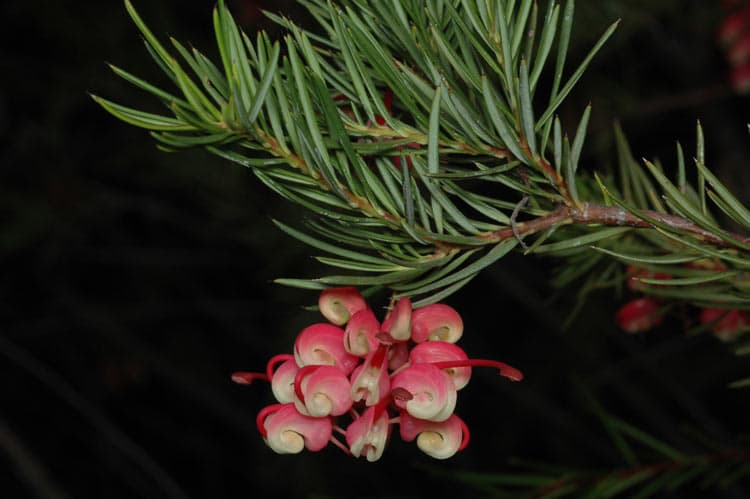
Grevillea rosmarinifolia is an evergreen shrub native to southeastern Australia, grown in warm-climate gardens for its needle-like foliage and loose clusters of curved pink to crimson flowers that reliably attract hummingbirds. It fits naturally into Mediterranean, drought-tolerant, and California-inspired plantings.
Once established, it is highly drought tolerant and demands sharp drainage above all else. Phosphorus sensitivity is the defining nutritional concern for all Proteaceae - standard or high-phosphorus fertilizers can damage or kill the plant; use a dedicated low-phosphorus formula or none at all. A soil pH of 5.5–6.5 suits it best. Prune lightly after the main late-winter-to-spring flowering, cutting only into live green growth; old leafless wood rarely regenerates. In zone 8a, plants may sustain top-kill below 15°F but often regrow from the crown.
The dense, prickly stems provide nesting cover for small birds, and the nectar-rich flowers support pollinators in late winter when few other shrubs are in bloom.
Phytophthora Root Rot
Wilting despite moist soil, yellowing leaves, stunted growth, and dark, decayed roots and crown tissue. Vines may collapse during hot weather.
Plant in well-draining soil and avoid waterlogging. Remove and destroy affected vines. Improve drainage with raised beds or amended soil and avoid overwatering.
Fungal leaf spot
Brown or purplish spots on the leaves, often ringed with a yellow halo, that spread and merge in warm, humid, or wet weather; heavily spotted leaves yellow and drop early.
Pick off spotted leaves and clear fallen debris to remove overwintering spores. Improve air circulation by thinning, and water at the base so foliage dries quickly. If it persists, apply a copper- or sulfur-based fungicide at the first sign.