
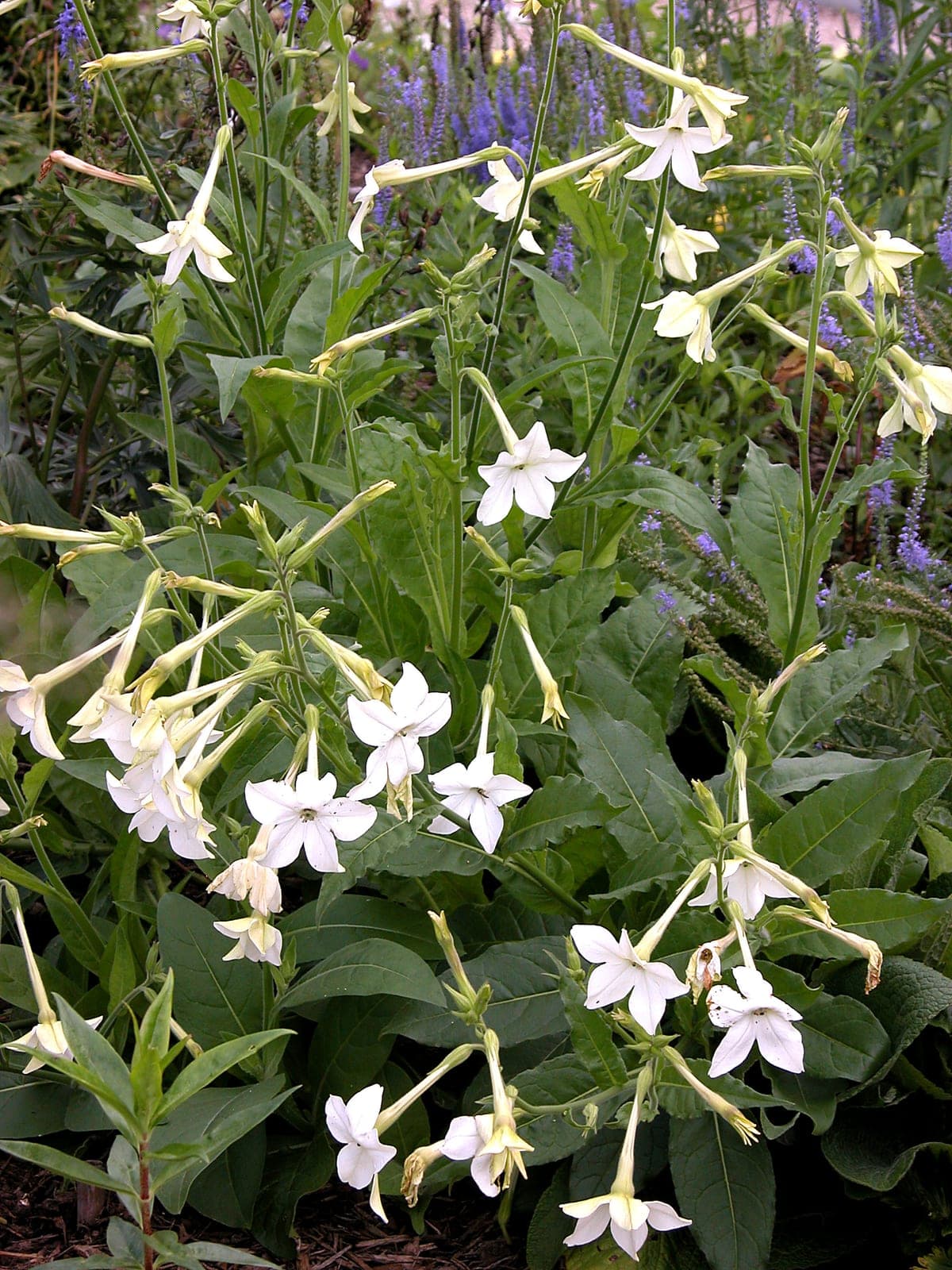
PL. —Nicotiana alata × langsdorffiiBotanical illustration — drop image
Nicotiana alata × langsdorffii

Nicotiana 'Tinkerbell'

SummerFall
2a11bHardiness zone
Peak bloom windowZone 6b · frost-offset weeks
Winter
Not in bloom
Spring
Peak bloom
Summer
Peak bloom
Fall
Peak bloom
Peak bloom
In bloom
Background

A probable hybrid between N. alata and N. langsdorffii, 'Tinkerbell' combines the tubular, star-shaped flower form of the former with the unusual two-tone coloring of the latter — striking apple-green blooms flushed with deep oxblood-red, held on tall, sticky stems from midsummer until frost. It's a conversation-starter in a border that would otherwise skew toward more familiar pastels.

Grown as a tender annual everywhere outside the tropics, it's started indoors well ahead of the last frost since seed needs light to germinate and shouldn't be covered. At 4–5 ft it can benefit from staking or the shelter of sturdier neighbors in windy sites.

Good companions
Care guide
SunFull sun to part shade
WaterModerate
SoilWell-drained, average to fertile
Spacing18–24 in
Height4–5 ft
Zone2a – 11b
Seasonal tasks
winter
sowStart seed indoors 8–10 weeks before last frost; press onto the soil surface without covering, as seed needs light to germinate.
spring
sowTransplant seedlings outdoors after all danger of frost has passed.
summer
watchStake tall stems if grown in an exposed, windy site.
cutDeadhead spent flower clusters lightly to keep the plant tidy and encourage continued bloom.
fall
watchEnjoy continuous bicolor blooms right up until frost.
Pests

Aphids

Aphididae
Symptoms

Clusters of small soft insects on new growth and flower buds.

Treatment

Knock off with a strong jet of water. Ladybirds and lacewings are natural predators. Insecticidal soap as last resort.