
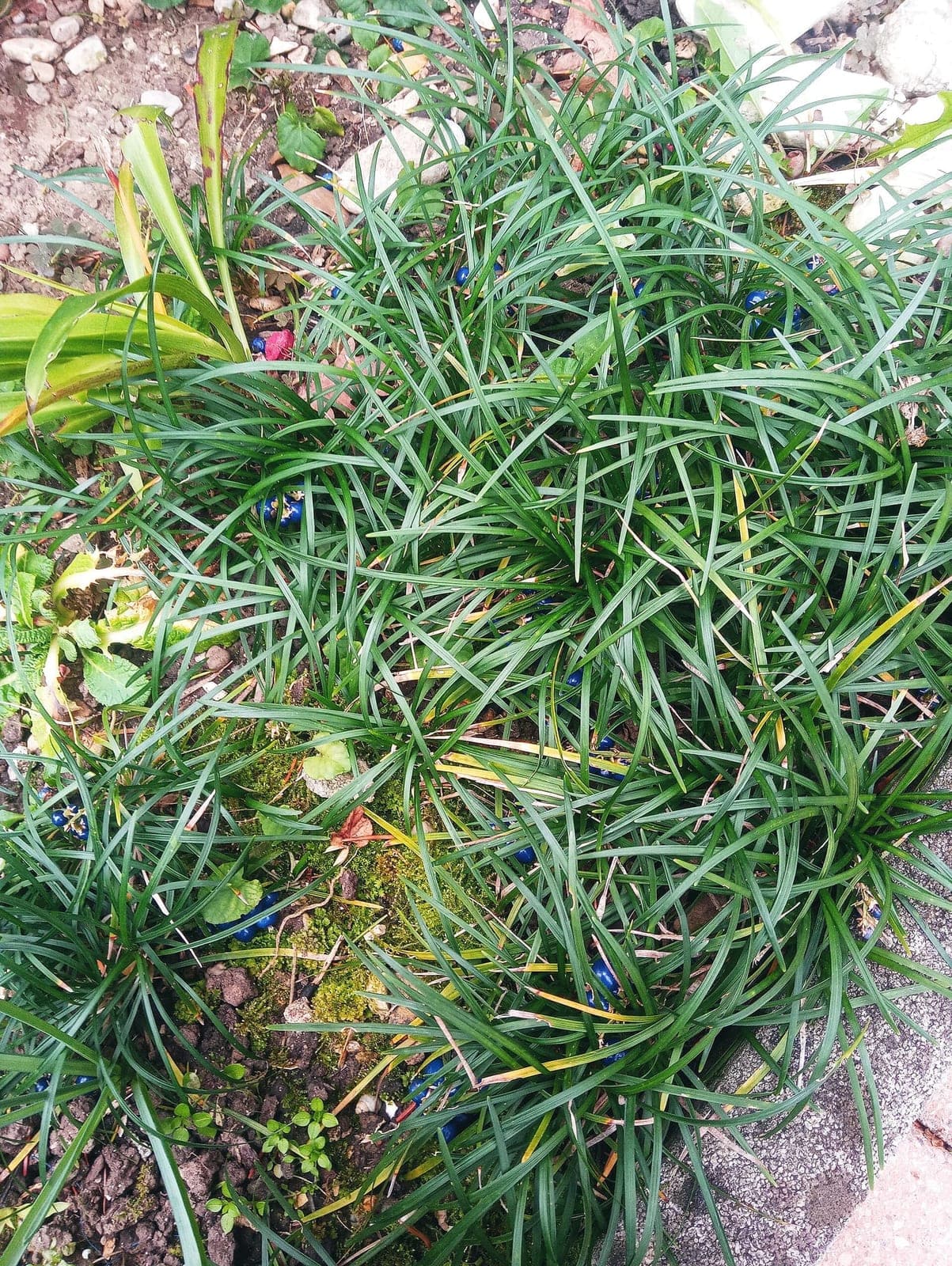
Ophiopogon japonicus is a grass-like evergreen perennial native to East and South Asia, widely planted as a shade-tolerant ground cover and turf substitute. Its dense, dark green, strap-like foliage spreads gradually by underground stolons to form a low, weed-suppressing mat that holds its color through the year. It is also used as edging and as a filler between stepping stones in Japanese-style garden designs.
Mondo grass tolerates deep shade and moderate drought once established, making it practical beneath trees and in sites where turf fails. It prefers slightly acidic, well-drained soil amended with organic matter; mulching helps retain moisture and buffer root temperatures at the cold edge of its range. Small pale-lavender to white flowers appear in midsummer, largely hidden within the foliage, followed by pea-sized blue berries in fall. It spreads more slowly than Liriope, which simplifies containment along beds and borders.
The dried tuber of O. japonicus, known in Traditional Chinese Medicine as Mai Dong, is one of the 50 fundamental herbs of East Asian pharmacopeias. Classified as a yin-nourishing herb, it is used for dryness patterns including dry cough, dry throat, and thirst, and for conditions involving insomnia and palpitations attributed to fluid deficiency.
Fungal leaf spot
Brown or purplish spots on the leaves, often ringed with a yellow halo, that spread and merge in warm, humid, or wet weather; heavily spotted leaves yellow and drop early.
Pick off spotted leaves and clear fallen debris to remove overwintering spores. Improve air circulation by thinning, and water at the base so foliage dries quickly. If it persists, apply a copper- or sulfur-based fungicide at the first sign.
Crown Rot
Lower leaves yellow and wilt; the base of the rosette turns brown and soft, sometimes with white fungal threads at the soil line. Plants collapse in wet conditions.
Remove and destroy affected plants. Improve drainage and avoid overhead watering. Do not mulch directly against the crown. Space plants for airflow and avoid replanting in the same wet spot.
Root rot
Plants wilt, yellow, and stunt even in moist soil; lower stems and roots turn brown, soft, and mushy and the plant may collapse. Most common in heavy, wet, or poorly drained ground.
Improve drainage and stop overwatering, and never plant too deep. Lift and destroy badly affected plants along with the soil around the roots. Grow in raised or free-draining beds to prevent it returning.