
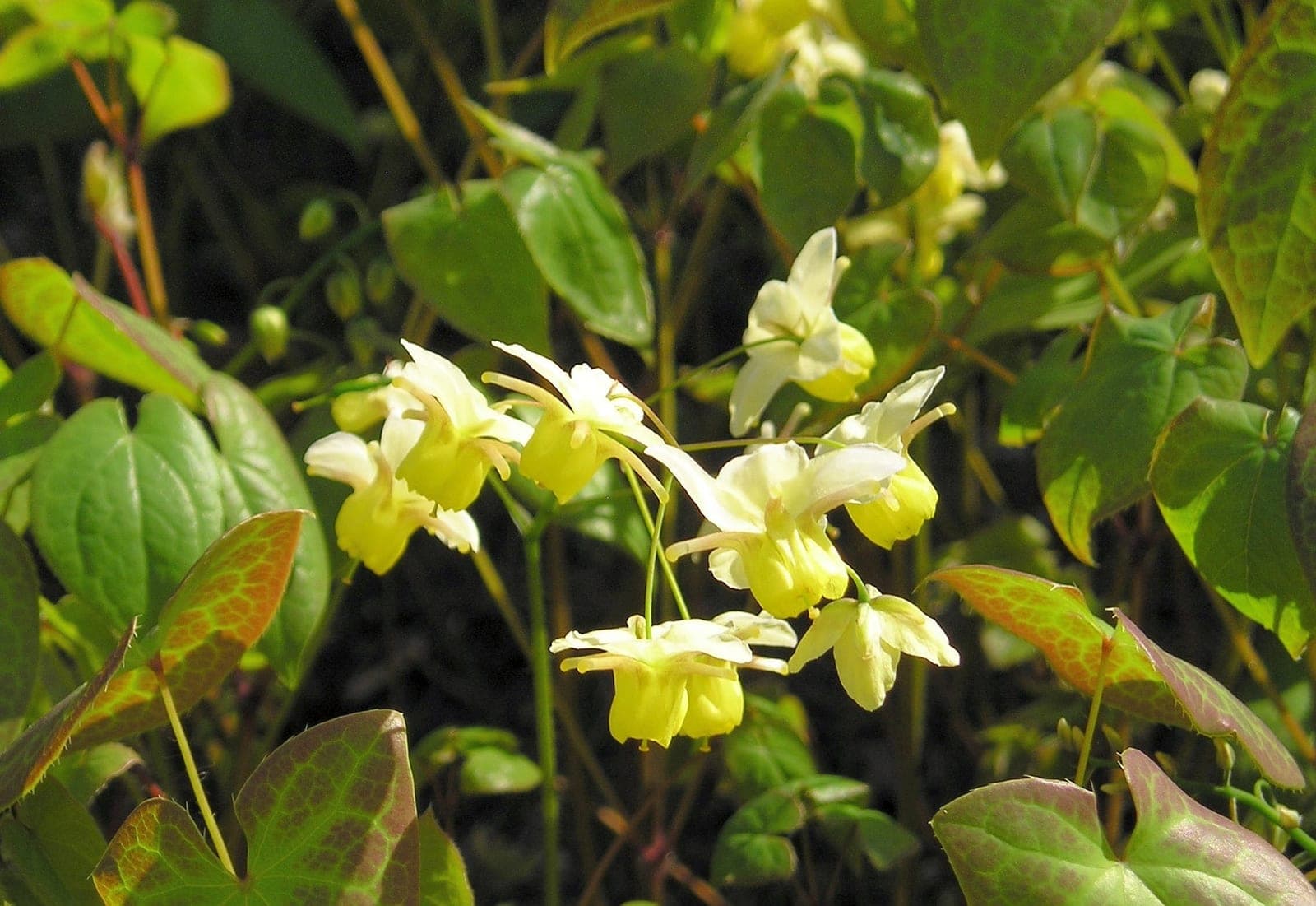
Epimedium × versicolor is a hybrid ground cover forming low, spreading mats of heart-shaped leaves. Its primary value is dry-shade tolerance - it thrives beneath trees and shrubs where root competition and low light exclude most other ground covers. Small bicolored flowers, typically rose-pink outer sepals with pale yellow inner petals, appear in spring just as new foliage unfurls, often with copper-red tints on young leaves.
The plant spreads slowly by creeping rhizomes and builds into a dense, weed-suppressing layer over several seasons. Cutting back the semi-evergreen foliage to ground level in late winter before new shoots break allows full visibility of both the spring flowers and the fresh growth flush. It establishes most readily in humus-rich, slightly acidic, well-drained soil; annual leaf fall from overhead trees maintains organic matter naturally. Cold hardiness is strong, and plants are notably deer resistant.
The genus Epimedium has a centuries-long history in traditional Chinese medicine under the name yin yang huo. Icariin, a flavonoid concentrated in the leaves, has been researched as a phosphodiesterase-5 inhibitor and for potential effects on bone density and cardiovascular function. Epimedium-derived extracts are among the most widely sold herbal supplements marketed for male sexual health and bone support.
Fungal leaf spot
Brown or purplish spots on the leaves, often ringed with a yellow halo, that spread and merge in warm, humid, or wet weather; heavily spotted leaves yellow and drop early.
Pick off spotted leaves and clear fallen debris to remove overwintering spores. Improve air circulation by thinning, and water at the base so foliage dries quickly. If it persists, apply a copper- or sulfur-based fungicide at the first sign.
Root rot
Plants wilt, yellow, and stunt even in moist soil; lower stems and roots turn brown, soft, and mushy and the plant may collapse. Most common in heavy, wet, or poorly drained ground.
Improve drainage and stop overwatering, and never plant too deep. Lift and destroy badly affected plants along with the soil around the roots. Grow in raised or free-draining beds to prevent it returning.