
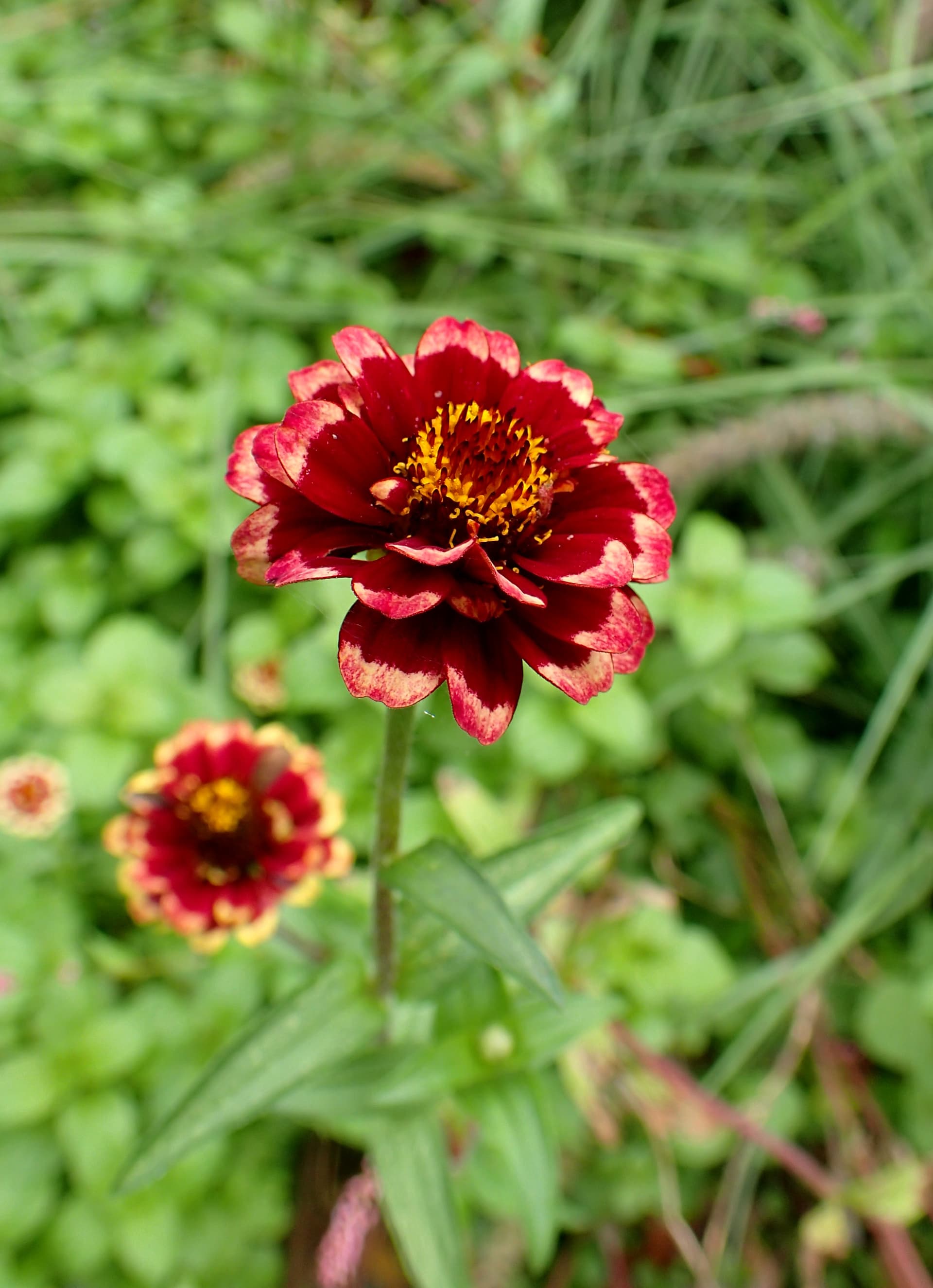
Zinnia haageana is a heat-tolerant annual from Mexico, smaller and more densely branched than common zinnia (Z. elegans). It grows to about 12–16 inches and produces bicolor and tricolor flower heads in combinations of orange, yellow, and mahogany red. The cultivar 'Aztec Orange' holds the RHS Award of Garden Merit. It handles summer heat and moderate drought better than Z. elegans, making it useful where conditions are harsh.
Grow in full sun and well-drained soil. Sow indoors 4–6 weeks before the last frost date, or direct sow after soil temperatures reach 65°F. Thin to 6–9 inches to maintain airflow and reduce foliar disease pressure. Avoid overhead irrigation. Removing spent flower heads at the next leaf node regularly extends production from midsummer into fall. It does not tolerate any frost and must not be planted out until all frost risk has passed.
Mexican zinnia is a reliable nectar source for butterflies and small bees. Its compact, low-mounding form works well in pollinator borders, container plantings, and as a front-of-bed filler alongside taller annuals or perennials.
Powdery mildew
White or grey powdery coating on leaves - usually starting on older growth in humid conditions or when nights cool.
Improve air circulation by thinning plants. Apply neem oil or potassium bicarbonate spray at first sign. Avoid overhead watering.
Alternaria blight
Brown circular spots with yellow halos on leaves; spreads rapidly in wet weather.
Remove affected leaves immediately. Water at the base only. A copper-based fungicide can help if caught early.
Botrytis (grey mould)
Grey fuzzy mould on petals and stems, worst in cool wet conditions.
Remove affected parts immediately. Improve air circulation. Avoid overhead watering. Apply copper fungicide if severe.
Damping Off
Seedlings collapse at the soil line with thin, water-soaked stems; seeds may fail to emerge or rot before sprouting.
Sow in well-draining mix, avoid overwatering, and ensure good airflow. Remove affected seedlings and let the surface dry between waterings.
Fungal leaf spot
Brown or purplish spots on the leaves, often ringed with a yellow halo, that spread and merge in warm, humid, or wet weather; heavily spotted leaves yellow and drop early.
Pick off spotted leaves and clear fallen debris to remove overwintering spores. Improve air circulation by thinning, and water at the base so foliage dries quickly. If it persists, apply a copper- or sulfur-based fungicide at the first sign.