
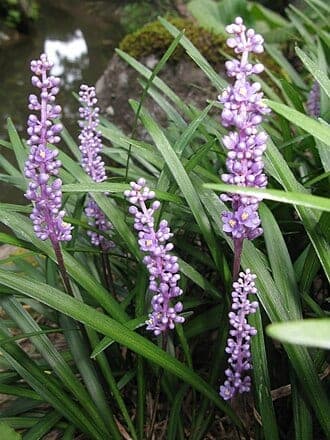
Liriope muscari, commonly called monkey grass or big blue lilyturf, is a clump-forming evergreen perennial native to China, Japan, and Taiwan. It produces dense tufts of strap-like dark green foliage year-round, lilac-purple flower spikes in late summer, and glossy black berries in fall. Few ground covers match its combination of deep shade tolerance, low maintenance, and year-round structure.
It establishes in nearly any well-drained soil and tolerates drought, compacted ground, and root competition from trees once settled. In cooler climates clumps expand slowly and stay manageable; in the warm, humid southeastern US it can naturalize and displace native understory plants. Foliage may scorch at the tips in harsh winters near the edge of its hardiness range. Dividing clumps every three to four years prevents center dieback and renews vigor. Preferred pH is 6.0–7.0.
The root tubers are used in traditional East Asian medicine as Liriopis Radix, primarily for dry cough, fatigue, and constipation. Phytochemical studies have identified saponins and steroidal glycosides with documented anti-inflammatory and cardioprotective activity.
Fungal leaf spot
Brown or purplish spots on the leaves, often ringed with a yellow halo, that spread and merge in warm, humid, or wet weather; heavily spotted leaves yellow and drop early.
Pick off spotted leaves and clear fallen debris to remove overwintering spores. Improve air circulation by thinning, and water at the base so foliage dries quickly. If it persists, apply a copper- or sulfur-based fungicide at the first sign.
Phytophthora Root Rot
Wilting despite moist soil, yellowing leaves, stunted growth, and dark, decayed roots and crown tissue. Vines may collapse during hot weather.
Plant in well-draining soil and avoid waterlogging. Remove and destroy affected vines. Improve drainage with raised beds or amended soil and avoid overwatering.
Crown Rot
Lower leaves yellow and wilt; the base of the rosette turns brown and soft, sometimes with white fungal threads at the soil line. Plants collapse in wet conditions.
Remove and destroy affected plants. Improve drainage and avoid overhead watering. Do not mulch directly against the crown. Space plants for airflow and avoid replanting in the same wet spot.
Root rot
Plants wilt, yellow, and stunt even in moist soil; lower stems and roots turn brown, soft, and mushy and the plant may collapse. Most common in heavy, wet, or poorly drained ground.
Improve drainage and stop overwatering, and never plant too deep. Lift and destroy badly affected plants along with the soil around the roots. Grow in raised or free-draining beds to prevent it returning.