
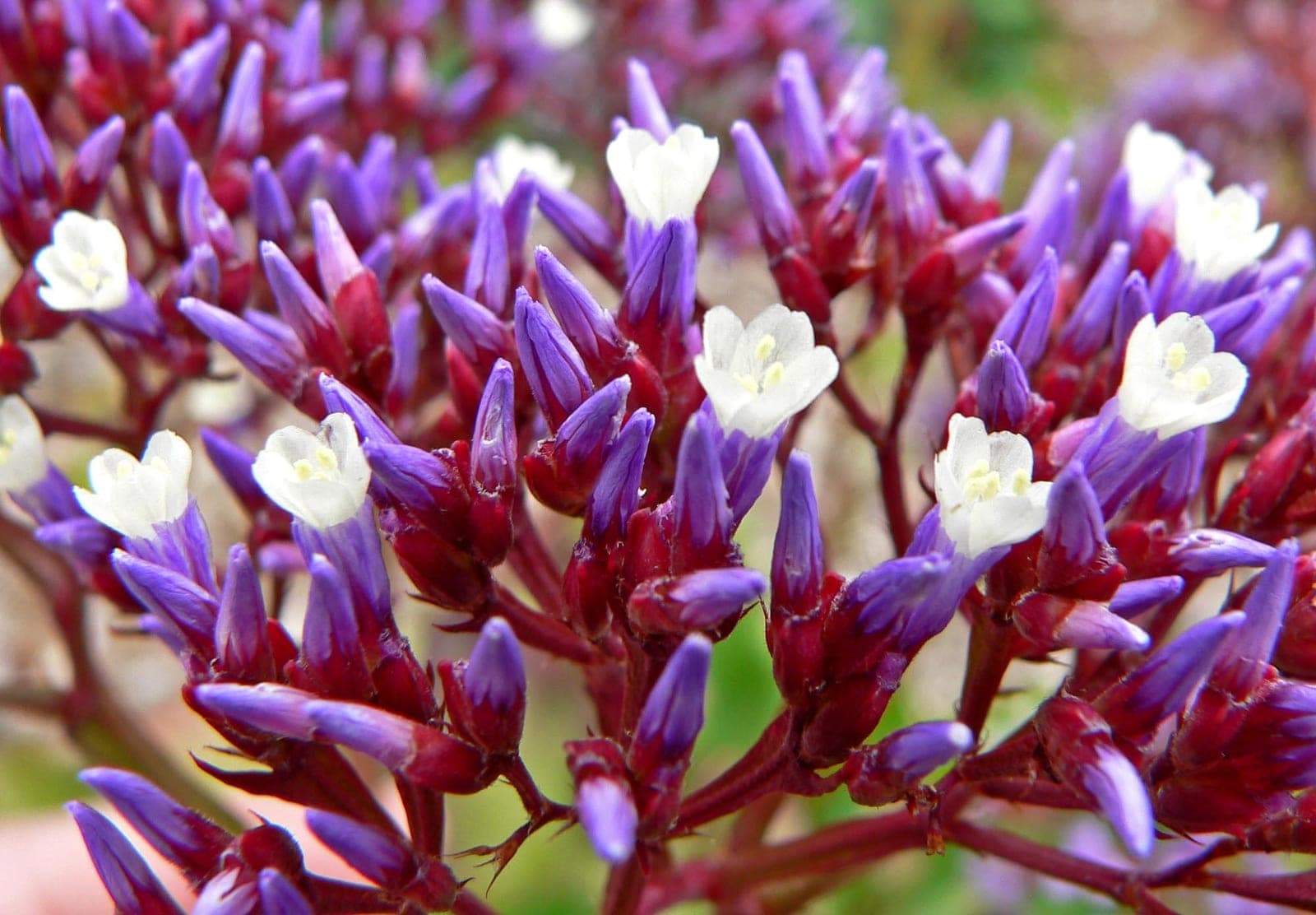
Limonium coriarium is a perennial sea-lavender that forms a compact basal rosette of stiff, leathery leaves - the quality its species epithet references - topped by branching stems of small, papery lavender florets through summer. The papery calyces hold color long after drying, making it useful both in the garden and as cut material for dried arrangements. It belongs to Plumbaginaceae, the plumbago family, and is not related to true lavender or rosemary despite the common name.
This species is adapted to poor, freely draining soil in coastal and rocky habitats, tolerating salt spray, alkaline pH, and extended drought once established. Rich or waterlogged soil encourages root and crown rot; a grit mulch around the base is more effective than organic material, particularly in wet winters at the cooler edge of its range. Plants are slow in the first season and improve considerably in years two and three as the root system matures.
Several Limonium species carry tannin-rich roots and leaves used historically as astringents in traditional medicine, applied to minor wounds and gastrointestinal complaints. Clinical research specific to L. coriarium is sparse; these associations reflect genus-level traditional use.
Botrytis (grey mould)
Grey fuzzy mould on petals and stems, worst in cool wet conditions.
Remove affected parts immediately. Improve air circulation. Avoid overhead watering. Apply copper fungicide if severe.
Root rot
Plants wilt, yellow, and stunt even in moist soil; lower stems and roots turn brown, soft, and mushy and the plant may collapse. Most common in heavy, wet, or poorly drained ground.
Improve drainage and stop overwatering, and never plant too deep. Lift and destroy badly affected plants along with the soil around the roots. Grow in raised or free-draining beds to prevent it returning.
Downy mildew
Yellowing on top of leaves with grey-purple fuzz underneath. Spreads rapidly in humid conditions.
Remove affected leaves. Improve air circulation. Avoid overhead watering. Copper spray as preventive.
Fungal leaf spot
Brown or purplish spots on the leaves, often ringed with a yellow halo, that spread and merge in warm, humid, or wet weather; heavily spotted leaves yellow and drop early.
Pick off spotted leaves and clear fallen debris to remove overwintering spores. Improve air circulation by thinning, and water at the base so foliage dries quickly. If it persists, apply a copper- or sulfur-based fungicide at the first sign.