
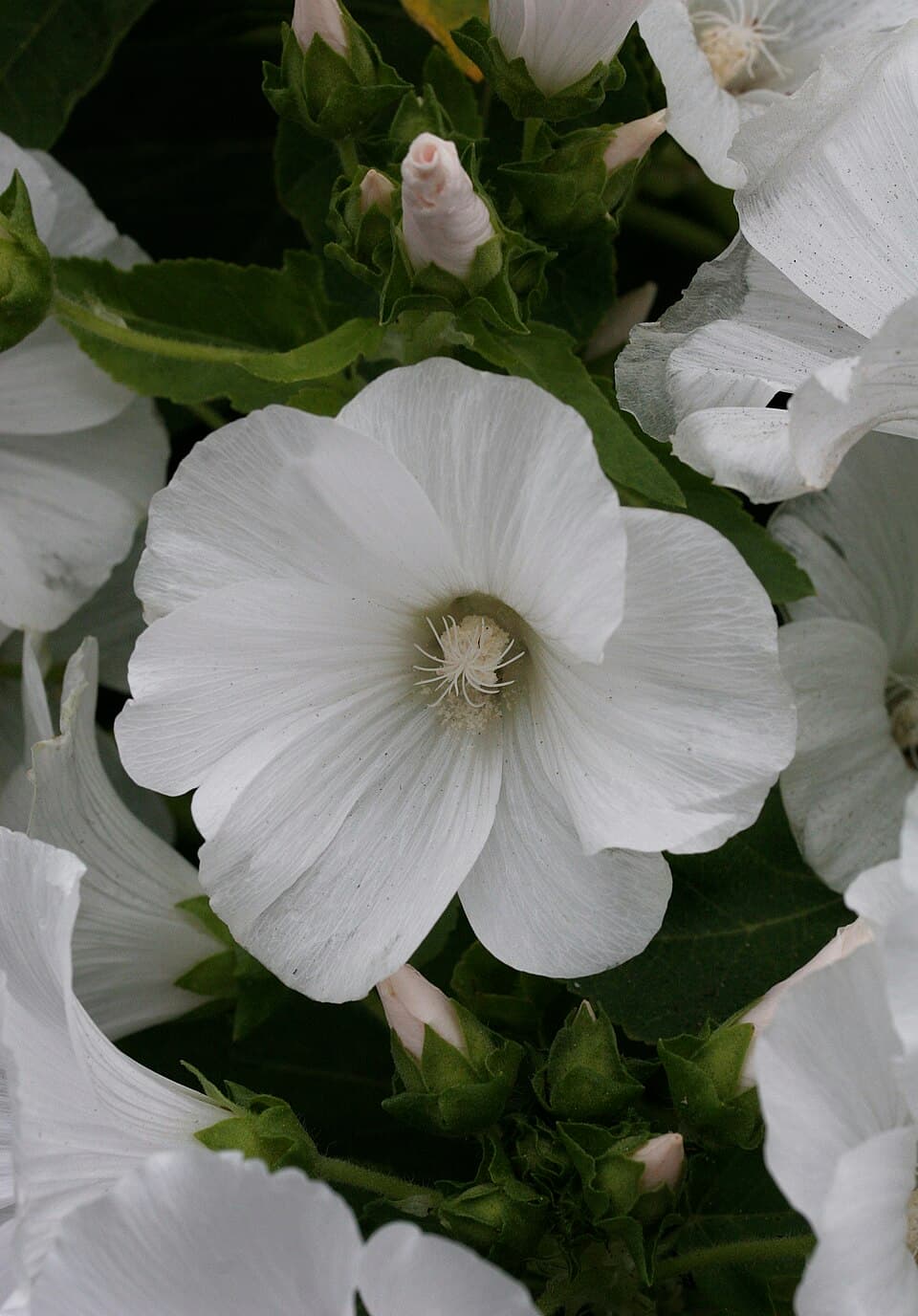
Lavatera trimestris 'Mont Blanc' is a fast-growing Mediterranean annual that produces large, silky, pure white cup-shaped flowers on compact bushy plants from midsummer to first frost. Plants go from seed to flower in roughly 10–12 weeks, making it one of the quicker-blooming annuals for a cutting or cottage-style garden.
Performance is best in poor to moderately fertile, well-drained soil; excess fertility drives leafy growth at the expense of flowers. The plant dislikes root disturbance, so direct sowing in final position produces far better results than transplanting. A 2–3 inch mulch layer conserves moisture during dry spells, and plants may need light staking on exposed or windy sites. In zones 8 and warmer, an autumn sowing produces an early-spring display.
The flowers and young leaves are edible, sharing the mucilaginous properties common across the mallow family. That same mucilage underpins a traditional use of mallow as a soothing remedy for sore throats, coughs, and minor skin irritation.
Rust
Orange to brown raised pustules on the undersides of leaves, with yellow spotting on the upper surface. Heavy infections cause leaves to yellow and drop.
Remove and destroy infected leaves. Avoid overhead watering and improve air circulation. Apply a sulfur or copper-based fungicide if it spreads. Clear plant debris in fall.
Powdery mildew
White or grey powdery coating on leaves - usually starting on older growth in humid conditions or when nights cool.
Improve air circulation by thinning plants. Apply neem oil or potassium bicarbonate spray at first sign. Avoid overhead watering.
Root rot
Plants wilt, yellow, and stunt even in moist soil; lower stems and roots turn brown, soft, and mushy and the plant may collapse. Most common in heavy, wet, or poorly drained ground.
Improve drainage and stop overwatering, and never plant too deep. Lift and destroy badly affected plants along with the soil around the roots. Grow in raised or free-draining beds to prevent it returning.
Fungal leaf spot
Brown or purplish spots on the leaves, often ringed with a yellow halo, that spread and merge in warm, humid, or wet weather; heavily spotted leaves yellow and drop early.
Pick off spotted leaves and clear fallen debris to remove overwintering spores. Improve air circulation by thinning, and water at the base so foliage dries quickly. If it persists, apply a copper- or sulfur-based fungicide at the first sign.