
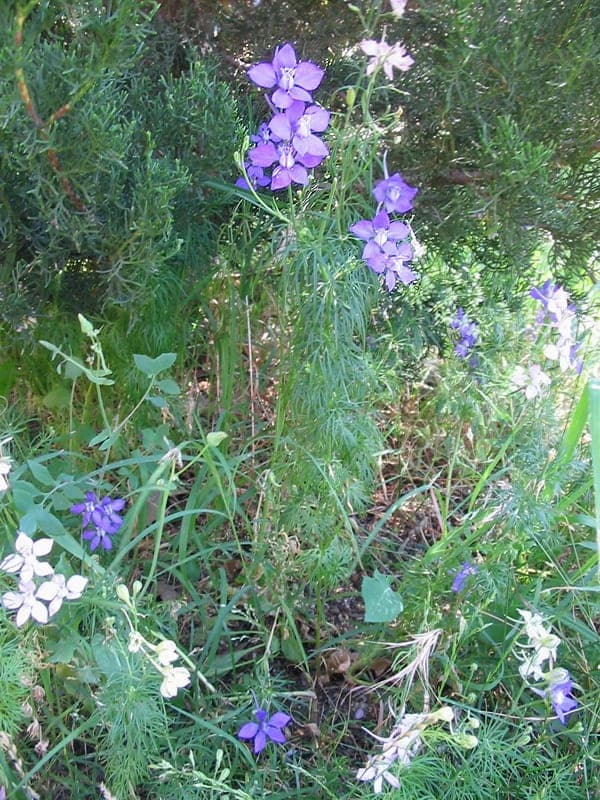
Larkspur is a cool-season annual in the buttercup family, producing erect stems with finely cut foliage and dense vertical flower spikes in blue, violet, pink, and white. It is one of the most reliable cut flowers for late spring and early summer and self-sows freely once established, returning year after year in beds where conditions suit it.
Seeds germinate best in cool soil between 50 and 65°F and the plant resents root disturbance, so direct sowing into the final site is standard. In zones 6 and warmer, fall sowing produces the strongest plants; in colder regions, sow as early as soil can be worked in spring. It prefers a near-neutral to slightly alkaline pH and performs poorly in heavy, wet soil. Plants flower through late spring then decline rapidly as summer heat builds. Thin seedlings rather than transplanting - crowded stands invite disease and produce weaker, shorter stems.
All parts of the plant, particularly the seeds and young growth, contain diterpenoid alkaloids including the highly toxic methyllycaconitine. The plant is a documented cause of livestock poisoning and is hazardous to humans. It should not be planted in areas accessible to grazing animals or young children.
Powdery mildew
White or grey powdery coating on leaves - usually starting on older growth in humid conditions or when nights cool.
Improve air circulation by thinning plants. Apply neem oil or potassium bicarbonate spray at first sign. Avoid overhead watering.
Botrytis (grey mould)
Grey fuzzy mould on petals and stems, worst in cool wet conditions.
Remove affected parts immediately. Improve air circulation. Avoid overhead watering. Apply copper fungicide if severe.
Damping Off
Seedlings collapse at the soil line with thin, water-soaked stems; seeds may fail to emerge or rot before sprouting.
Sow in well-draining mix, avoid overwatering, and ensure good airflow. Remove affected seedlings and let the surface dry between waterings.
Crown Rot
Lower leaves yellow and wilt; the base of the rosette turns brown and soft, sometimes with white fungal threads at the soil line. Plants collapse in wet conditions.
Remove and destroy affected plants. Improve drainage and avoid overhead watering. Do not mulch directly against the crown. Space plants for airflow and avoid replanting in the same wet spot.
Root rot
Plants wilt, yellow, and stunt even in moist soil; lower stems and roots turn brown, soft, and mushy and the plant may collapse. Most common in heavy, wet, or poorly drained ground.
Improve drainage and stop overwatering, and never plant too deep. Lift and destroy badly affected plants along with the soil around the roots. Grow in raised or free-draining beds to prevent it returning.
Fungal leaf spot
Brown or purplish spots on the leaves, often ringed with a yellow halo, that spread and merge in warm, humid, or wet weather; heavily spotted leaves yellow and drop early.
Pick off spotted leaves and clear fallen debris to remove overwintering spores. Improve air circulation by thinning, and water at the base so foliage dries quickly. If it persists, apply a copper- or sulfur-based fungicide at the first sign.