
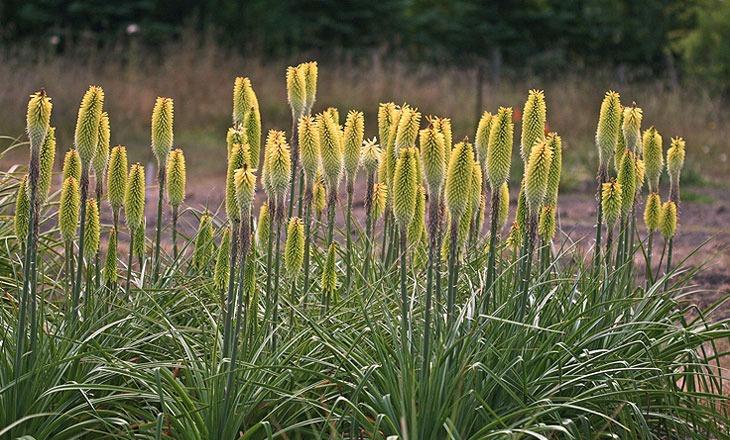
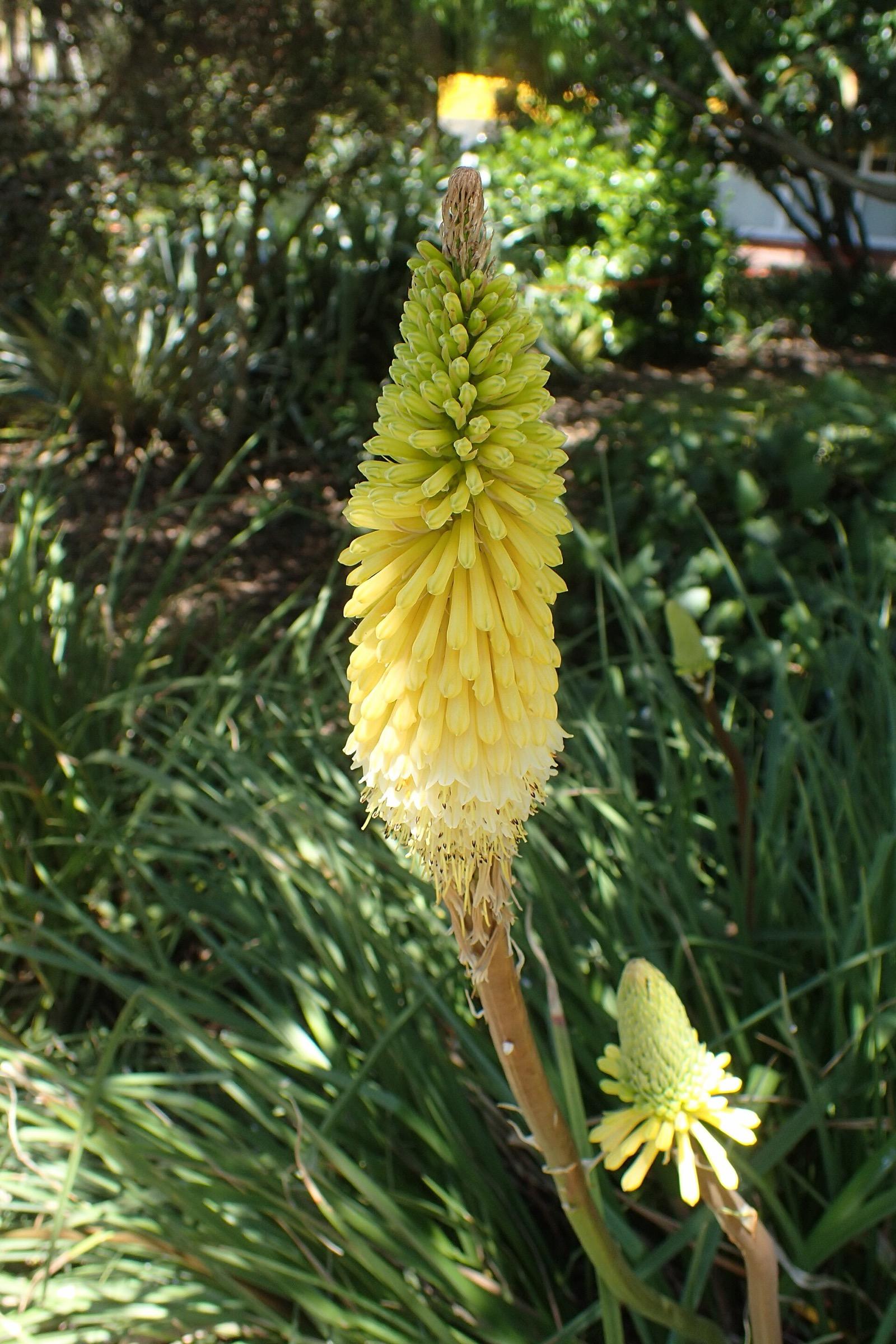
Kniphofia 'Percy's Pride' is a cultivar of red hot poker, a genus native to southern and eastern Africa. It produces tall flower spikes densely packed with tubular lime-green flowers that age to cream-yellow, appearing in late summer and fall when many borders are past their peak. The cool, pale color palette is atypical for the genus and pairs well with ornamental grasses and late-season daisy-family perennials.
A clump-forming perennial with arching, strap-like foliage, 'Percy's Pride' requires well-drained soil above all else. Wet conditions during winter are the primary cause of crown failure in colder zones; in zone 6, a dry mulch applied over the crown before the ground freezes substantially improves overwintering. Divide congested clumps every four to five years in spring to maintain vigor. The tubular flowers are well-suited to hummingbirds and long-tongued bees.
These dates are for Zone 6b. Enter your ZIP to time every job to your own frost dates.
- cut · Any time in fallCut spent spikes at the base once the last florets fade
- buy · Feb 13 - Feb 27Buy plants - about two months before planting out
- plant · Apr 24 - May 8Plant out once the soil has warmed, with the crown slightly proud of grade in free-draining soil
Problems & troubleshooting
Common problems
Crown Rot
Lower leaves yellow and wilt; the base of the rosette turns brown and soft, sometimes with white fungal threads at the soil line. Plants collapse in wet conditions.
Remove and destroy affected plants. Improve drainage and avoid overhead watering. Do not mulch directly against the crown. Space plants for airflow and avoid replanting in the same wet spot.
Root rot
Plants wilt, yellow, and stunt even in moist soil; lower stems and roots turn brown, soft, and mushy and the plant may collapse. Most common in heavy, wet, or poorly drained ground.
Improve drainage and stop overwatering, and never plant too deep. Lift and destroy badly affected plants along with the soil around the roots. Grow in raised or free-draining beds to prevent it returning.
Fungal leaf spot
Brown or purplish spots on the leaves, often ringed with a yellow halo, that spread and merge in warm, humid, or wet weather; heavily spotted leaves yellow and drop early.
Pick off spotted leaves and clear fallen debris to remove overwintering spores. Improve air circulation by thinning, and water at the base so foliage dries quickly. If it persists, apply a copper- or sulfur-based fungicide at the first sign.