
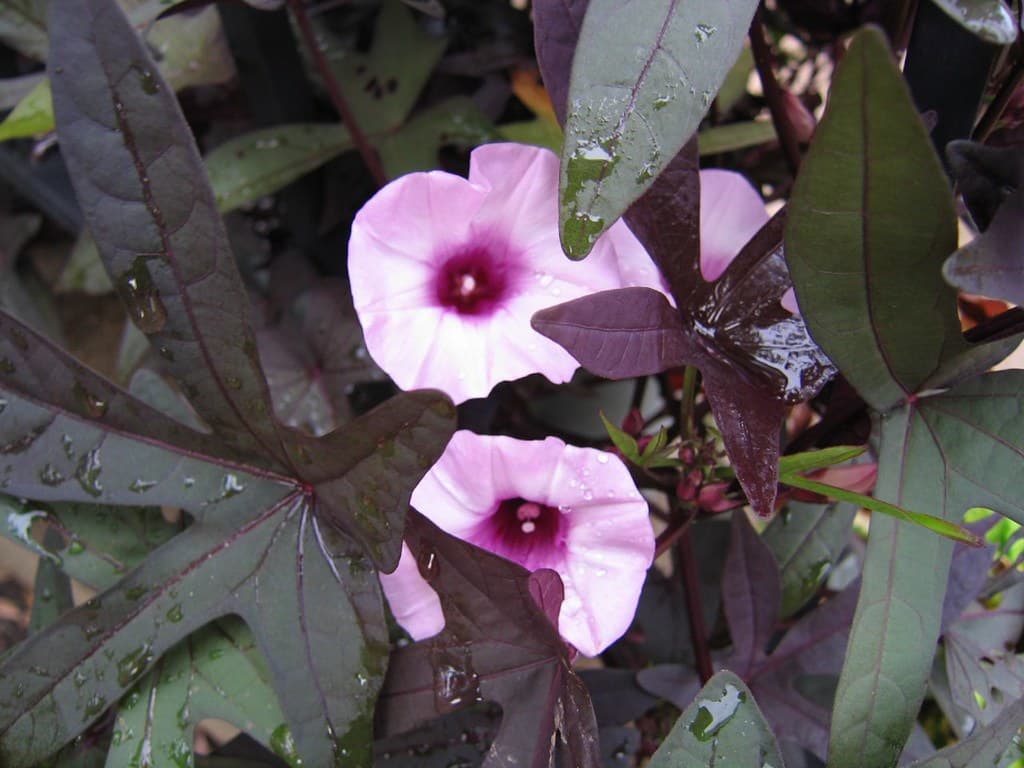
'Black Heart' is an ornamental cultivar of Ipomoea batatas selected for near-black, heart-shaped foliage produced by unusually high anthocyanin pigmentation. It grows as a vigorous trailing vine and is used in containers, hanging baskets, and as a fast-filling seasonal ground cover. The dark foliage contrasts sharply with chartreuse, silver, or brightly colored companion plants.
Growth stalls when soil temperatures drop below 60°F and plants are killed by frost. Full sun produces the darkest leaf color; shade shifts pigmentation toward muted purple-green. In zones 9–11 the plant is perennial; elsewhere it is grown as a frost-tender annual from nursery transplants or rooted cuttings. Tubers that develop underground over the season can be dug before the first frost, cured at 80–85°F for 7–10 days, and stored at 55–60°F for replanting the following spring.
Leaves of Ipomoea batatas are consumed as cooked greens across parts of Asia, Africa, and the Caribbean. Research has documented antioxidant and anti-inflammatory activity in leaf extracts, attributed to anthocyanin and polyphenol content.
Sweet Potato Black Rot
Dark brown to black, circular, sunken lesions on tubers. Infected flesh is bitter and inedible. Lesions may expand in storage and produce olive-green spore masses.
Use only certified disease-free slips. Cure tubers promptly and thoroughly before storage. Discard any infected tubers immediately. Rotate to non-host crops for at least 3 years.
Sweet Potato Scurf
Brown to black, irregular superficial discoloration on tuber skin giving a sooty or dirty appearance. Does not penetrate flesh but reduces quality and can shorten storage life.
Plant certified clean slips. Avoid replanting in infested soil for 2–3 years. Harvest promptly and cure properly. Store only blemish-free tubers.
Root-Knot Nematode
Swollen galls on roots, poor vigor, wilting in heat, and reduced fruiting. Containers and sandy soils are more prone.
Use clean potting mix in containers. Avoid replanting in infested soil. Maintain plant vigor with mulch and steady watering. Solarize affected garden soil.
Fusarium wilt
Sudden wilting, brown streaks in stems, yellowing leaves. Affects sweet basil varieties most.
No cure. Remove and destroy plants. Do not replant in the same spot for 3+ years. Choose resistant varieties.
Mosaic virus
Yellowing, mottled, or distorted leaves. No cure - spread by aphids.
Remove and destroy infected plants. Control aphid populations to prevent spread. Do not propagate from infected tubers.
Fungal leaf spot
Brown or purplish spots on the leaves, often ringed with a yellow halo, that spread and merge in warm, humid, or wet weather; heavily spotted leaves yellow and drop early.
Pick off spotted leaves and clear fallen debris to remove overwintering spores. Improve air circulation by thinning, and water at the base so foliage dries quickly. If it persists, apply a copper- or sulfur-based fungicide at the first sign.