
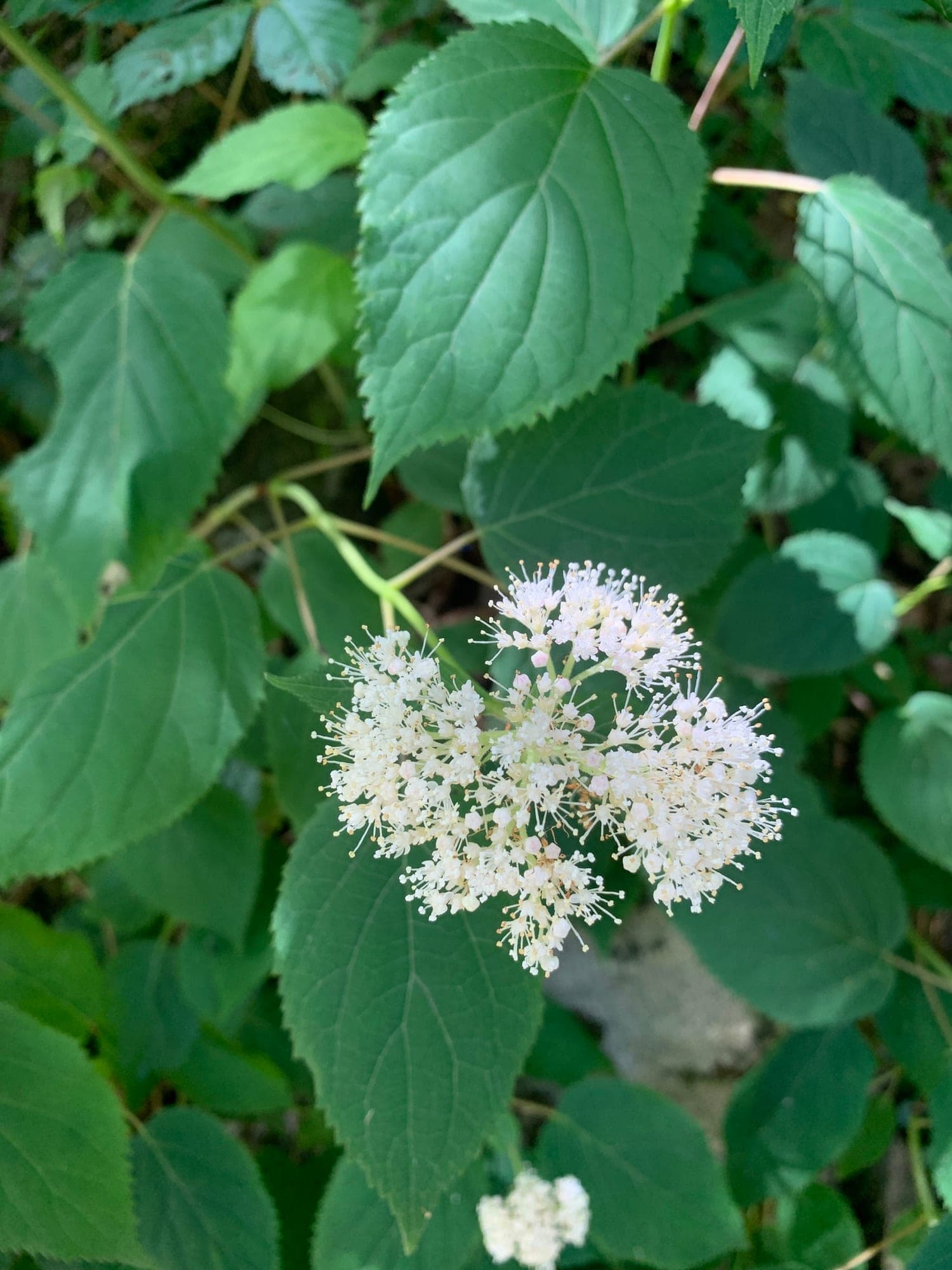
'Snowflake' is the double-flowered oakleaf hydrangea. Where the species carries cones of small fertile flowers dotted with a few showy sterile ones, 'Snowflake' is made almost entirely of layered, double-petaled white florets, so each cone is fuller and longer lasting. Heads open in early summer, age from white to pink and then parchment, and can stay on the plant into winter. It grows 5–8 ft tall and 5–10 ft wide, with the deeply lobed oak-shaped leaves and cinnamon exfoliating bark of the species, and the leaves turn burgundy and orange in autumn.
It wants the same conditions as any oakleaf: rich, well-drained, slightly acidic soil, part shade or morning sun, and a steady drink in its first years. It is among the more shade-tolerant hydrangeas, though flowering is better with a few hours of direct sun. The weight of the double heads can bend stems after heavy rain, so give it room and space it where the arching shape can be seen. Like all oakleaf hydrangeas it blooms on old wood, so prune only right after flowering, and in the coldest part of its range protect or accept some stem dieback in hard winters.
Ecoregions:Eastern Temperate Forests
Powdery mildew
White or grey powdery coating on leaves - usually starting on older growth in humid conditions or when nights cool.
Improve air circulation by thinning plants. Apply neem oil or potassium bicarbonate spray at first sign. Avoid overhead watering.
Cercospora Leaf Spot
Small round spots with tan or gray centers and reddish-purple borders on leaves. Spots merge in severe cases, causing leaves to brown and die back.
Remove infected leaves and avoid overhead watering. Space plants for airflow and rotate crops. Apply a copper-based fungicide if the infection spreads.