
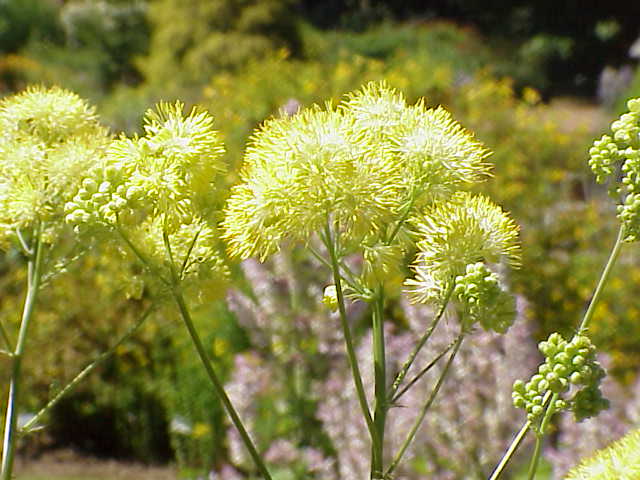
Thalictrum chelidonii is a tall, clump-forming herbaceous perennial native to the Himalayan mountains from northeast India through Nepal to southwestern China. It is grown for large, airy panicles of nodding lilac to pale purple flowers with prominent creamy-yellow stamens that appear in mid- to late summer, and for its divided, blue-green foliage that closely resembles columbine leaves.
It performs best in partial shade with consistently moist, humus-rich soil, making it well suited to woodland-edge borders and streamside plantings. At 4–6 feet tall, stems are brittle and benefit from early staking in exposed positions. The plant self-seeds modestly where conditions suit. In zone 6 and the colder parts of zone 7, a compost mulch applied over the crown after hard frost improves winter reliability. The flowers attract bees and hoverflies seeking pollen.
Powdery mildew
White or grey powdery coating on leaves - usually starting on older growth in humid conditions or when nights cool.
Improve air circulation by thinning plants. Apply neem oil or potassium bicarbonate spray at first sign. Avoid overhead watering.
Rust
Orange to brown raised pustules on the undersides of leaves, with yellow spotting on the upper surface. Heavy infections cause leaves to yellow and drop.
Remove and destroy infected leaves. Avoid overhead watering and improve air circulation. Apply a sulfur or copper-based fungicide if it spreads. Clear plant debris in fall.
Fungal leaf spot
Brown or purplish spots on the leaves, often ringed with a yellow halo, that spread and merge in warm, humid, or wet weather; heavily spotted leaves yellow and drop early.
Pick off spotted leaves and clear fallen debris to remove overwintering spores. Improve air circulation by thinning, and water at the base so foliage dries quickly. If it persists, apply a copper- or sulfur-based fungicide at the first sign.