
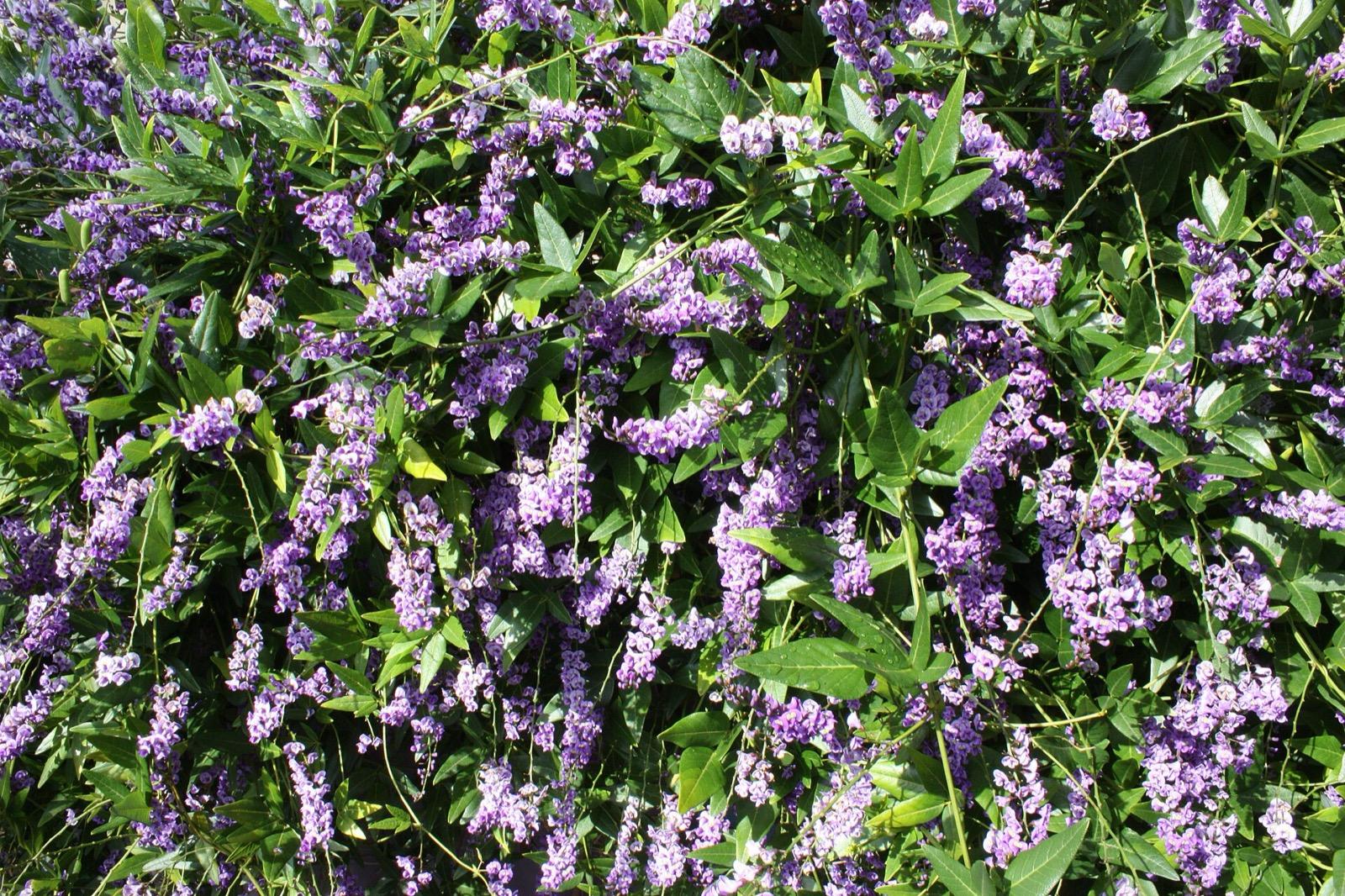
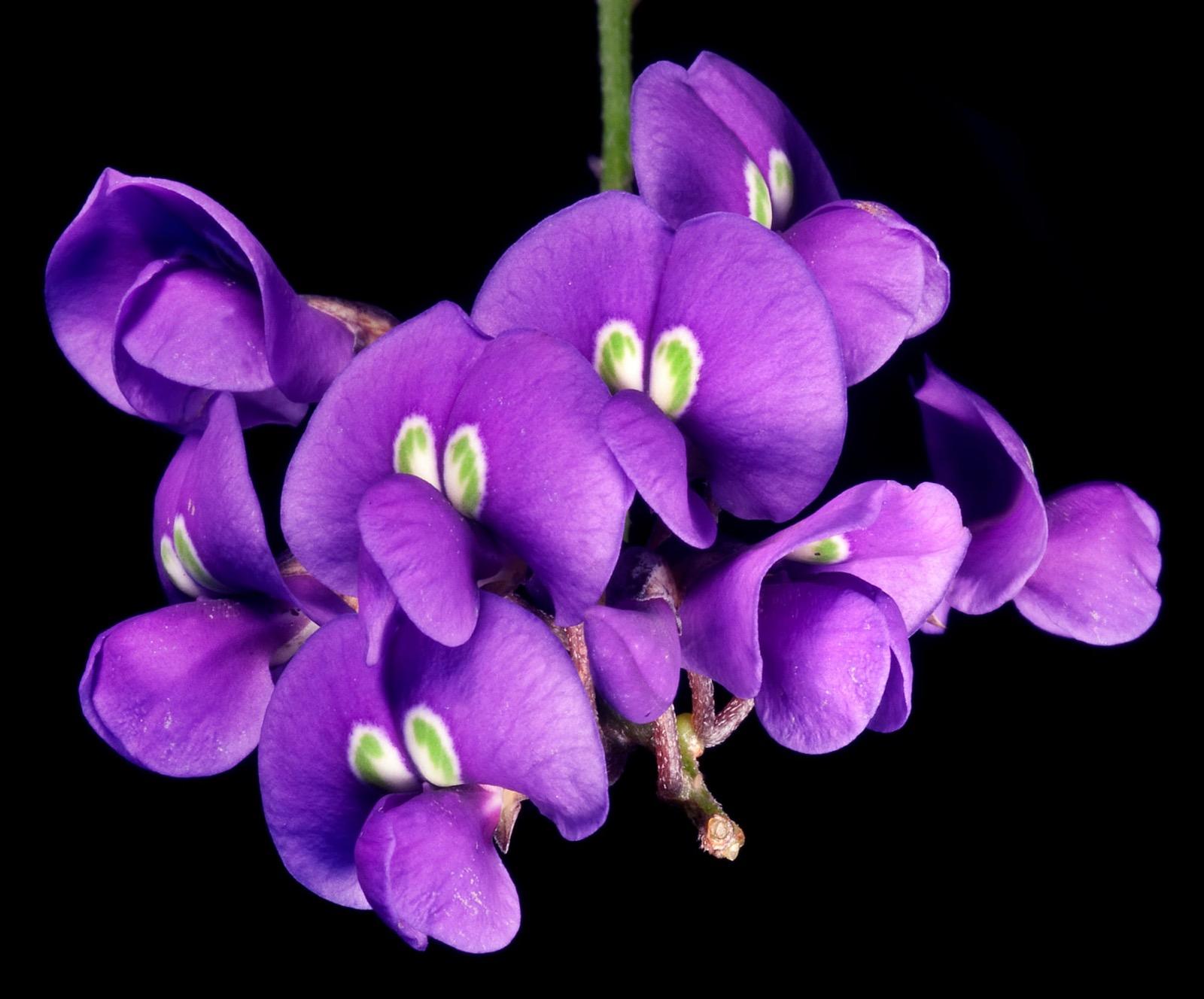
Hardenbergia comptoniana is a fast-growing twining vine from Western Australia that covers trellises, fences, and pergolas with long racemes of small purple pea-shaped flowers in late winter through spring - a period when little else is in flower in warm-climate gardens. As a member of the pea family (Fabaceae), it fixes atmospheric nitrogen through root symbiosis, modestly improving soil fertility over time.
The vine tolerates soils ranging from sand to clay provided drainage is adequate, and establishes readily in coastal and inland gardens across zones 9–11. Part shade suits hot inland positions; in milder coastal gardens it handles full sun. Mulch the root zone to conserve moisture through summer dormancy and reduce irrigation requirements. Once established, plants are drought tolerant and need little attention beyond a light trim after the spring flush.
Native wisteria is a useful pollinator resource in Mediterranean-climate gardens, attracting bees and other beneficial insects during winter and early spring when nectar sources are scarce.
These dates are for Zone 6b. Enter your ZIP to time every job to your own frost dates.
- buy · Jan 30 - Feb 13Order seed - about two months before sowing
- buy · Feb 13 - Feb 27Buy plants - about two months before planting out
- watch · Any time in winterCheck drainage after heavy rain; a wet crown is the usual cause of failure
- sow · Apr 10 - May 8Nick the seed coat or pour hot water over the seed and soak overnight, then sow in free-draining mix
- plant · Apr 24 - May 22Plant out container-grown plants once frost has passed, next to a trellis or fence for the twining stems
- cut · Apr 24Cut stems back by up to a third once flowering finishes to keep growth dense
Problems & troubleshooting
Common problems
Phytophthora Root Rot
Wilting despite moist soil, yellowing leaves, stunted growth, and dark, decayed roots and crown tissue. Vines may collapse during hot weather.
Plant in well-draining soil and avoid waterlogging. Remove and destroy affected vines. Improve drainage with raised beds or amended soil and avoid overwatering.
Powdery mildew
White or grey powdery coating on leaves - usually starting on older growth in humid conditions or when nights cool.
Improve air circulation by thinning plants. Apply neem oil or potassium bicarbonate spray at first sign. Avoid overhead watering.