
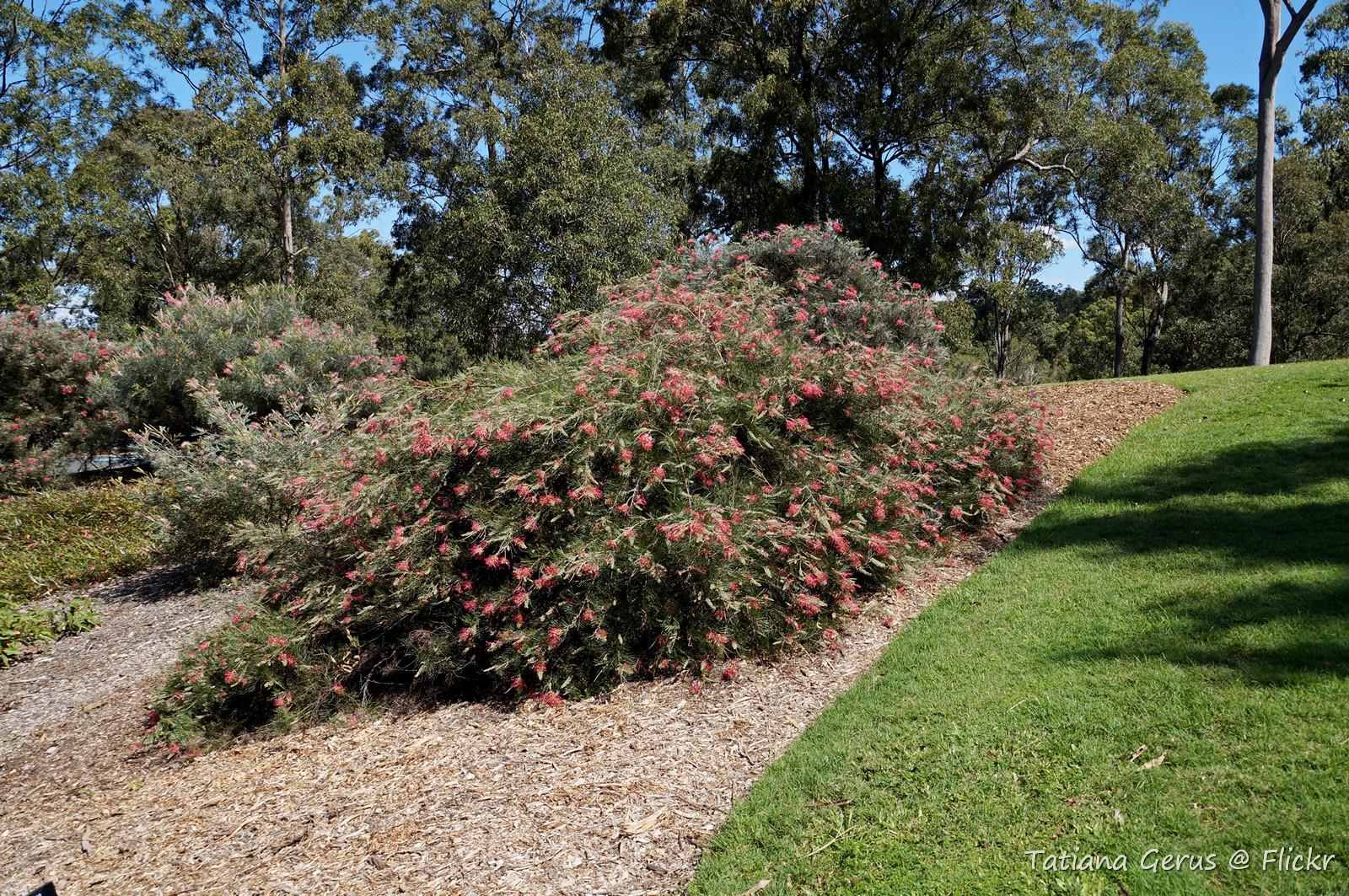
Grevillea 'Billy Bonkers' is a compact, evergreen shrub in the Proteaceae family, bred from Australian native grevillea species. It produces dense clusters of bright pink-red, toothbrush-style flowers nearly year-round in frost-free climates, making it one of the more continuously productive flowering shrubs for warm-zone gardens. The flowers attract hummingbirds and nectar-feeding insects throughout the year.
Grevilleas demand excellent drainage and low-phosphorus soil that mirrors their native Australian habitat. Standard fertilizers containing phosphorus can damage or kill Proteaceae plants; use only products formulated for Australian natives. The plant is highly drought-tolerant once established but benefits from regular water through its first two summers. A light prune by one-third after each flowering flush maintains a compact form and stimulates regrowth. Heavy clay soils and low spots where water pools invite phytophthora root rot, the primary cause of grevillea failure in cultivation.
Aboriginal Australians traditionally harvested nectar from Grevillea flowers of related species by shaking the clusters or sucking directly from the tubes; the nectar is sweet and edible.
These dates are for Zone 6b. Enter your ZIP to time every job to your own frost dates.
- cut · Nov 6Tip-prune after the main flush to keep the mound dense; cut only into leafy growth, never bare wood
- buy · Feb 13 - Feb 27Buy grafted plants - about two months before planting out
- watch · Any time in winterCheck drainage after heavy rain; standing water at the crown quickly leads to Phytophthora root rot
- plant · Apr 24 - May 22Plant out once frost has passed, in sharply drained soil with no bone meal or high-phosphorus amendment
- watch · Any time in summerRub off any shoots that appear below the graft union; the vigorous rootstock will outgrow the low top if left
Problems & troubleshooting
Common problems
Phytophthora Root Rot
Wilting despite moist soil, yellowing leaves, stunted growth, and dark, decayed roots and crown tissue. Vines may collapse during hot weather.
Plant in well-draining soil and avoid waterlogging. Remove and destroy affected vines. Improve drainage with raised beds or amended soil and avoid overwatering.
Fungal leaf spot
Brown or purplish spots on the leaves, often ringed with a yellow halo, that spread and merge in warm, humid, or wet weather; heavily spotted leaves yellow and drop early.
Pick off spotted leaves and clear fallen debris to remove overwintering spores. Improve air circulation by thinning, and water at the base so foliage dries quickly. If it persists, apply a copper- or sulfur-based fungicide at the first sign.