
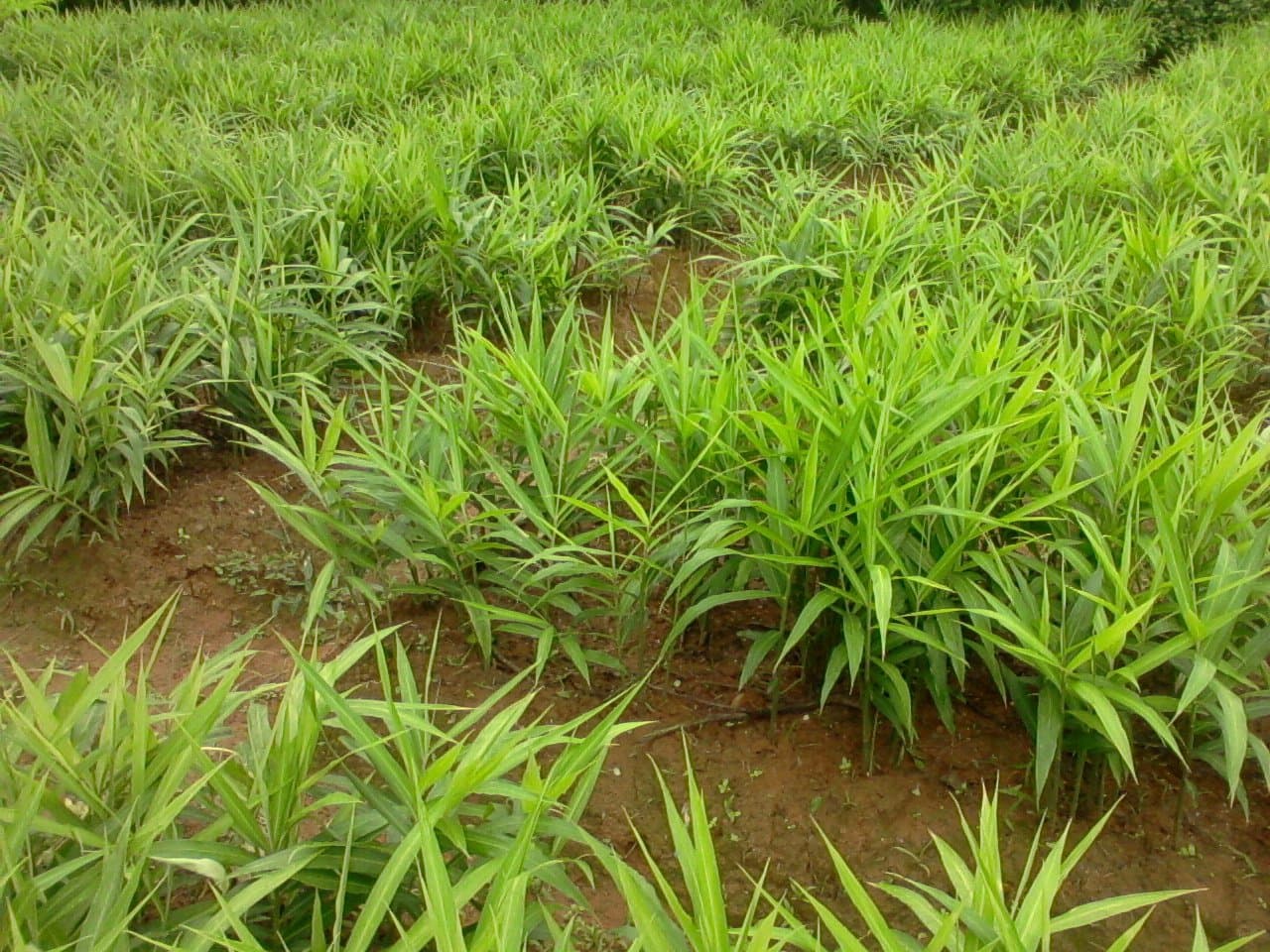
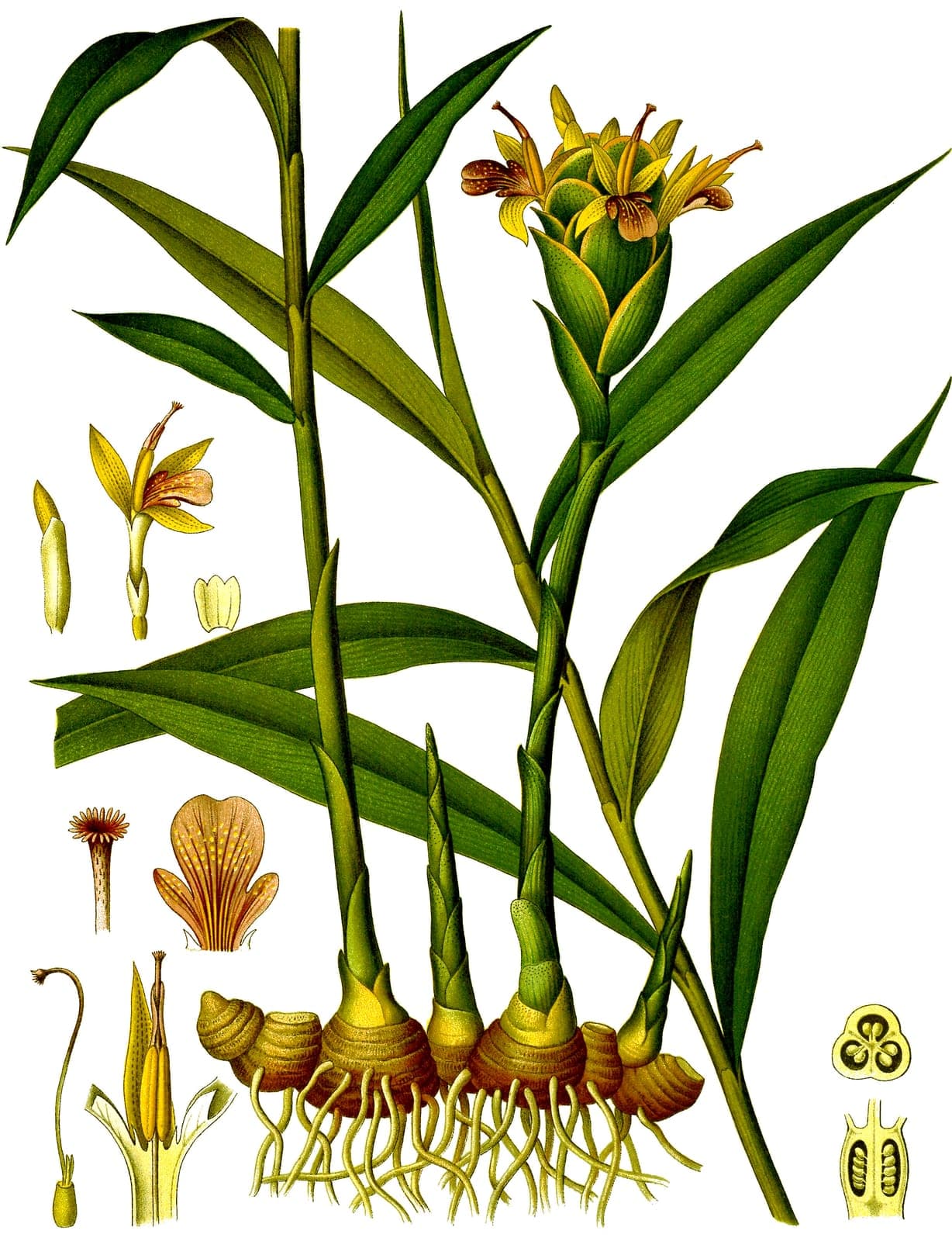
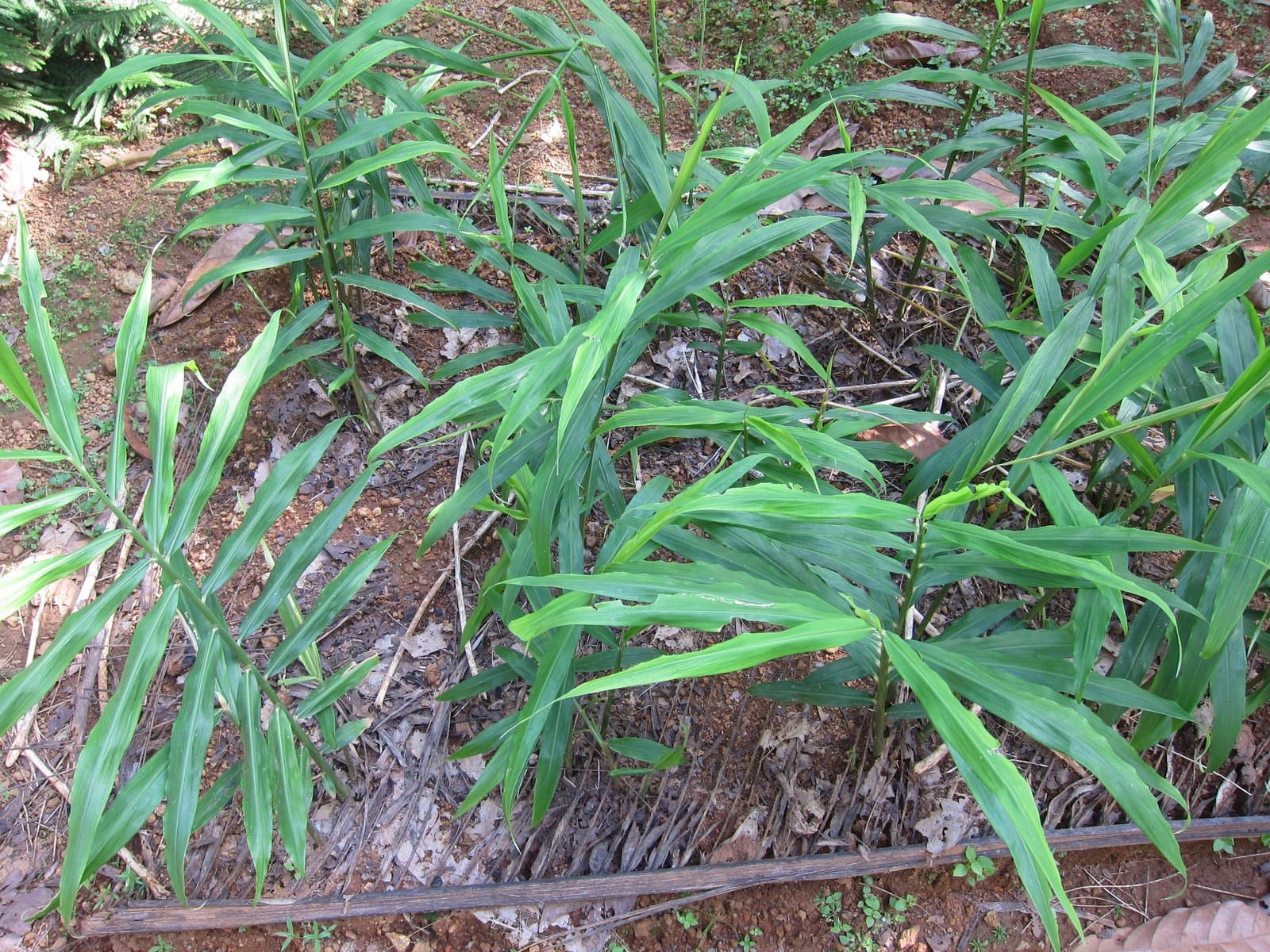
Ginger is a tropical herbaceous perennial grown for its aromatic rhizomes, one of the world's most widely traded spices. It forms pseudostems to about 3 ft with long, lance-shaped leaves; in consistently warm and humid conditions, pale yellow flowers with purple-edged petals emerge on separate shoots from the rhizome, though in temperate gardens it rarely flowers.
Native to tropical Asia, ginger requires warm soil, consistent moisture, and at least 8–10 months of frost-free growing to produce full-sized rhizomes. In zones below 8 it is grown as a seasonal crop: start rhizomes indoors before last frost, move outside once soil reaches 60°F, and lift rhizomes before frost returns. Rich, slightly acidic soil (pH 5.5–6.5) with heavy organic mulch holds moisture and moderates soil temperature, both critical to yield.
The rhizome contains gingerols, shogaols, and paradols. Clinical trials document effectiveness against pregnancy-related nausea, motion sickness, and postoperative nausea. Ginger has longstanding use in Ayurvedic and traditional Chinese medicine as a digestive aid and warming remedy. It is used fresh, dried, pickled, and candied across Asian, South Asian, Caribbean, and Western cuisines.
Root rot
Plants wilt, yellow, and stunt even in moist soil; lower stems and roots turn brown, soft, and mushy and the plant may collapse. Most common in heavy, wet, or poorly drained ground.
Improve drainage and stop overwatering, and never plant too deep. Lift and destroy badly affected plants along with the soil around the roots. Grow in raised or free-draining beds to prevent it returning.
Bacterial Soft Rot
Rhizomes turn mushy and foul-smelling; foliage yellows and pulls away easily at the base. Often follows borer damage or overly wet soil.
Cut away all soft tissue back to firm rhizome, let it dry, and dust the cut with sulfur. Improve drainage and avoid burying rhizomes. Destroy badly infected plants.
Fusarium wilt
Sudden wilting, brown streaks in stems, yellowing leaves. Affects sweet basil varieties most.
No cure. Remove and destroy plants. Do not replant in the same spot for 3+ years. Choose resistant varieties.
Fungal leaf spot
Brown or purplish spots on the leaves, often ringed with a yellow halo, that spread and merge in warm, humid, or wet weather; heavily spotted leaves yellow and drop early.
Pick off spotted leaves and clear fallen debris to remove overwintering spores. Improve air circulation by thinning, and water at the base so foliage dries quickly. If it persists, apply a copper- or sulfur-based fungicide at the first sign.
Ginger Bacterial Wilt
Rapid wilting and yellowing of lower leaves progressing up the pseudostem. Internal vascular tissue shows brown streaking. When a freshly cut stem is suspended in a glass of water, a milky or creamy bacterial ooze streams out - a diagnostic sign. Rhizomes may show internal browning and a foul odor.
No chemical cure once infection is established. Remove and destroy affected plants along with the surrounding 12 in of soil; do not compost. Source only certified disease-free seed rhizomes. Rotate planting sites on a minimum three-year cycle. Improve drainage and avoid working soil when wet to reduce spread.