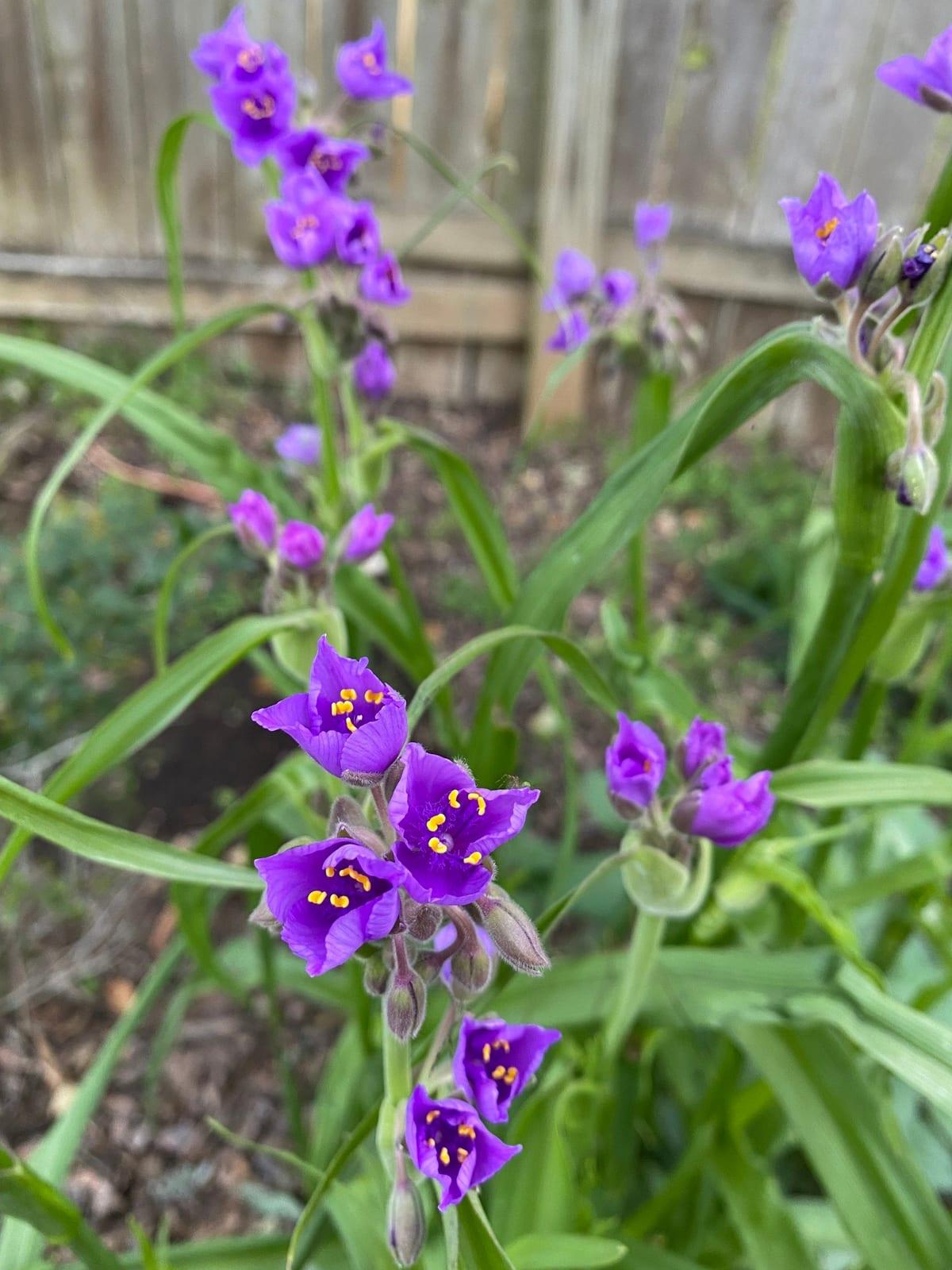
Tradescantia gigantea is a native perennial of Texas and Louisiana prairies and one of the tallest species in the genus. It produces clusters of three-petaled blue to violet flowers on upright, leafy stems and fits naturally into prairie-style gardens, naturalized meadows, or hot, sunny borders where few other tall perennials perform as reliably.
Plants establish quickly in sandy or loamy, well-drained soil and develop strong drought tolerance once roots are settled. Clumps spread gradually and self-seed modestly, filling in over time without becoming invasive. Native bumblebees and sweat bees work the flowers actively. Mulching the root zone with 2–3 inches of organic material reduces moisture loss through summer heat. Divide congested clumps every three to four years to sustain productivity.
Young shoots and flowers of Tradescantia species are edible and have been gathered as food by Indigenous peoples throughout the genus's native range.
Ecoregions:Eastern Temperate ForestsGreat Plains
These dates are for Zone 6b. Enter your ZIP to time every job to your own frost dates.
- cut · Any time in fallCut stems to near ground level after the first hard frost to tidy clumps and limit disease carryover.
- sow · Oct 30 - Nov 27Direct sow seed onto prepared, weed-free soil and leave it outdoors to cold stratify naturally; press it onto the surface rather than burying it.
- sow · Apr 10Set out divisions or transplants in prepared beds at or just after last frost date.
- watch · Any time in springCheck emerging stems in spring for aphid colonies; dislodge with a firm stream of water.
- buy · Aug 21 - Sep 4Order seed - about two months before sowing
- cut · Any time in summerRemove spent flower clusters promptly to encourage continued production through early summer.
- watch · Any time in summerMonitor crowns for fungal rot in areas with poor drainage or heavy summer rainfall.
Problems & troubleshooting
Common problems
Root rot
Plants wilt, yellow, and stunt even in moist soil; lower stems and roots turn brown, soft, and mushy and the plant may collapse. Most common in heavy, wet, or poorly drained ground.
Improve drainage and stop overwatering, and never plant too deep. Lift and destroy badly affected plants along with the soil around the roots. Grow in raised or free-draining beds to prevent it returning.
Fungal leaf spot
Brown or purplish spots on the leaves, often ringed with a yellow halo, that spread and merge in warm, humid, or wet weather; heavily spotted leaves yellow and drop early.
Pick off spotted leaves and clear fallen debris to remove overwintering spores. Improve air circulation by thinning, and water at the base so foliage dries quickly. If it persists, apply a copper- or sulfur-based fungicide at the first sign.
Rust
Orange to brown raised pustules on the undersides of leaves, with yellow spotting on the upper surface. Heavy infections cause leaves to yellow and drop.
Remove and destroy infected leaves. Avoid overhead watering and improve air circulation. Apply a sulfur or copper-based fungicide if it spreads. Clear plant debris in fall.