
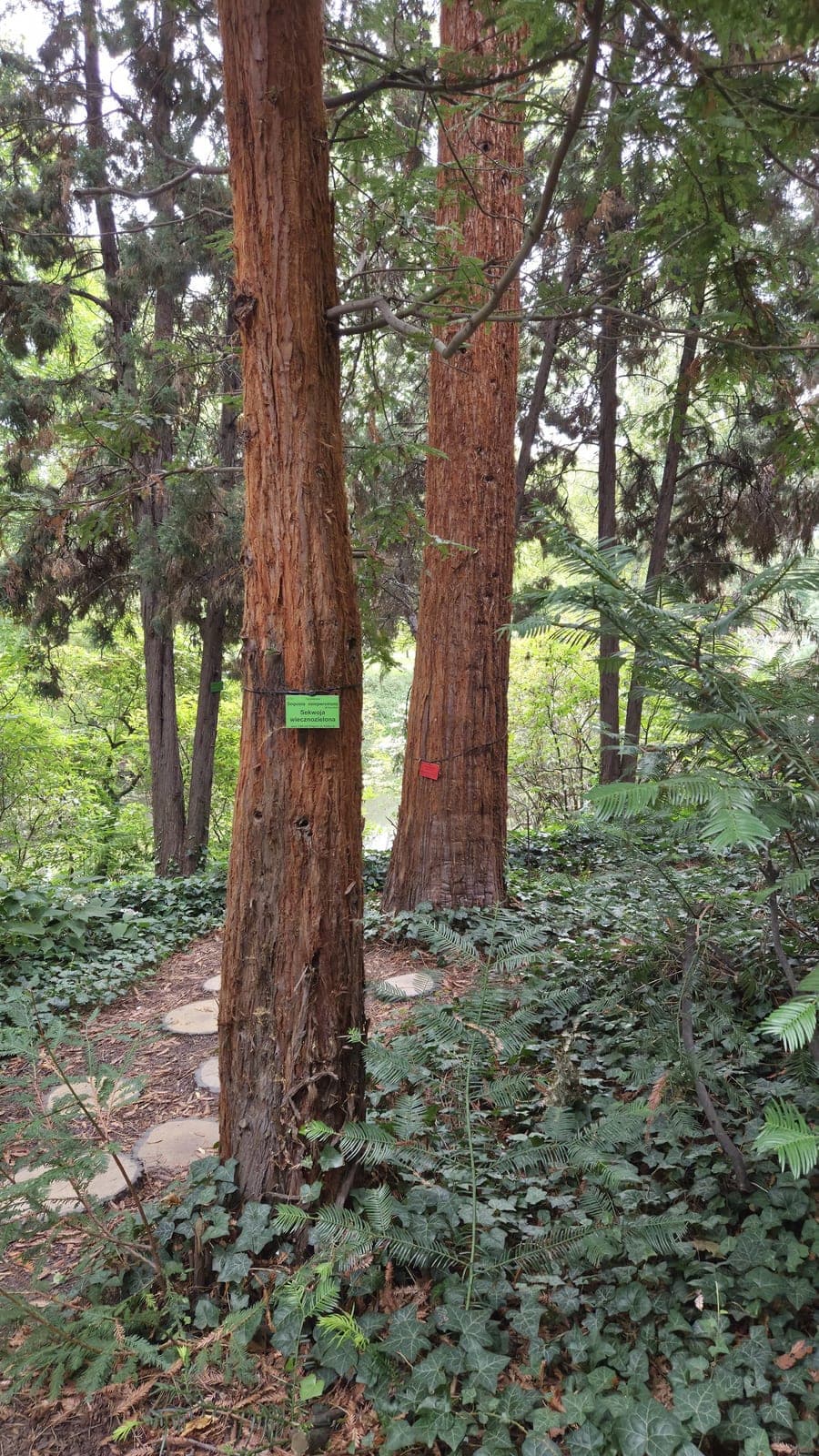
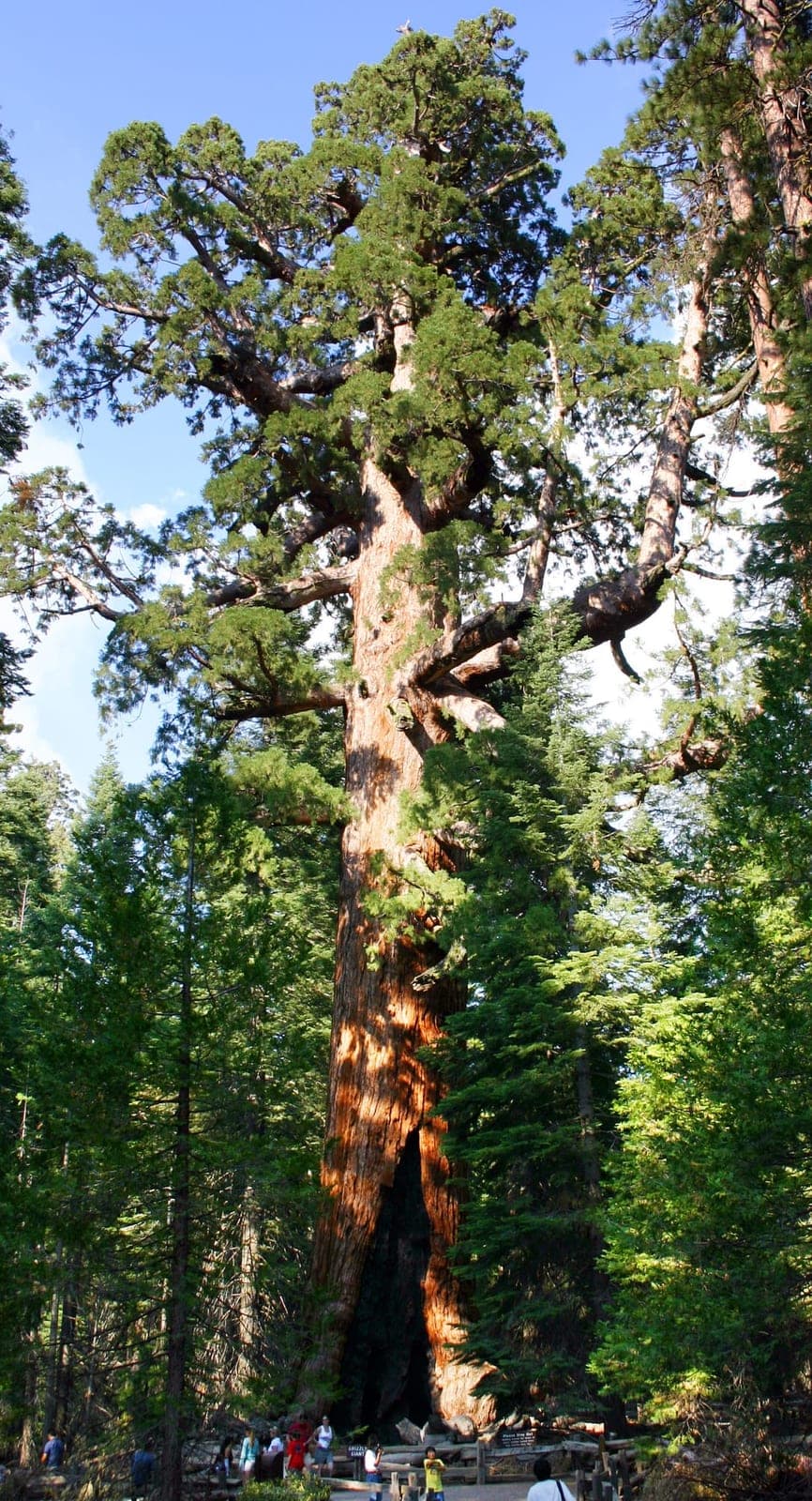
Giant sequoia is the largest tree on Earth by volume, native to roughly 75 isolated groves on the western slopes of California's Sierra Nevada at elevations between 4,600 and 7,000 feet. As a landscape specimen it functions as a multi-generational focal point, growing steadily to 60 feet or more within a few decades in cultivation and ultimately dominating the skyline of any property.
It performs best in deep, moist, well-drained soil in full sun. Standing water and compacted clay invite root rot and decline. Young trees need supplemental irrigation through dry summers; once established they become more drought-tolerant but still benefit from consistent soil moisture. Situate the tree well away from structures, utilities, and pavement - mature specimens exceed 100 feet in cultivation and root systems spread widely. A 3–4 inch mulch layer over the root zone retains moisture and suppresses competing vegetation. The tree tolerates cold well within its rated zones and has naturalized successfully across much of central and western Europe.
The spongy, fibrous bark - exceeding two feet in thickness on old-growth specimens - provides exceptional fire resistance. In native Sierra Nevada groves, periodic fire prepares the seedbed by clearing duff and opening the canopy to light. The trees provide nesting cavities and foraging habitat for numerous bird and small mammal species.
Ecoregions:Northwestern Forested MountainsMediterranean California
Phytophthora Root Rot
Wilting despite moist soil, yellowing leaves, stunted growth, and dark, decayed roots and crown tissue. Vines may collapse during hot weather.
Plant in well-draining soil and avoid waterlogging. Remove and destroy affected vines. Improve drainage with raised beds or amended soil and avoid overwatering.
Armillaria Root Rot
Thinning, yellowing canopy with progressive dieback; white, fan-shaped mycelial mats visible beneath bark at or just below the soil line; honey-colored mushroom clusters appearing at the trunk base or on surface roots in autumn.
No chemical cure exists. Improve drainage and avoid any injury to roots or trunk. Remove severely infected trees along with as much root material as possible. Do not replant susceptible species in the same spot.
Botryosphaeria Canker
Dark, sunken cankers on stems and major branches, most often occurring after drought stress or mechanical wounding. Bark peeled back from affected areas reveals brown, discolored wood beneath. Branch tips wilt and die back progressively inward.
Prune infected branches at least 6 inches below the visible canker margin using sterilized tools, and dispose of all cuttings away from the garden. Reduce plant stress by maintaining consistent irrigation during dry periods and avoiding bark wounds during maintenance. No curative fungicide is available; keeping plants vigorous is the primary preventive strategy.