
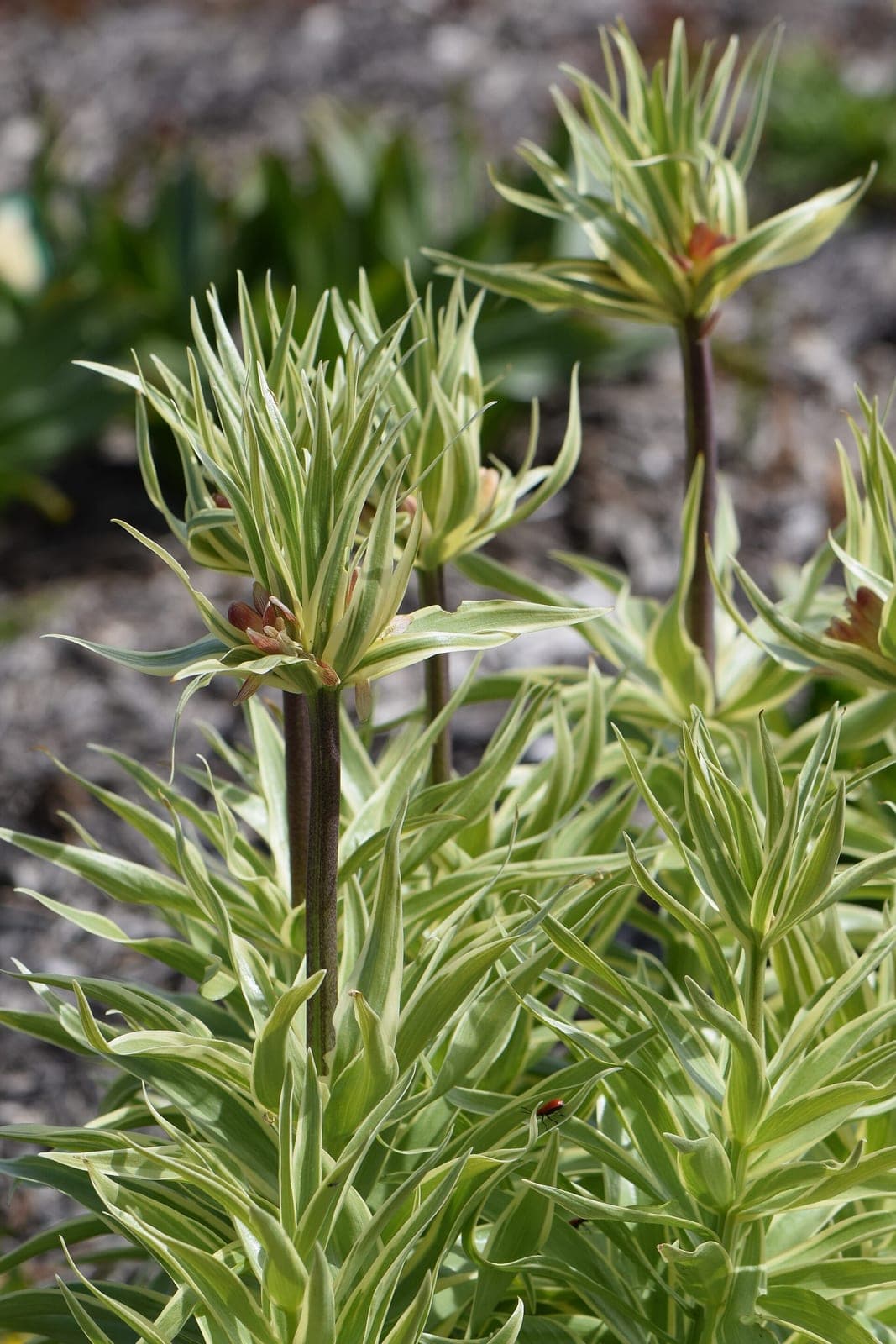
Fritillaria imperialis 'Aureomarginata' is a cultivar of Crown Imperial with leaves edged in gold. In mid- to late spring, stout stems reach 3–4 feet, topped with a whorl of pendant orange bells beneath a tuft of green-and-gold foliage. It is among the most architecturally striking spring bulbs available to temperate gardeners.
Native to rocky slopes and mountain meadows from Turkey through Iran to the Himalayas, Crown Imperial requires excellent drainage above all else. Plant bulbs on their sides in autumn to prevent water from pooling in the hollow crown. The plant enters full dormancy by midsummer; interplanting with later-emerging perennials prevents bare gaps in the border. Coarse grit beneath each bulb improves drainage in heavier soils. Preferred soil pH is 6.0–7.5, and bulbs need a dry summer rest period to perform reliably year to year.
The bulbs produce a strong musky odor that repels moles, voles, and other burrowing rodents, making Crown Imperial a practical perimeter planting around beds with more vulnerable bulbs. In early spring, the deep, nectar-rich pendant flowers attract bumblebees and other long-tongued pollinators before many competing sources are available.
Lily Basal Rot
Bulb scales brown and soften at the base; stems yellow, wilt, and collapse at or just above soil level. Pink or white fungal growth may be visible on rotted bulb tissue when dug.
Discard infected bulbs; do not replant lilies in the same location for at least three years. Improve soil drainage before replanting. Dust new bulbs with sulfur powder prior to planting. Avoid overwatering and soil compaction around the root zone.
Botrytis (grey mould)
Grey fuzzy mould on petals and stems, worst in cool wet conditions.
Remove affected parts immediately. Improve air circulation. Avoid overhead watering. Apply copper fungicide if severe.
Crown Rot
Lower leaves yellow and wilt; the base of the rosette turns brown and soft, sometimes with white fungal threads at the soil line. Plants collapse in wet conditions.
Remove and destroy affected plants. Improve drainage and avoid overhead watering. Do not mulch directly against the crown. Space plants for airflow and avoid replanting in the same wet spot.
Root rot
Plants wilt, yellow, and stunt even in moist soil; lower stems and roots turn brown, soft, and mushy and the plant may collapse. Most common in heavy, wet, or poorly drained ground.
Improve drainage and stop overwatering, and never plant too deep. Lift and destroy badly affected plants along with the soil around the roots. Grow in raised or free-draining beds to prevent it returning.
Bacterial Soft Rot
Rhizomes turn mushy and foul-smelling; foliage yellows and pulls away easily at the base. Often follows borer damage or overly wet soil.
Cut away all soft tissue back to firm rhizome, let it dry, and dust the cut with sulfur. Improve drainage and avoid burying rhizomes. Destroy badly infected plants.