
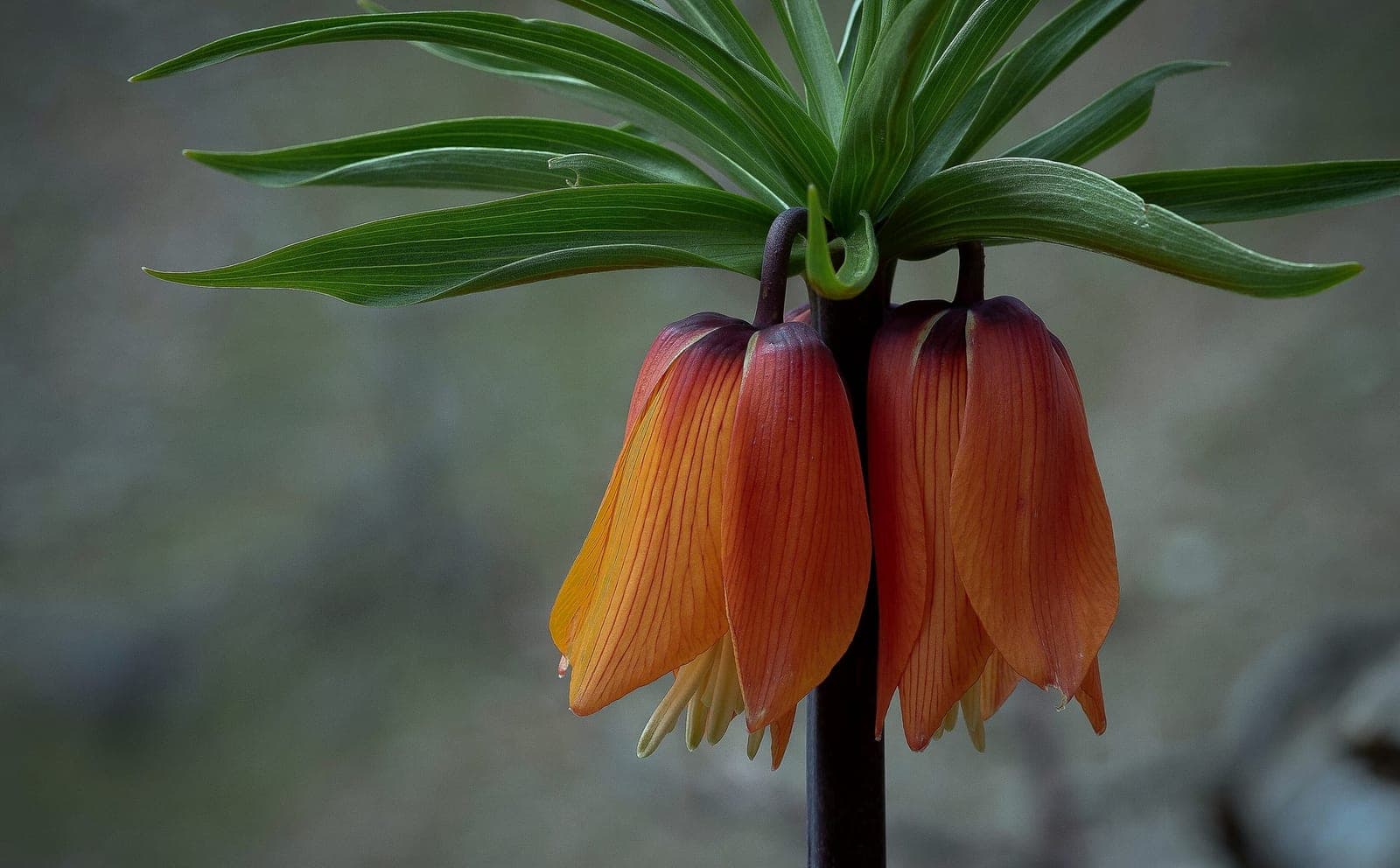
Crown Imperial is a tall spring bulb native to rocky hillsides and mountain meadows from Turkey east to the Himalayan foothills. It produces thick, leafy stems reaching 3–4 feet, topped by a ring of large pendant bells in orange, red, or yellow beneath a tuft of bright green bracts. The effect is strongly architectural, and few other spring bulbs approach it in stature or presence.
The whole plant, bulb included, gives off a strong musky smell often compared to a fox or skunk. Deer and rodents leave it alone, and it has a long reputation for keeping voles, moles and squirrels away from neighboring bulbs - that part is gardener lore rather than tested, but since the smell comes from the bulb itself it is there year-round, not only in bloom. Plant it among tulips and other bulbs rodents favor. Sharply drained soil is essential; the hollow top of each bulb collects standing water and rots, so tilting the bulb slightly on its side at planting is standard practice. A neutral to slightly alkaline pH of 6.5–7.5 suits it well. In zones 7b–8b, summer heat and humidity reduce long-term persistence; lifting bulbs once foliage has fully browned, then storing them cool and dry until fall, improves repeat performance.
Each pendant bell contains a visible pool of clear nectar that does not fall out even when the flower is inverted-a trait documented in botanical literature since the 17th century. In its native range the nectar feeds birds as well as bees.
Lily Basal Rot
Bulb scales brown and soften at the base; stems yellow, wilt, and collapse at or just above soil level. Pink or white fungal growth may be visible on rotted bulb tissue when dug.
Discard infected bulbs; do not replant lilies in the same location for at least three years. Improve soil drainage before replanting. Dust new bulbs with sulfur powder prior to planting. Avoid overwatering and soil compaction around the root zone.
Botrytis (grey mould)
Grey fuzzy mould on petals and stems, worst in cool wet conditions.
Remove affected parts immediately. Improve air circulation. Avoid overhead watering. Apply copper fungicide if severe.
Root rot
Plants wilt, yellow, and stunt even in moist soil; lower stems and roots turn brown, soft, and mushy and the plant may collapse. Most common in heavy, wet, or poorly drained ground.
Improve drainage and stop overwatering, and never plant too deep. Lift and destroy badly affected plants along with the soil around the roots. Grow in raised or free-draining beds to prevent it returning.