
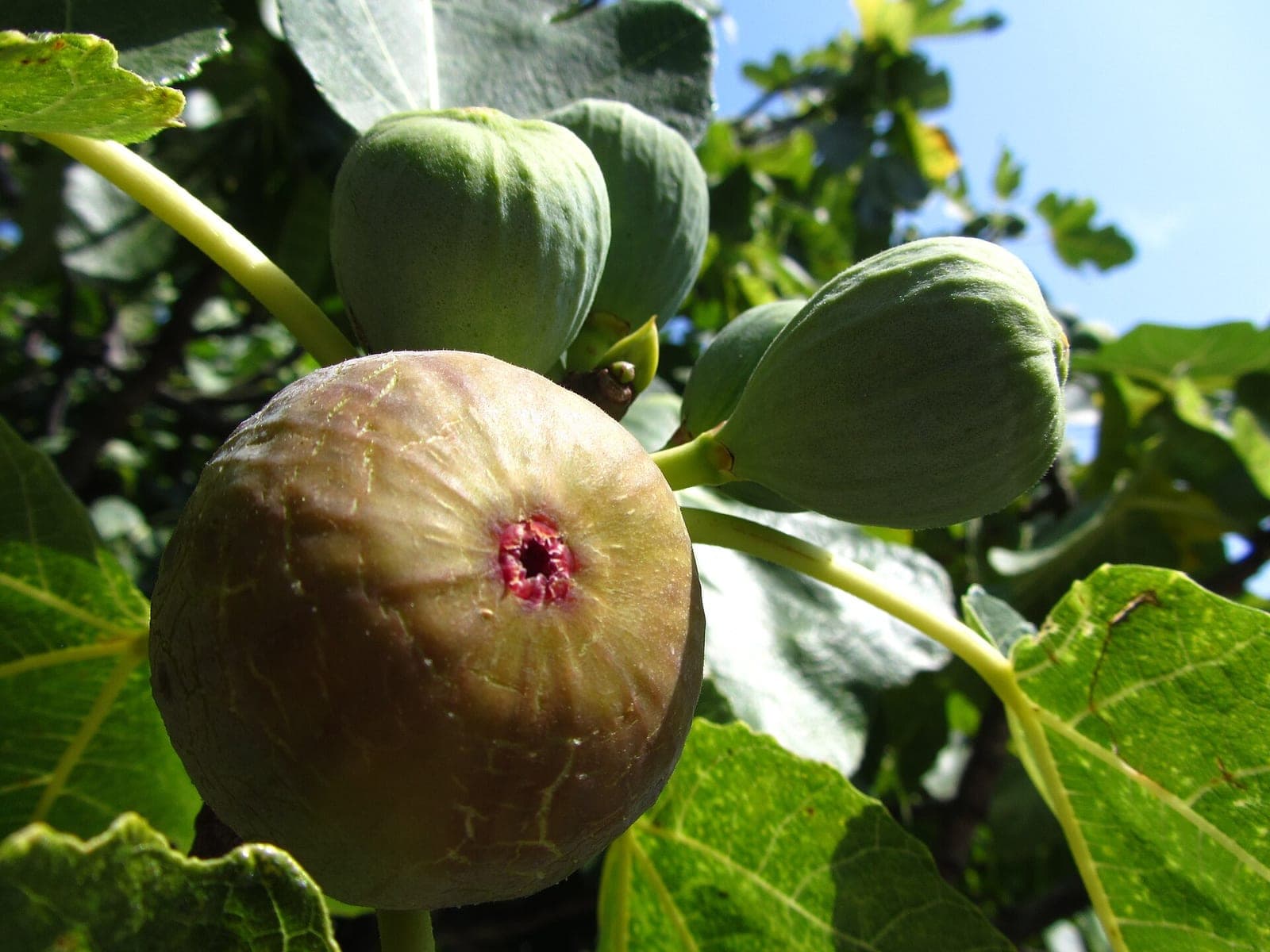
Kadota is one of the oldest fig cultivars in continuous cultivation, likely identical to the Italian 'Dottato' documented since Roman times and widely grown in California since the nineteenth century. It produces medium-to-large, yellow-green fruit with amber to violet flesh, low acidity, and mild sweetness that made it the dominant American canning fig through the twentieth century. It is self-fruitful and highly productive, requiring no pollinator.
Kadota sets two crops: a breba crop on the previous season's wood in early summer, and a heavier main crop on current-season growth in late summer through fall. The tree can reach 30 ft unpruned; regular dormant pruning keeps it manageable and directs energy into fruit. It suckers readily from the roots, and volunteers should be removed unless propagation is the goal. A thick organic mulch conserves moisture, moderates root temperature, and suppresses weeds. Preferred soil pH is 6.0–6.5 and the tree performs best in deep, well-drained loam, though it tolerates clay or sandy conditions better than most fruit trees. Though drought-tolerant once established, consistent irrigation during fruit development improves size and yield.
Ripe Kadota figs are eaten fresh, dried, canned, or made into preserves; the fruit is high in dietary fiber and has a documented mild laxative action. The milky latex in unripe fruit and stems contains ficin, a proteolytic enzyme with traditional use as a digestive aid and topical treatment; raw latex is a skin irritant and should be handled with care.
Growing figs? Read the fig guide - which type to buy, pruning and picking, winter protection for zones 7 and below, and growing in a pot, timed to your frost dates.Fig Endosepsis
Internal browning, softening, and souring of the fruit with little to no external sign in early stages. Cut fruit reveals a darkened, fermented, or foul-smelling interior. Caused by Fusarium moniliforme entering through the fruit's ostiole.
Remove and destroy all affected fruit immediately; do not compost. Harvest promptly as soon as fruit reaches full ripeness. Clear dropped fruit from beneath the tree regularly. The primary vector is the fig wasp, which is largely absent in zones 5–7, reducing transmission risk for northern plantings.
Fig Souring
Fruit softens prematurely from the inside and emits a fermented or vinegary odor. Internal flesh turns brown and watery. A pinkish or whitish ooze may appear at the ostiole. Affected fruit often drops before reaching full color.
Reduce irrigation as fruit nears maturity to limit moisture accumulation at the ostiole. Harvest promptly at peak ripeness and remove fallen or overripe fruit immediately. Control dried-fruit beetles and vinegar flies with yellow sticky traps and strict sanitation. Avoid overhead irrigation. Closed-eye cultivars such as Violette de Bordeaux have inherent resistance; maintain good ostiole closure by avoiding excessive nitrogen fertilization, which can cause oversized, more open fruit.
Rust
Orange to brown raised pustules on the undersides of leaves, with yellow spotting on the upper surface. Heavy infections cause leaves to yellow and drop.
Remove and destroy infected leaves. Avoid overhead watering and improve air circulation. Apply a sulfur or copper-based fungicide if it spreads. Clear plant debris in fall.
Root-Knot Nematode
Swollen galls on roots, poor vigor, wilting in heat, and reduced fruiting. Containers and sandy soils are more prone.
Use clean potting mix in containers. Avoid replanting in infested soil. Maintain plant vigor with mulch and steady watering. Solarize affected garden soil.
Mosaic virus
Yellowing, mottled, or distorted leaves. No cure - spread by aphids.
Remove and destroy infected plants. Control aphid populations to prevent spread. Do not propagate from infected tubers.
Fungal leaf spot
Brown or purplish spots on the leaves, often ringed with a yellow halo, that spread and merge in warm, humid, or wet weather; heavily spotted leaves yellow and drop early.
Pick off spotted leaves and clear fallen debris to remove overwintering spores. Improve air circulation by thinning, and water at the base so foliage dries quickly. If it persists, apply a copper- or sulfur-based fungicide at the first sign.