
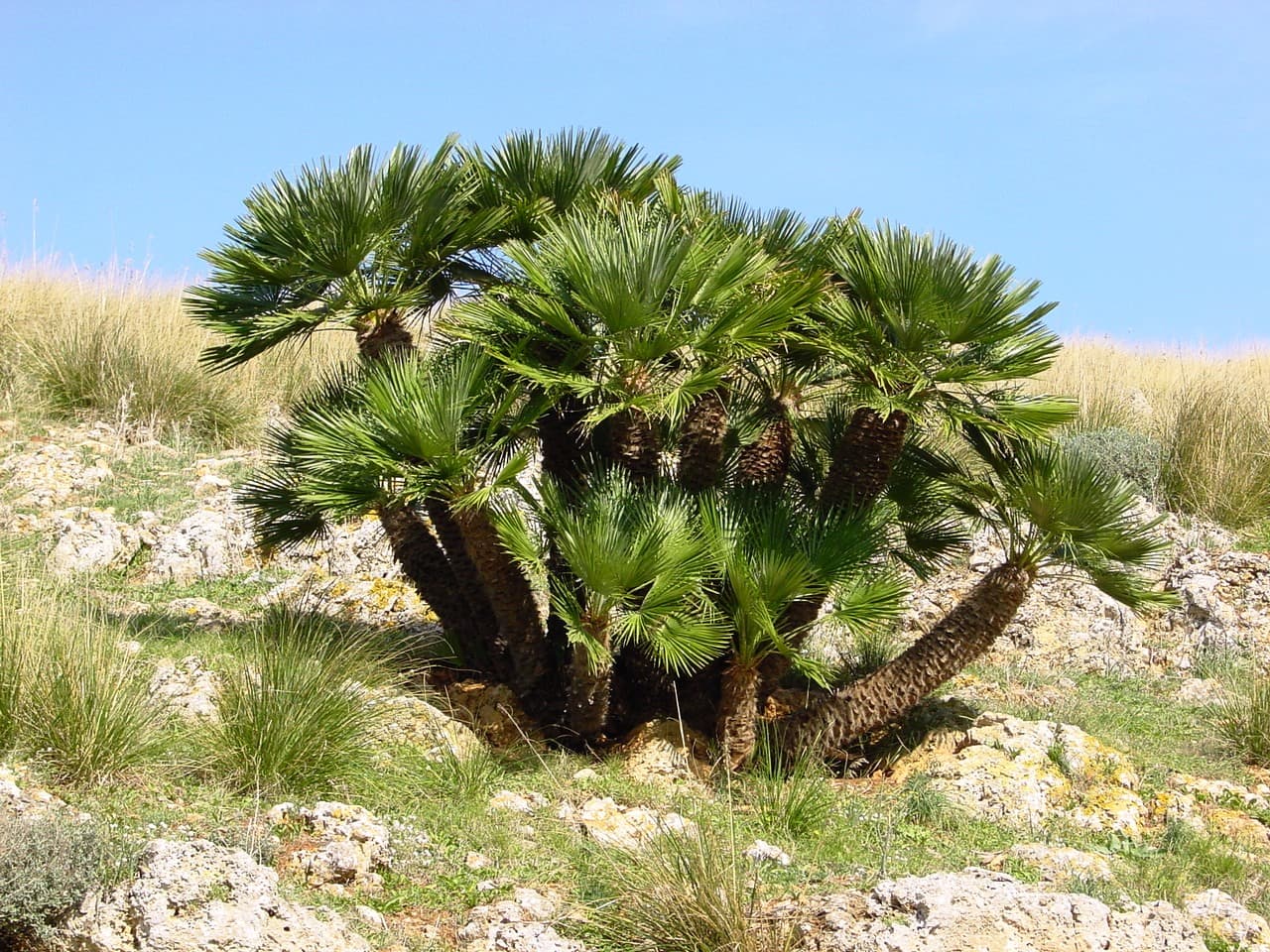
Chamaerops humilis is the only palm native to continental Europe, distributed across the western Mediterranean from Portugal to Libya. It forms a slow-growing, multi-stemmed clump with rigid, fan-shaped leaves on petioles armed with sharp teeth. Its cold tolerance and drought resistance make it one of the few palms suitable for temperate gardens at the cooler edge of the subtropical zone.
Growth averages 6–12 inches per year. The plant produces basal offsets freely; these can be removed to keep the clump tidy or left to develop a broad naturalistic colony. It tolerates rocky, poor, and alkaline soils and once established needs little supplemental water in dry-summer or Mediterranean-type climates. At the cooler end of its range, a 4–6 inch mulch ring over the root zone before the first hard freeze protects roots, and keeping the crown dry during prolonged wet-cold spells reduces crown rot risk.
Leaf fiber from this palm was historically harvested across North Africa and Iberia and woven into baskets, rope, brooms, and mats - a trade material called palmietto. A lipid-sterol extract from the fruit has been investigated in clinical trials for benign prostatic hyperplasia, with results reported comparable to saw palmetto preparations.
Palm Pink Rot
Water-soaked, darkening lesions at petiole bases and on lower fronds; pink to salmon-colored spore masses develop on affected tissue; fronds collapse and hang without detaching cleanly.
Cut out and dispose of infected fronds and petiole tissue. Avoid overhead irrigation and any practice that keeps the crown wet. Improve soil drainage around the trunk. Apply copper-based fungicide to the crown and petiole bases at first sign of infection and repeat every 2–3 weeks while warm, humid conditions persist.
Graphiola Leaf Spot (False Smut)
Small, hard, dark brown to black wart-like pustules erupt from both surfaces of fronds, often ringed by yellow halos. Heavily infected fronds yellow and die back prematurely.
Remove and destroy heavily infected fronds. Improve air circulation around the crown by pruning adjacent vegetation. Apply copper-based fungicide in spring as new growth emerges and repeat monthly through the growing season if infection pressure remains high.
Root rot
Plants wilt, yellow, and stunt even in moist soil; lower stems and roots turn brown, soft, and mushy and the plant may collapse. Most common in heavy, wet, or poorly drained ground.
Improve drainage and stop overwatering, and never plant too deep. Lift and destroy badly affected plants along with the soil around the roots. Grow in raised or free-draining beds to prevent it returning.