
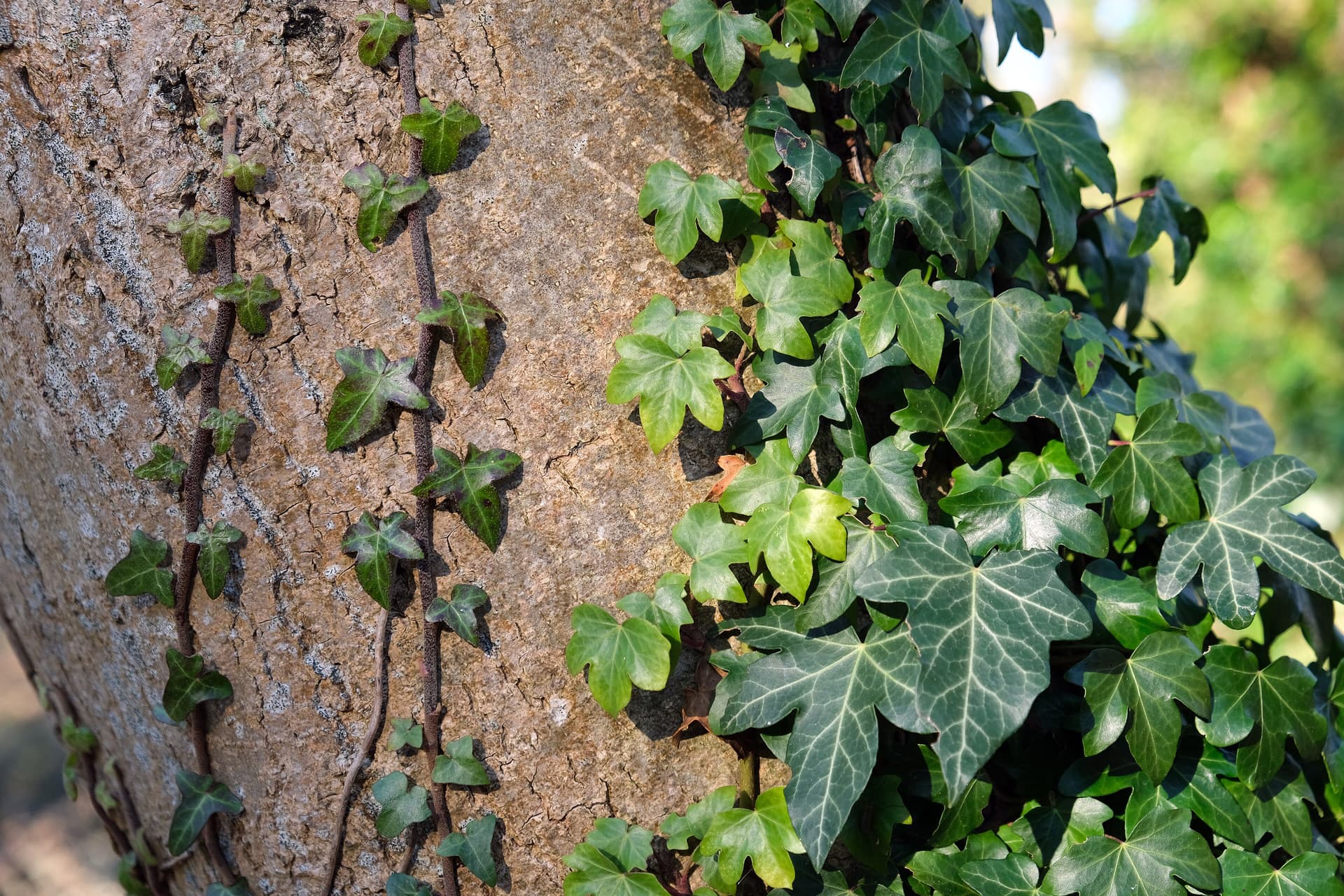
Hedera helix is an evergreen species that shifts from its familiar lobed-leaf, climbing juvenile phase into a distinct adult stage after reaching maturity on a structure. Adult stems develop unlobed, ovate to rhombic leaves, a self-supporting shrubby habit, and the capacity to flower and set fruit - traits entirely absent from juvenile growth. Cuttings taken from confirmed adult-phase stems root and grow on as compact shrubs without reverting to the climbing form, making them a propagation-stable option for shade gardeners.
Adult ivy tolerates deep shade, dry soil under established tree canopy, urban air pollution, and significant drought once rooted. In autumn it produces compact clusters of small yellow-green flowers that supply nectar to late-season pollinators; the blue-black drupes that follow persist into winter and are taken by thrushes and other birds. The juvenile climbing form of this species is invasive across much of the eastern United States and Pacific Northwest; the adult arborescent form sets seed less freely and poses considerably lower naturalization risk, though the distinction is worth stating when siting it near natural areas. Mulch around the base moderates soil moisture, and a slightly acidic to neutral pH suits it best.
Leaf extracts of Hedera helix standardized to hederacoside C are recognized in European traditional herbal medicine as an expectorant for acute bronchitis and productive cough; several preparations hold pharmaceutical marketing authorization in Germany and other EU countries. Raw leaves and berries are toxic if ingested and can cause contact dermatitis on sensitive skin.
Growing it indoors up north? See the indoor care guide - light, water, and the rhythm that keeps it flowering as a houseplant.Powdery mildew
White or grey powdery coating on leaves - usually starting on older growth in humid conditions or when nights cool.
Improve air circulation by thinning plants. Apply neem oil or potassium bicarbonate spray at first sign. Avoid overhead watering.
Botrytis (grey mould)
Grey fuzzy mould on petals and stems, worst in cool wet conditions.
Remove affected parts immediately. Improve air circulation. Avoid overhead watering. Apply copper fungicide if severe.
Root rot
Plants wilt, yellow, and stunt even in moist soil; lower stems and roots turn brown, soft, and mushy and the plant may collapse. Most common in heavy, wet, or poorly drained ground.
Improve drainage and stop overwatering, and never plant too deep. Lift and destroy badly affected plants along with the soil around the roots. Grow in raised or free-draining beds to prevent it returning.
Phytophthora Root Rot
Wilting despite moist soil, yellowing leaves, stunted growth, and dark, decayed roots and crown tissue. Vines may collapse during hot weather.
Plant in well-draining soil and avoid waterlogging. Remove and destroy affected vines. Improve drainage with raised beds or amended soil and avoid overwatering.
Alternaria blight
Brown circular spots with yellow halos on leaves; spreads rapidly in wet weather.
Remove affected leaves immediately. Water at the base only. A copper-based fungicide can help if caught early.
Cercospora Leaf Spot
Small round spots with tan or gray centers and reddish-purple borders on leaves. Spots merge in severe cases, causing leaves to brown and die back.
Remove infected leaves and avoid overhead watering. Space plants for airflow and rotate crops. Apply a copper-based fungicide if the infection spreads.