
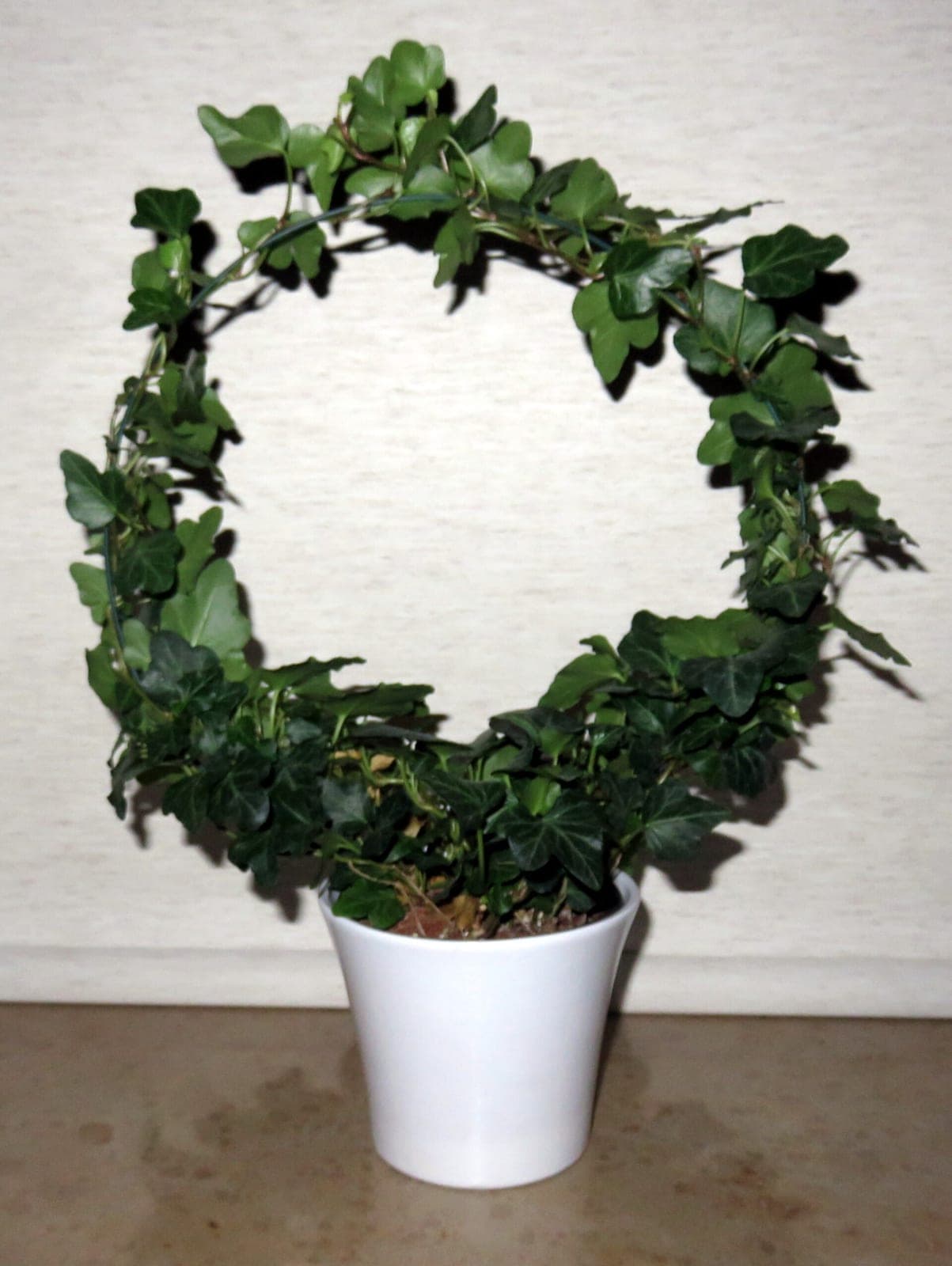
English Ivy (Hedera helix) is an evergreen trailing vine native to much of Europe and western Asia. Indoors, it is grown for its attractive lobed foliage, which comes in dozens of cultivars ranging from solid deep green to variegated cream and gold. Its long cascading stems make it a natural choice for hanging baskets, high shelves, and the tops of cabinets.
Ivy adapts well to average household humidity and performs best in bright indirect light, making it suitable for most rooms. The most common mistake is overwatering: the plant prefers to dry out slightly between waterings, and consistently soggy soil leads quickly to root rot and yellowing leaves. It also struggles in very warm, stuffy conditions, where poor air circulation encourages spider mites, the most persistent pest problem on indoor ivy.
Ivy stems produce small aerial rootlets in the wild that allow the plant to grip surfaces, but indoors it is best treated as a freely trailing plant. Trimming leggy stems back encourages bushier growth and provides material for new cuttings at the same time.
Bright indirect light in practice means a spot within a few feet of a window where direct sun is blocked or diffused by a sheer curtain or the angle of the room. In too little light, stems stretch and become spindly between nodes, and variegated cultivars tend to lose their patterning and revert toward solid green; direct afternoon sun can bleach or scorch the leaves.
Putting it outside for summer? See its garden profile - hardiness zones, bloom window, and when to bring it back in.Water once the top inch of soil is dry
Feed with a balanced houseplant fertiliser
Wipe the leaves to remove dust and check them over
Check leaf undersides for spider mites and mealybugs
Repot when roots crowd the pot
Trim trailing stems to keep it full and in bounds
Mites thrive in dry air: shower the foliage if the leaves look dusty or speckled