
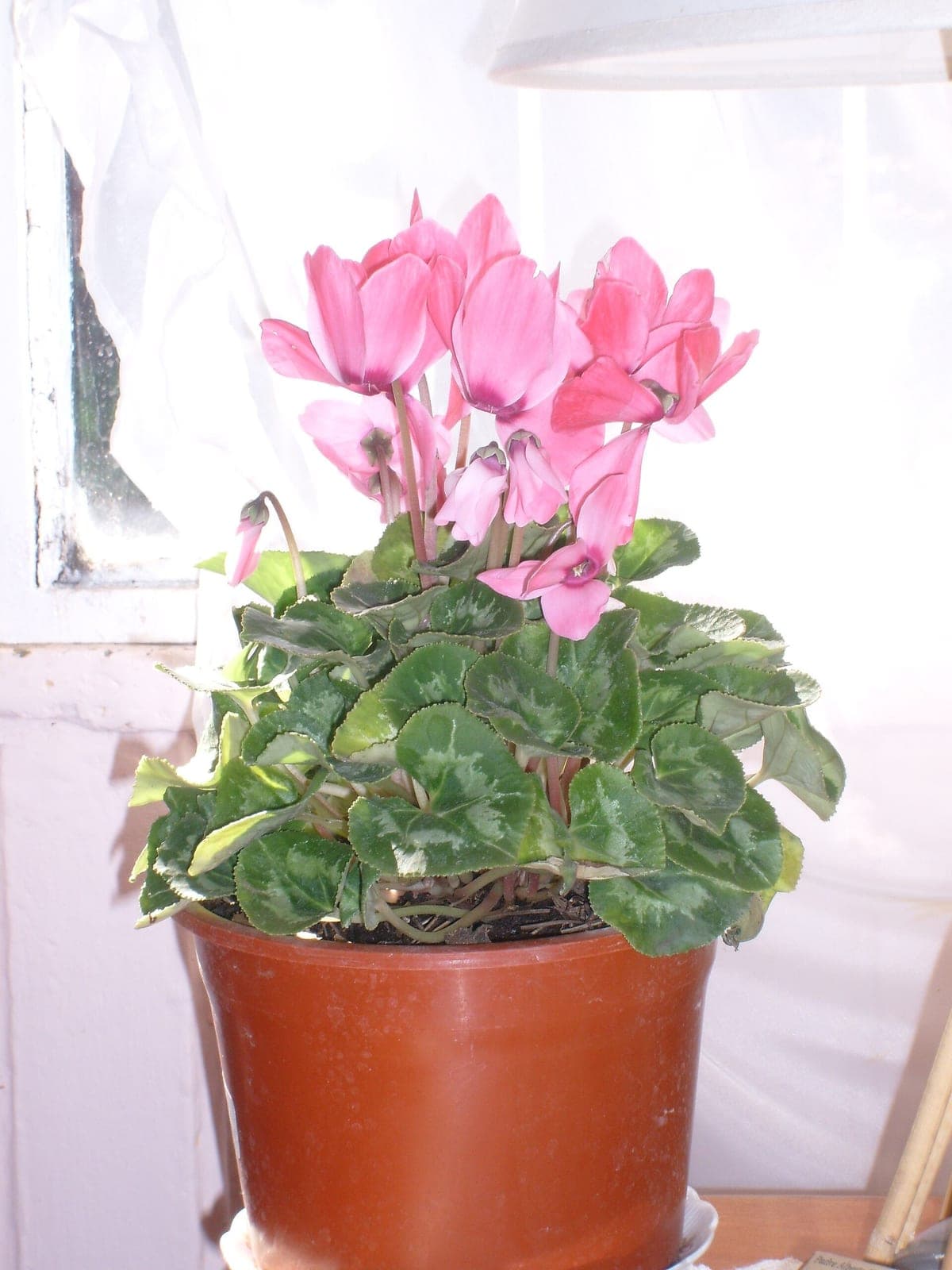
Florist's Cyclamen
To encourage bloom: A dry rest in a cool spot through summer, then fresh soil and watering in late summer, brings it back into flower.
Cool (55 to 65°F) and bright keeps the flowers coming; a warm room shortens the show. Twist spent stalks off at the base.
Florist's cyclamen (Cyclamen persicum) is a tuberous herbaceous perennial native to rocky hillsides and shrubland from south-central Turkey to the Levant. Cultivated varieties are widely sold as flowering houseplants during cooler months, prized for their swept-back blooms in shades of red, pink, white, and purple. The plant grows from a flattened tuber that sits at or just above the soil surface, and despite the name, it is not actually native to Persia.
The single most important thing to understand about cyclamen indoors is that it is a cool-temperature plant. It performs best between 50 and 65°F and declines quickly in warm living spaces above 68°F. Bright indirect light, consistently moist but never waterlogged soil, and good airflow keep it healthy through its blooming period. The most common mistake is warm placement - setting the pot near a radiator, heating vent, or in a hot south-facing window causes rapid wilting, yellowing leaves, and premature dormancy.
After flowering ends, cyclamen enters a natural dormancy: leaves yellow and die back, and watering should taper to almost nothing until new growth emerges. The tuber survives underground, and with the correct summer rest and a return to cooler conditions in fall, many plants will rebloom the following season.
Bright indirect light means good ambient brightness with no direct sun rays on the foliage - an east-facing windowsill or a position set back a few feet from a south or west window works well. Too little light reduces flower count and causes stems to stretch; direct sun scorches the leaves and speeds up wilting.
Water from below and let it drain; keep the crown dry
Feed with a diluted flowering-plant fertiliser while in bloom
Keep it cool and bright: warm rooms shorten flowering
Twist off spent flowers and yellowing leaves at the base
After blooming it goes dormant: stop watering, rest the tuber dry, then resume when new leaves appear