
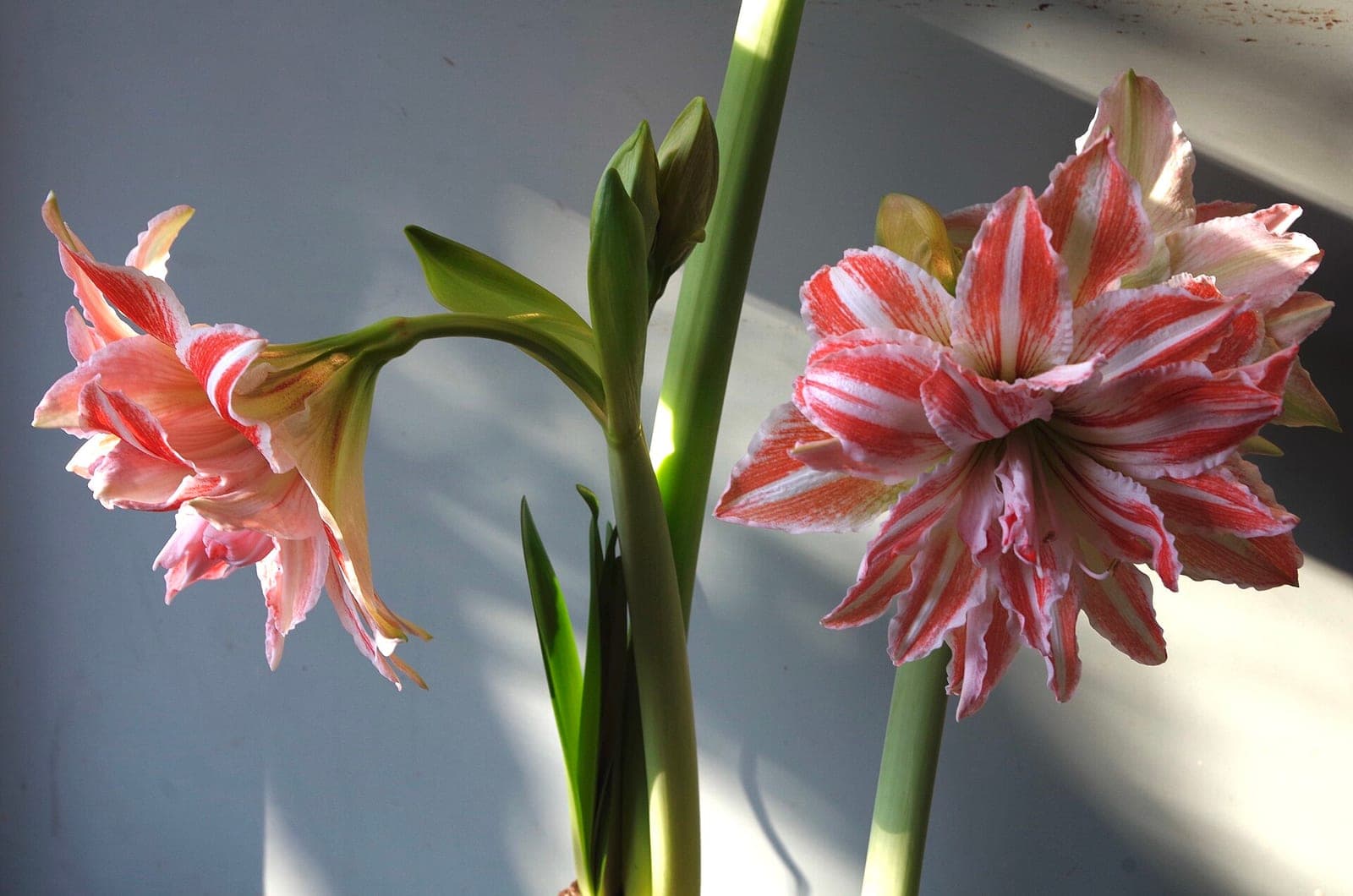
Amaryllis
To encourage bloom: Pot the bulb 6 to 8 weeks before you want flowers; after flowering, feed the leaves, then rest the bulb dry for 8 to 12 weeks and restart it each year.
Turn the pot every few days so the stalk grows straight, and stake it before the buds open.
Hippeastrum hybrids - sold nearly everywhere under the name amaryllis - are bulb-forming plants native to tropical and subtropical regions of the Americas, from Mexico to Argentina. The genus encompasses more than 116 species and over 600 named hybrids, with flowers ranging from classic deep red to white, salmon, pink, and multicolored stripes. People keep them indoors because they are straightforward to manage, take up little floor space, and reward basic care with some of the largest, most dramatic blooms of any common houseplant.
A bright spot near a window covers most of what this plant needs. Adequate light fuels the broad strap-like leaves and supports strong flowering; too little produces elongated, floppy growth and may prevent the bulb from storing enough energy to perform well. The single most common mistake indoors is overwatering: the large fleshy bulb rots quickly in consistently soggy soil, and water pooling around the neck of the bulb above the soil line accelerates that damage. Water only when the top inch or two of the growing medium has dried out, and make sure the pot drains completely. Average household temperature and humidity are adequate; no misting or supplemental humidity is needed.
Amaryllis bulbs go through a natural rest cycle. After the foliage matures, gradually reducing water and letting the leaves die back, then storing the pot in a cool, dim spot for eight to ten weeks, will prompt the bulb to produce a new flower stalk. Mature bulbs routinely produce smaller offset bulbs at their base; these can be separated and grown on as independent plants, though offsets may take a few years to reach blooming size.
Bright indirect light in practice means a spot within two to four feet of a large, unobstructed window where the plant receives strong ambient light but not prolonged direct midday sun, which can scorch the wide leaves. In too little light the foliage stretches and the bulb builds insufficient reserves to reflower.
Water once the top inch of soil is dry; avoid wetting the bulb
Feed with a balanced fertiliser after flowering to refill the bulb
Support the tall flower stalks with a stake
Repot into a snug pot with the top third of the bulb exposed
After flowering, cut the spent stalk and keep feeding the leaves; rest the bulb dry for 8–12 weeks before restarting