
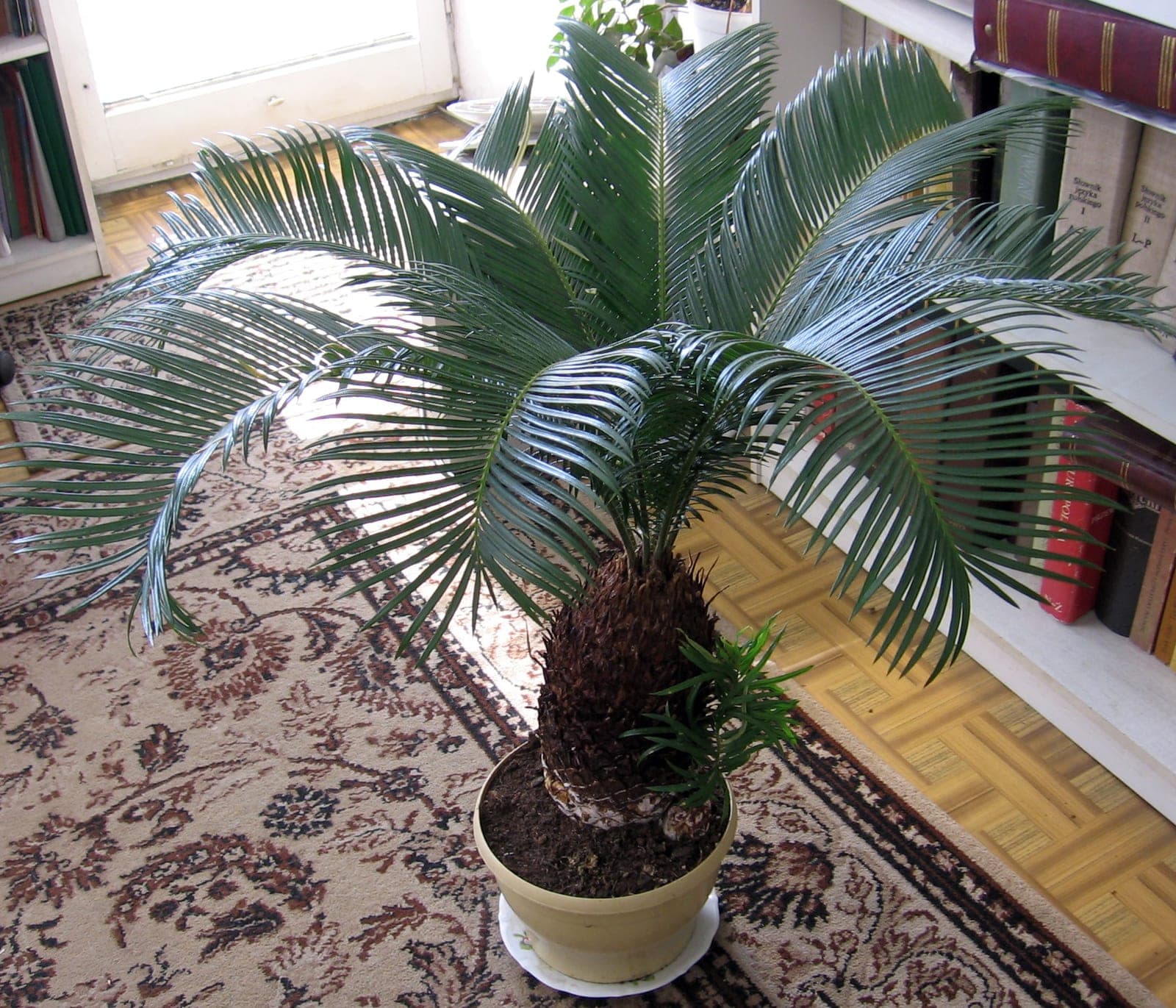
The Sago Palm (Cycas revoluta) is not a true palm - it is a cycad, a primitive gymnosperm native to southern Japan and the Ryukyu Islands, with relatives dating back more than 200 million years. Its arching, feathery fronds and stout, fiber-covered trunk give it a convincingly palm-like silhouette, which is the main reason the name stuck. People grow it indoors for its bold, sculptural presence and its general tolerance of low-maintenance routines.
Indoors, the plant needs bright indirect light to hold its deep green color and push out new fronds; in dim conditions it stalls, and the foliage gradually pales. Growth is slow under any circumstances - one flush of new fronds per year is typical. The most common mistake is overwatering. Cycas revoluta stores moisture in its thick trunk and is far more likely to decline from root rot than from drought, so watering on a fixed schedule rather than responding to actual soil dryness kills more specimens than neglect ever does.
New fronds emerge all at once in a single dramatic flush called a break, unfurling together over several weeks before hardening off to a stiff, glossy finish. Mature plants often produce offsets, called pups, at the base of the trunk; these can be separated and grown on as new plants once they reach a few inches in diameter.
Bright indirect light means a spot within a few feet of a south- or east-facing window where direct sun is filtered or arrives only briefly. Too little light causes the plant to stall completely and produce weak, pale fronds, while prolonged harsh direct sun through glass scorches the leaflets.
Water once the top inch or two of soil is dry
Feed with a balanced houseplant fertiliser
Wipe the fronds to remove dust, and rotate the pot
Check frond undersides for spider mites and scale
Repot when roots crowd the pot; palms dislike disturbance
Keep pets and children away: every part of this plant is highly toxic