
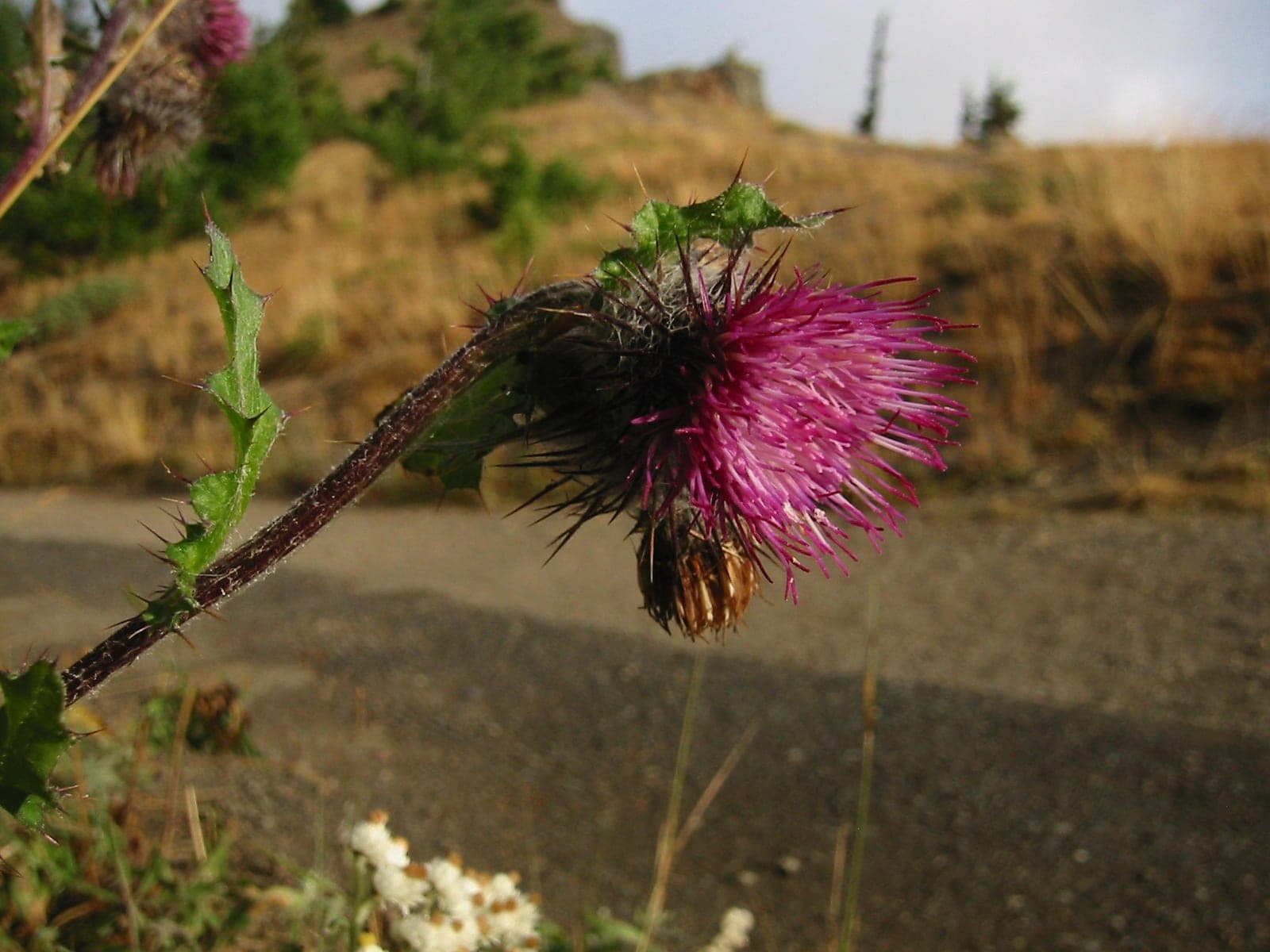
Cirsium edule is a native thistle of the Pacific Northwest, ranging from southeastern Alaska through British Columbia into Washington, Oregon, and locally to Idaho. It grows in moist meadows, forest openings, and along streams, reaching 3 to 6 feet tall with purple-pink flower heads that attract bees and butterflies. It is a documented larval host for both the mylitta crescent and the painted lady butterfly.
The plant behaves as a biennial or short-lived perennial, forming a spiny basal rosette in its first year before bolting and setting seed in its second. It self-seeds reliably where conditions suit it, making it practical for naturalizing in a Pacific Northwest native plant garden. Prefers consistently moist, well-drained soil at a mildly acidic to neutral pH and tolerates part shade under open tree canopies.
Indigenous peoples across its range consumed the roots raw or cooked, peeled and ate young stems raw much as one would eat celery, and used young leaves as cooked greens. It is among the better-documented edible native thistles of North America.
Ecoregions:Northwestern Forested MountainsMarine West Coast ForestNorth American Deserts
Rust
Orange to brown raised pustules on the undersides of leaves, with yellow spotting on the upper surface. Heavy infections cause leaves to yellow and drop.
Remove and destroy infected leaves. Avoid overhead watering and improve air circulation. Apply a sulfur or copper-based fungicide if it spreads. Clear plant debris in fall.
Powdery mildew
White or grey powdery coating on leaves - usually starting on older growth in humid conditions or when nights cool.
Improve air circulation by thinning plants. Apply neem oil or potassium bicarbonate spray at first sign. Avoid overhead watering.
Root rot
Plants wilt, yellow, and stunt even in moist soil; lower stems and roots turn brown, soft, and mushy and the plant may collapse. Most common in heavy, wet, or poorly drained ground.
Improve drainage and stop overwatering, and never plant too deep. Lift and destroy badly affected plants along with the soil around the roots. Grow in raised or free-draining beds to prevent it returning.