
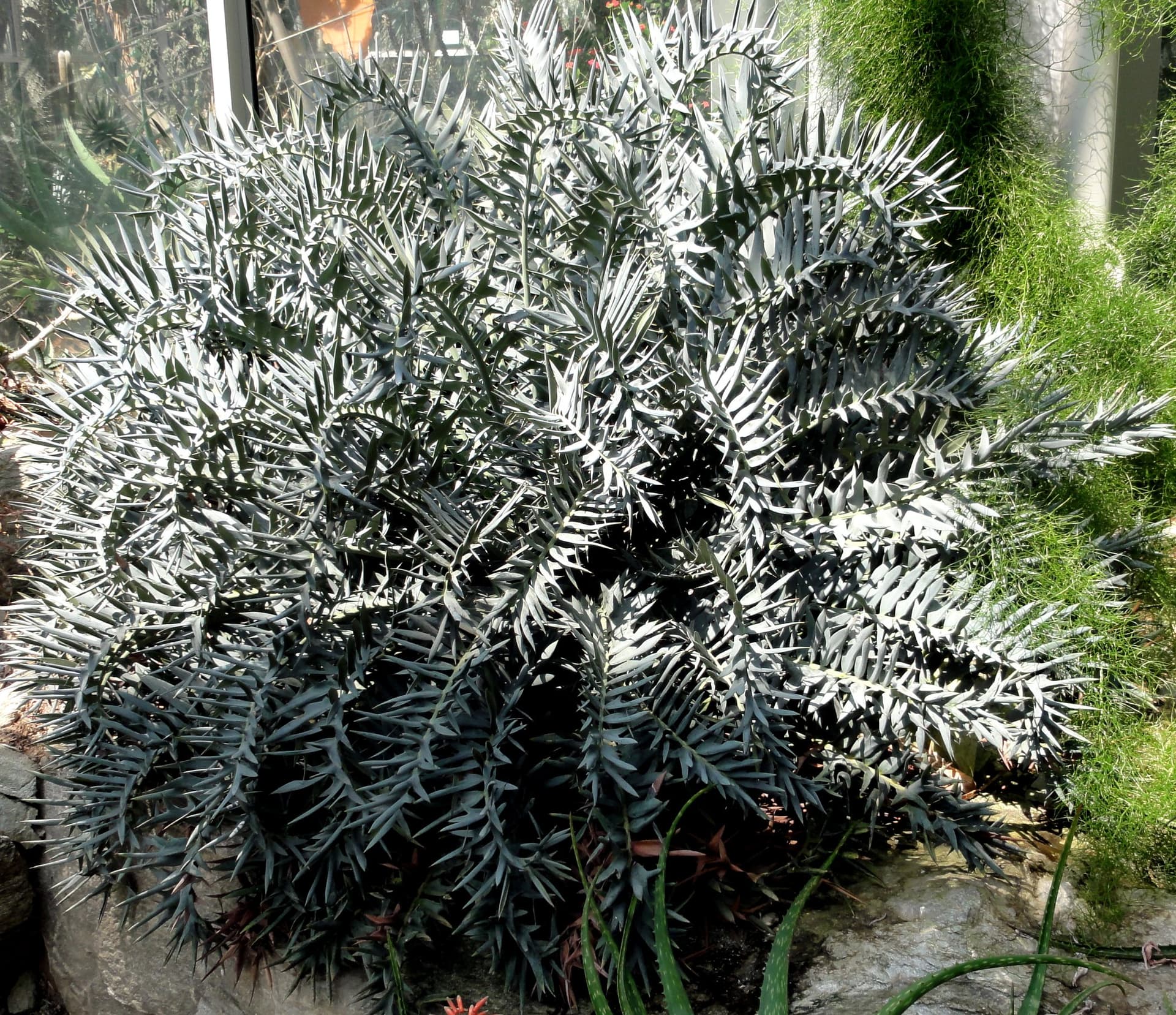
Encephalartos horridus is a small cycad native to exposed ridges and slopes of South Africa's Eastern Cape Province, where it grows in shallow soils under full sun in arid shrubland. It reaches roughly 3 ft tall and wide, with stiff, arching leaves of a distinctive blue-gray color that intensifies with sun exposure - a structural accent few garden plants can match. The species name horridus is Latin for 'bristly', reflecting the sharp, spiny leaflets.
In cultivation it demands conditions close to its native habitat: sharply drained, lean soil, full sun, and minimal irrigation once established. It is dioecious, with male and female cones borne on separate plants. Growth is extremely slow - a visible trunk may take a decade or more to form, and frond flushes occur only once or twice a year. The blue coloration is an adaptation to high UV exposure and drought, and it fades markedly in shade or with overwatering. Mulching around the crown with gravel rather than organic material helps replicate the stony habitat and discourages moisture retention.
All parts of the plant are toxic to humans and animals, containing cycasin and related glycosides capable of causing liver damage and neurological harm. E. horridus is listed on CITES Appendix I due to severe population decline from poaching for the ornamental trade; only nursery-propagated stock should be purchased.
Phytophthora Root Rot
Wilting despite moist soil, yellowing leaves, stunted growth, and dark, decayed roots and crown tissue. Vines may collapse during hot weather.
Plant in well-draining soil and avoid waterlogging. Remove and destroy affected vines. Improve drainage with raised beds or amended soil and avoid overwatering.
Crown Rot
Lower leaves yellow and wilt; the base of the rosette turns brown and soft, sometimes with white fungal threads at the soil line. Plants collapse in wet conditions.
Remove and destroy affected plants. Improve drainage and avoid overhead watering. Do not mulch directly against the crown. Space plants for airflow and avoid replanting in the same wet spot.