
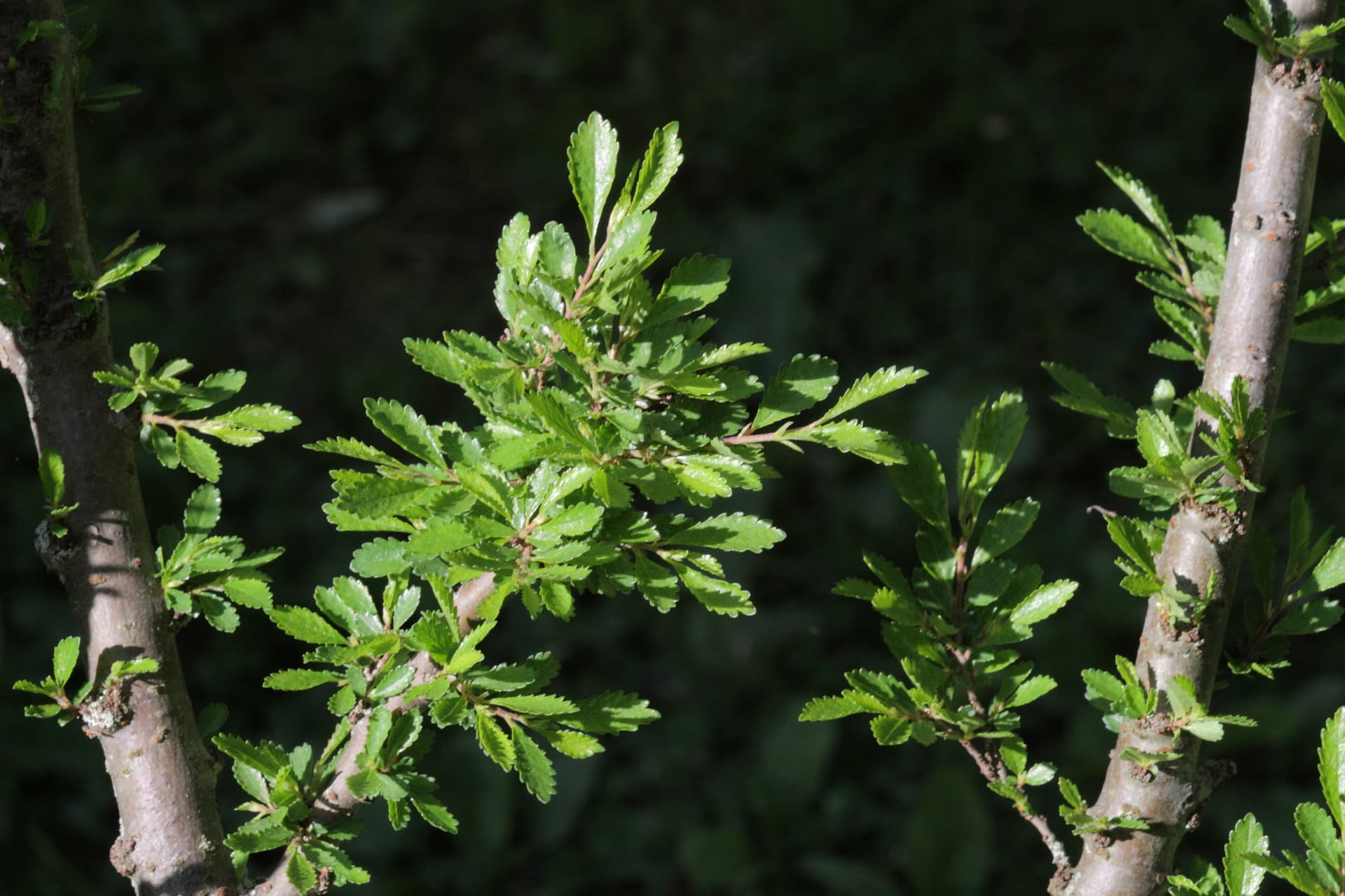
Ulmus parvifolia 'Hokkaido' is a dwarf cultivar of Chinese elm selected for very slow growth and diminutive leaves roughly half the size of the standard species. In landscape use it typically reaches 2–4 ft tall and wide over many years, making it one of the few genuine dwarf trees suited to rock gardens, raised beds, stone troughs, and containers. The parent species is distinguished by ornamental exfoliating bark that peels in irregular plates to reveal cream, orange, brown, and gray layers beneath.
'Hokkaido' carries the species-level resistance to Dutch elm disease and elm leaf beetle that makes Chinese elm a reliable choice where other elms fail. It tolerates a broad range of soils, from heavy clay to sandy loam, provided drainage is adequate, and accepts a pH between 5.5 and 8.0. In zones 5–7 it drops all leaves in autumn; in zones 8–9 foliage may persist through mild winters. A 2–3 inch mulch layer around the root zone speeds establishment and moderates summer soil temperature.
Fungal leaf spot
Brown or purplish spots on the leaves, often ringed with a yellow halo, that spread and merge in warm, humid, or wet weather; heavily spotted leaves yellow and drop early.
Pick off spotted leaves and clear fallen debris to remove overwintering spores. Improve air circulation by thinning, and water at the base so foliage dries quickly. If it persists, apply a copper- or sulfur-based fungicide at the first sign.
Verticillium Wilt
Lower leaves yellow and wilt, often on one side of the plant, with brown streaking in the stem and crown tissue when cut open. Plants are stunted and decline over the season.
Remove and destroy affected plants. Avoid planting in soil that has grown infected tomatoes, peppers, or other susceptible crops. Rotate beds and improve drainage; there is no cure once a plant is infected.
Root rot
Plants wilt, yellow, and stunt even in moist soil; lower stems and roots turn brown, soft, and mushy and the plant may collapse. Most common in heavy, wet, or poorly drained ground.
Improve drainage and stop overwatering, and never plant too deep. Lift and destroy badly affected plants along with the soil around the roots. Grow in raised or free-draining beds to prevent it returning.