
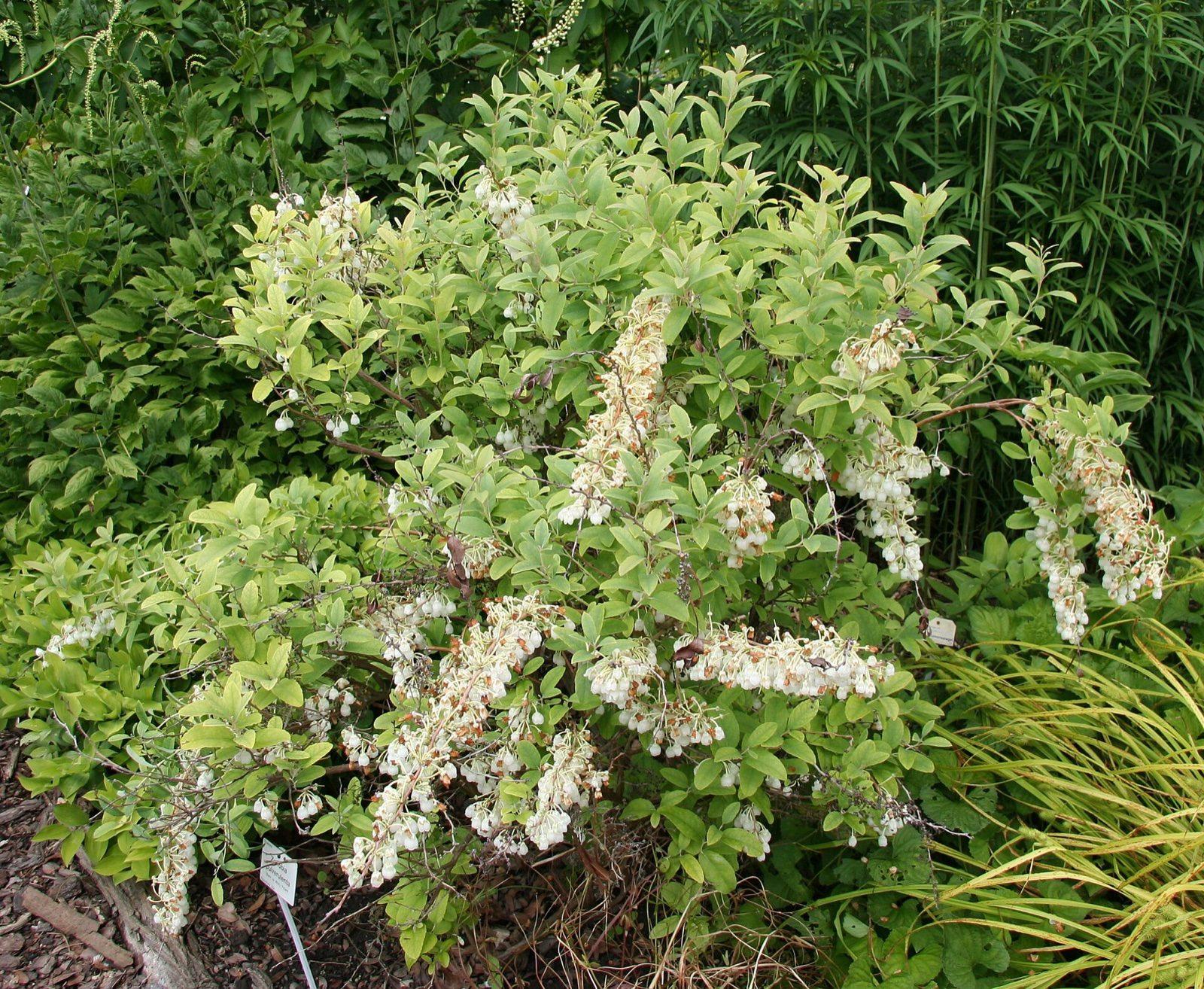
Zenobia pulverulenta is a deciduous to semi-evergreen native shrub in the heath family, endemic to the coastal plain of Virginia and the Carolinas. Its species name refers to the pronounced glaucous, blue-gray waxy coating on its leaves; the common name honeycup describes the urn-shaped white flowers. In late spring to early summer it produces dense clusters of fragrant white bells with an anise-honey scent, making it one of the more distinctive natives available for acid-soil gardens.
In the wild it grows in pocosins, pine savannas, and wetland margins on sandy, acidic, nutrient-poor soils. It performs best in consistently moist to wet, acidic soil (pH 4.5–6.0) in part shade, though it tolerates full sun where moisture is reliable. Glaucous intensity on the foliage is strongest in full sun; shade reduces it. The shrub spreads slowly by suckers and can form small colonies over time. Fall foliage turns reddish orange before leaf drop. It attracts native bees and other pollinators at peak flowering.
Ecoregions:Eastern Temperate Forests
These dates are for Zone 6b. Enter your ZIP to time every job to your own frost dates.
- buy · Feb 13 - Feb 27Buy plants - about two months before planting out
- plant · Apr 10 - May 1Plant nursery stock in acidic, humus-rich soil and mulch with pine needles or shredded leaves
- cut · Jun 12Prune right after flowering; cut a few of the oldest stems to the ground to keep new, blue-leaved shoots coming
- watch · Any time in summerWater in dry spells; it comes from wet pine savannas and sulks in drought
Problems & troubleshooting
Common problems
Phytophthora Root Rot
Wilting despite moist soil, yellowing leaves, stunted growth, and dark, decayed roots and crown tissue. Vines may collapse during hot weather.
Plant in well-draining soil and avoid waterlogging. Remove and destroy affected vines. Improve drainage with raised beds or amended soil and avoid overwatering.
Botryosphaeria Canker
Dark, sunken cankers on stems and major branches, most often occurring after drought stress or mechanical wounding. Bark peeled back from affected areas reveals brown, discolored wood beneath. Branch tips wilt and die back progressively inward.
Prune infected branches at least 6 inches below the visible canker margin using sterilized tools, and dispose of all cuttings away from the garden. Reduce plant stress by maintaining consistent irrigation during dry periods and avoiding bark wounds during maintenance. No curative fungicide is available; keeping plants vigorous is the primary preventive strategy.
Fungal leaf spot
Brown or purplish spots on the leaves, often ringed with a yellow halo, that spread and merge in warm, humid, or wet weather; heavily spotted leaves yellow and drop early.
Pick off spotted leaves and clear fallen debris to remove overwintering spores. Improve air circulation by thinning, and water at the base so foliage dries quickly. If it persists, apply a copper- or sulfur-based fungicide at the first sign.