
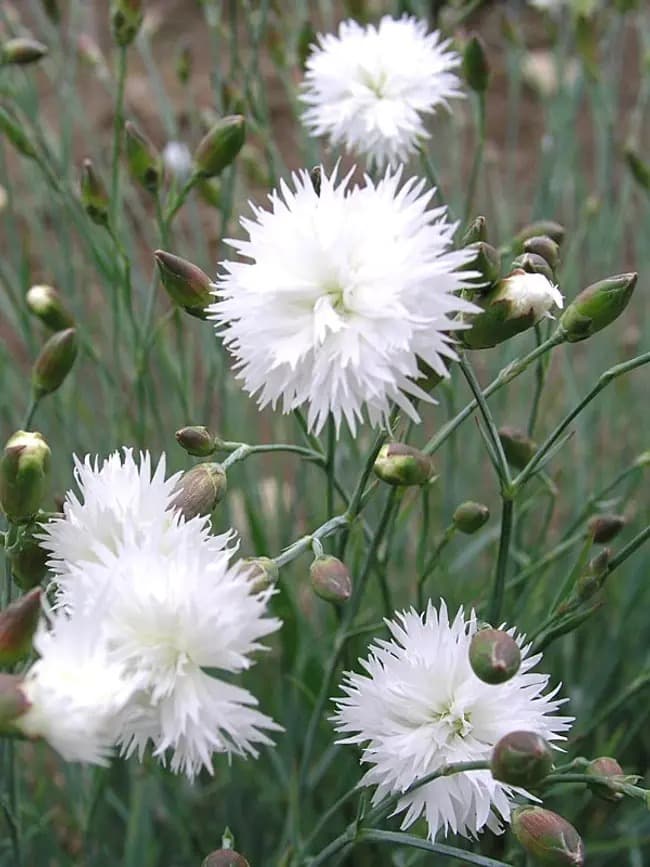
Dianthus plumarius 'Itsaul White' is a cottage pink cultivar that forms a low, spreading mat of blue-gray, grass-like foliage topped with pure white, fringed flowers carrying a strong clove fragrance. It performs well at border edges, in rock gardens, and on slopes where drainage is sharp, and holds its foliage through winter in milder zones.
Excellent drainage is the primary requirement; plants in wet soil, especially over winter, are far more likely to rot than to suffer cold damage. Neutral to slightly alkaline soil and lean fertility produce the tightest foliage and the best flowering. Shearing by one-third immediately after the main late-spring flush tidies the plant and usually triggers a lighter secondary round of flowers in late summer. Clumps tend to die out at the center after three to four years and should be divided or replaced with rooted stem cuttings.
The petals are edible with a sweet, spicy flavor and are used as garnishes, in salads, and to flavor desserts and liqueurs. The white petal bases should be removed before use as they are bitter.
Fusarium wilt
Sudden wilting, brown streaks in stems, yellowing leaves. Affects sweet basil varieties most.
No cure. Remove and destroy plants. Do not replant in the same spot for 3+ years. Choose resistant varieties.
Crown Rot
Lower leaves yellow and wilt; the base of the rosette turns brown and soft, sometimes with white fungal threads at the soil line. Plants collapse in wet conditions.
Remove and destroy affected plants. Improve drainage and avoid overhead watering. Do not mulch directly against the crown. Space plants for airflow and avoid replanting in the same wet spot.
Rust
Orange to brown raised pustules on the undersides of leaves, with yellow spotting on the upper surface. Heavy infections cause leaves to yellow and drop.
Remove and destroy infected leaves. Avoid overhead watering and improve air circulation. Apply a sulfur or copper-based fungicide if it spreads. Clear plant debris in fall.
Botrytis (grey mould)
Grey fuzzy mould on petals and stems, worst in cool wet conditions.
Remove affected parts immediately. Improve air circulation. Avoid overhead watering. Apply copper fungicide if severe.
Root rot
Plants wilt, yellow, and stunt even in moist soil; lower stems and roots turn brown, soft, and mushy and the plant may collapse. Most common in heavy, wet, or poorly drained ground.
Improve drainage and stop overwatering, and never plant too deep. Lift and destroy badly affected plants along with the soil around the roots. Grow in raised or free-draining beds to prevent it returning.