
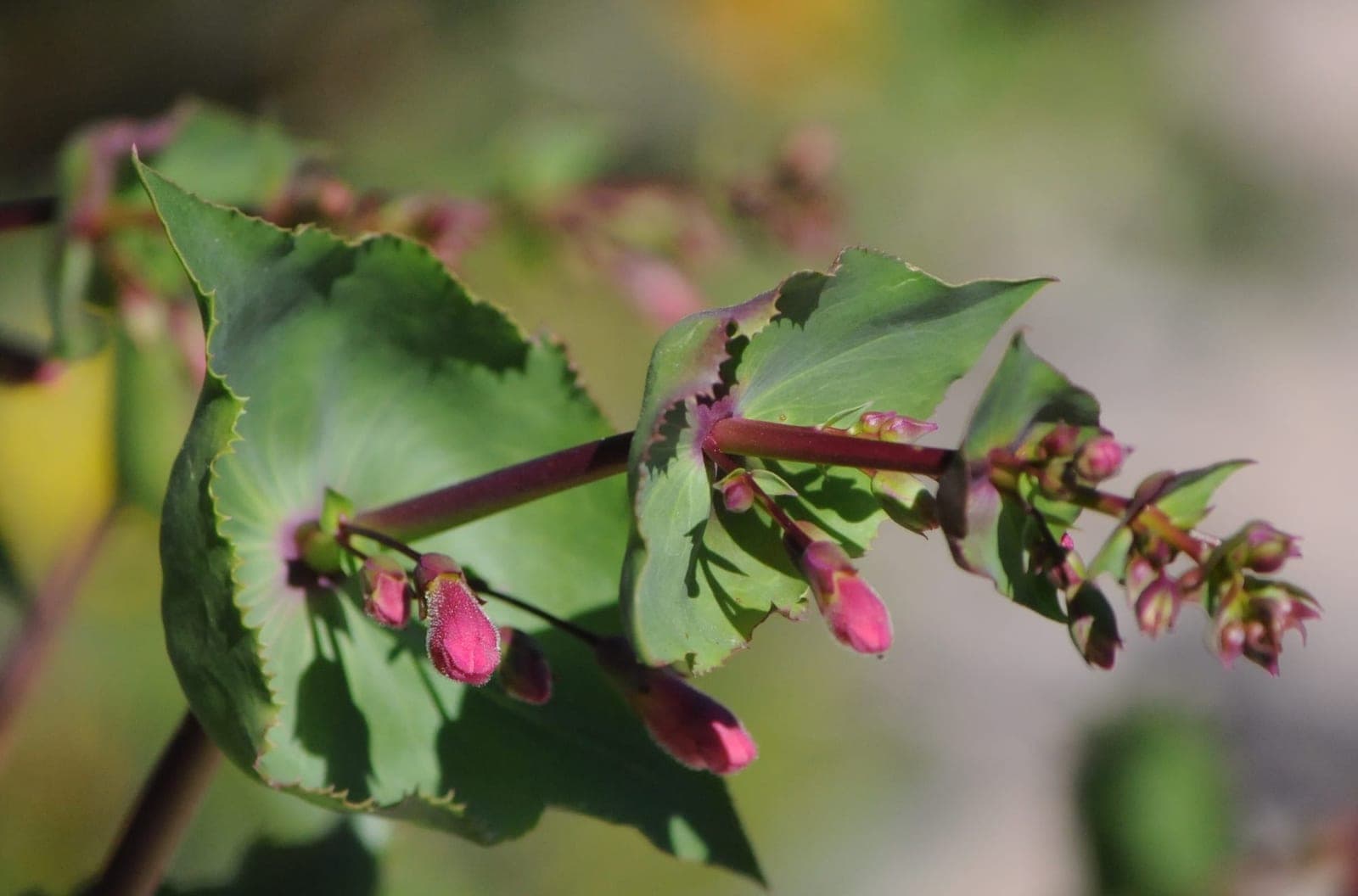
Desert penstemon is a native shrubby perennial of the southwestern United States, found in sandy washes, desert scrub, and plateau woodlands across Arizona, New Mexico, Utah, Nevada, and adjacent Baja California. It produces reddish-pink tubular flowers on erect stems reaching about 1 meter, making it a productive plant in dry gardens and a reliable hummingbird plant from spring into early summer.
Its most distinctive structural trait is the connate-perfoliate leaf arrangement: opposite pairs of leaves fuse at their bases, encircling the stem as a single disc - an adaptation that reduces water loss and gives the plant a sculptural quality. Sharp drainage is the overriding requirement; clay soils and overwatering are the primary causes of early plant death. In gardens near the cold end of its range, a south-facing position and a gravel mulch around the crown improve winter survival. Avoid rich or heavily amended soils, which promote lush, weak growth prone to collapse.
The tubular flowers are sized and shaped for hummingbirds, which are its primary long-distance pollinators. Native specialist bees in the genera Osmia and Anthophora also visit heavily during the spring flowering period, giving the plant significant value in pollinator habitat plantings.
Ecoregions:North American DesertsSouthern Semi-Arid HighlandsTemperate Sierras
Powdery mildew
White or grey powdery coating on leaves - usually starting on older growth in humid conditions or when nights cool.
Improve air circulation by thinning plants. Apply neem oil or potassium bicarbonate spray at first sign. Avoid overhead watering.
Root rot
Plants wilt, yellow, and stunt even in moist soil; lower stems and roots turn brown, soft, and mushy and the plant may collapse. Most common in heavy, wet, or poorly drained ground.
Improve drainage and stop overwatering, and never plant too deep. Lift and destroy badly affected plants along with the soil around the roots. Grow in raised or free-draining beds to prevent it returning.
Crown Rot
Lower leaves yellow and wilt; the base of the rosette turns brown and soft, sometimes with white fungal threads at the soil line. Plants collapse in wet conditions.
Remove and destroy affected plants. Improve drainage and avoid overhead watering. Do not mulch directly against the crown. Space plants for airflow and avoid replanting in the same wet spot.
Fungal leaf spot
Brown or purplish spots on the leaves, often ringed with a yellow halo, that spread and merge in warm, humid, or wet weather; heavily spotted leaves yellow and drop early.
Pick off spotted leaves and clear fallen debris to remove overwintering spores. Improve air circulation by thinning, and water at the base so foliage dries quickly. If it persists, apply a copper- or sulfur-based fungicide at the first sign.