
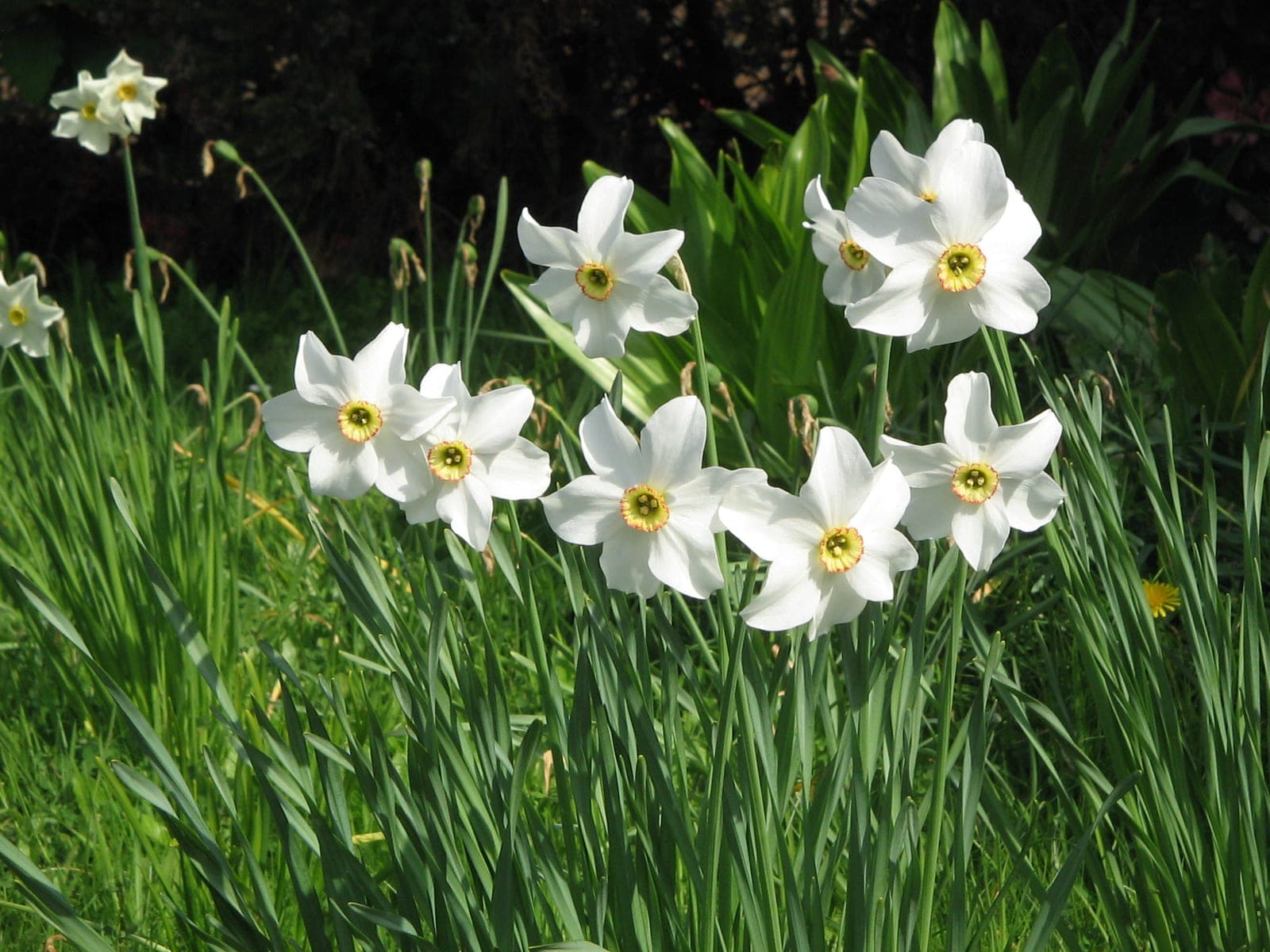
Pheasant's Eye is the old poet's daffodil, grown in gardens since at least the sixteenth century and naturalised across meadows in Europe. The flower is small and flat, pure white petals swept slightly back around a tiny yellow cup edged in red, carried on a 14 to 16 inch stem. The scent is strong and sweet, the strongest of any daffodil, and it flowers last of all, often as the tulips are finishing.
It wants a cool, moist spot and dislikes drying out in summer, which makes it the one daffodil better in grass or a damp meadow than in a hot border. Plant it in quantity, mow after the foliage has yellowed, and leave it alone; it resents disturbance and takes a year to settle after moving.
Botrytis (grey mould)
Grey fuzzy mould on petals and stems, worst in cool wet conditions.
Remove affected parts immediately. Improve air circulation. Avoid overhead watering. Apply copper fungicide if severe.
Narcissus Basal Rot
Brown rot starting at the base of the bulb, spreading upward; soft, decaying tissue and stunted or failed growth in spring. Fungal growth may appear pink or white.
Discard infected bulbs. Plant only firm, healthy bulbs in well-draining soil. Avoid hot, wet conditions during summer dormancy and rotate planting sites.
Narcissus Yellow Stripe Virus
Yellow or pale streaks running lengthwise along leaves; distorted foliage and reduced flower size or vigor over successive years.
No cure. Remove and destroy infected plants. Control aphids, which spread the virus, and buy certified virus-free bulbs.