
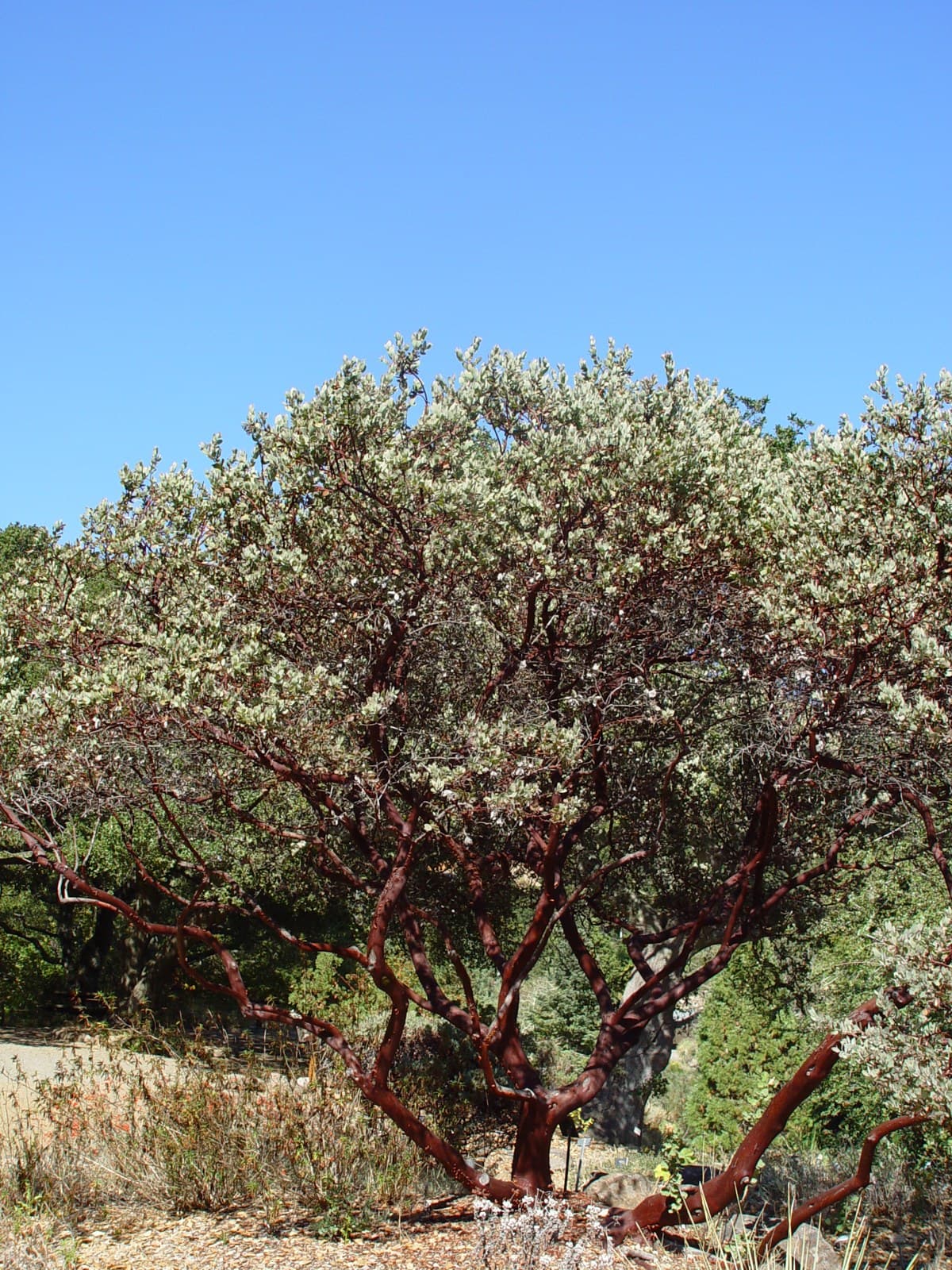
Arctostaphylos manzanita is a large evergreen shrub native to California's Coast Ranges and Sierra Nevada foothills, reaching 6–15 ft tall. Its smooth, mahogany-red bark is ornamental year-round, and small urn-shaped white to pink flowers open in late winter, providing early-season nectar for hummingbirds and native bees before most plants are active. The Spanish name means 'little apple,' a reference to the round reddish berries that follow.
Once established, common manzanita requires little to no summer water; summer irrigation is the primary cause of decline. It thrives in rocky, fast-draining soil with good air circulation and performs poorly in clay or heavily amended beds. Plant container-grown stock in fall to allow root development during the cool, wet season. Prefer a pH of 5.5–7.0. Occasional selective pruning maintains structure; heavy shearing promotes weak regrowth and disfigures the natural form.
Berries were a significant food for Native California peoples, eaten fresh, dried, and ground into meal, or steeped into a cider-like drink. Leaf preparations containing arbutin, a compound with urinary antiseptic properties, were used in traditional medicine for urinary tract complaints and as a topical astringent for skin irritation.
Ecoregions:Northwestern Forested MountainsMarine West Coast ForestMediterranean California
Phytophthora Root Rot
Wilting despite moist soil, yellowing leaves, stunted growth, and dark, decayed roots and crown tissue. Vines may collapse during hot weather.
Plant in well-draining soil and avoid waterlogging. Remove and destroy affected vines. Improve drainage with raised beds or amended soil and avoid overwatering.
Crown Rot
Lower leaves yellow and wilt; the base of the rosette turns brown and soft, sometimes with white fungal threads at the soil line. Plants collapse in wet conditions.
Remove and destroy affected plants. Improve drainage and avoid overhead watering. Do not mulch directly against the crown. Space plants for airflow and avoid replanting in the same wet spot.
Fungal leaf spot
Brown or purplish spots on the leaves, often ringed with a yellow halo, that spread and merge in warm, humid, or wet weather; heavily spotted leaves yellow and drop early.
Pick off spotted leaves and clear fallen debris to remove overwintering spores. Improve air circulation by thinning, and water at the base so foliage dries quickly. If it persists, apply a copper- or sulfur-based fungicide at the first sign.