
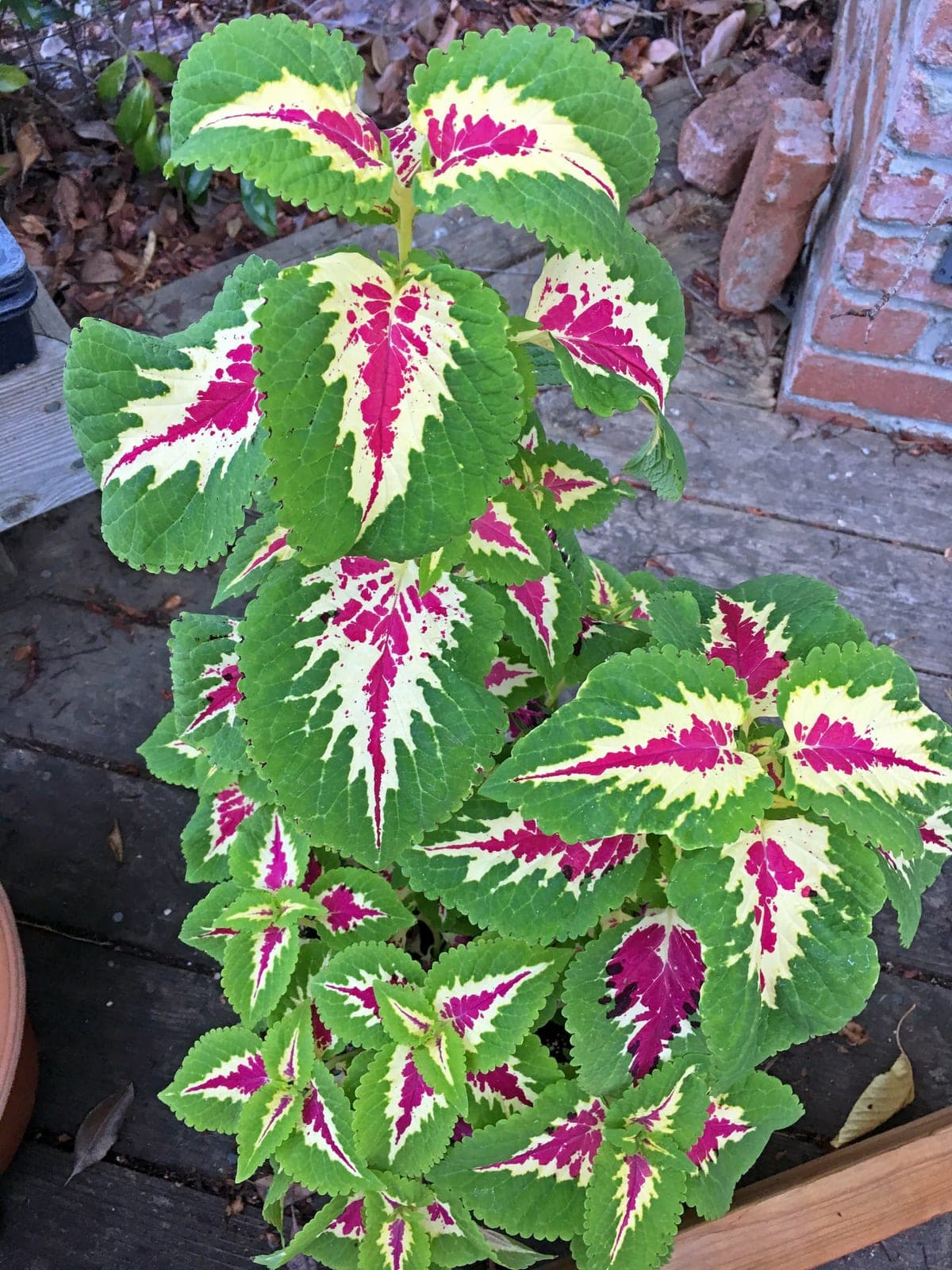
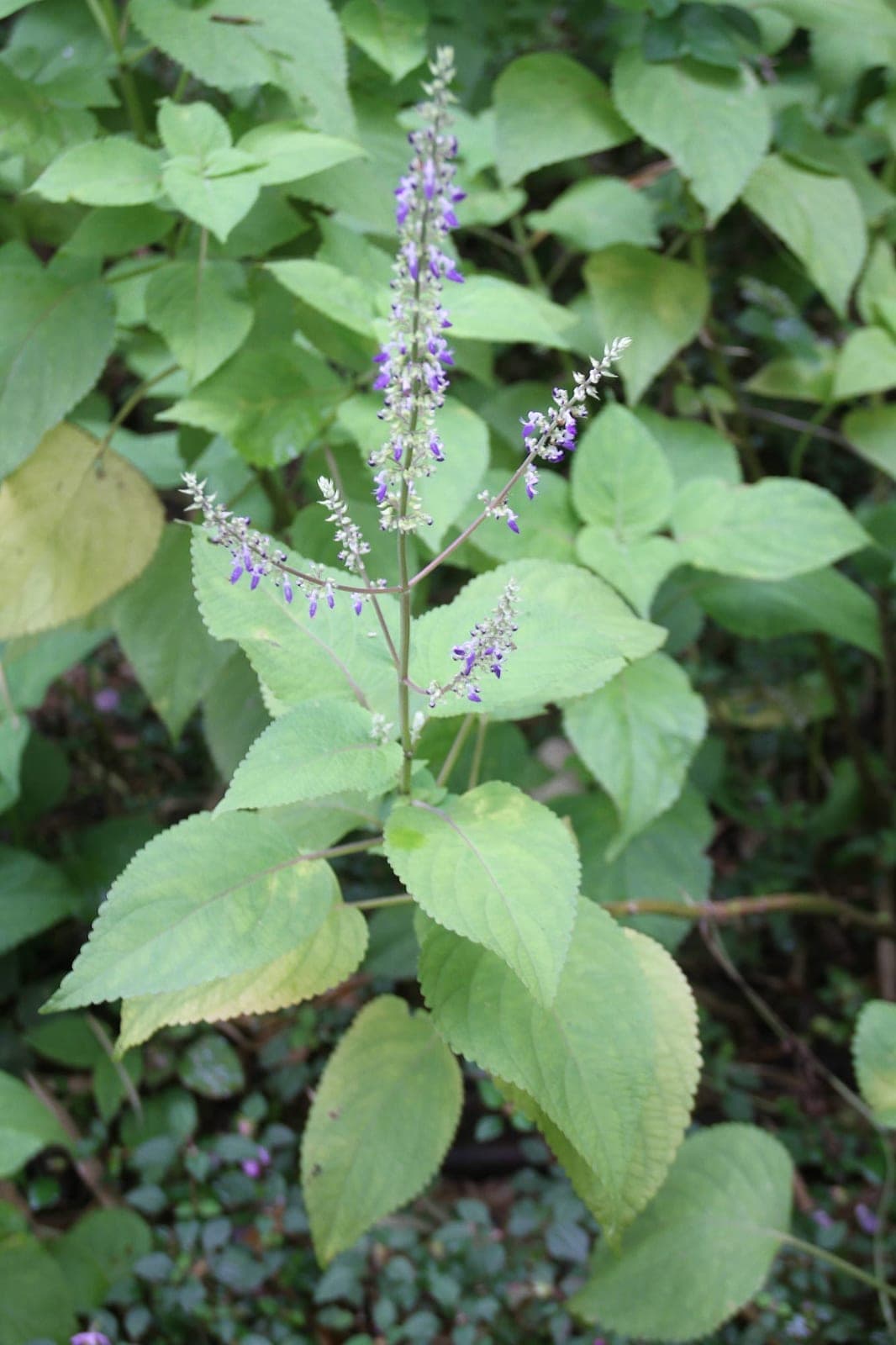
 'Premium Sun Crimson Gold'. Photo: S.G.S., CC BY-SA 4.0.
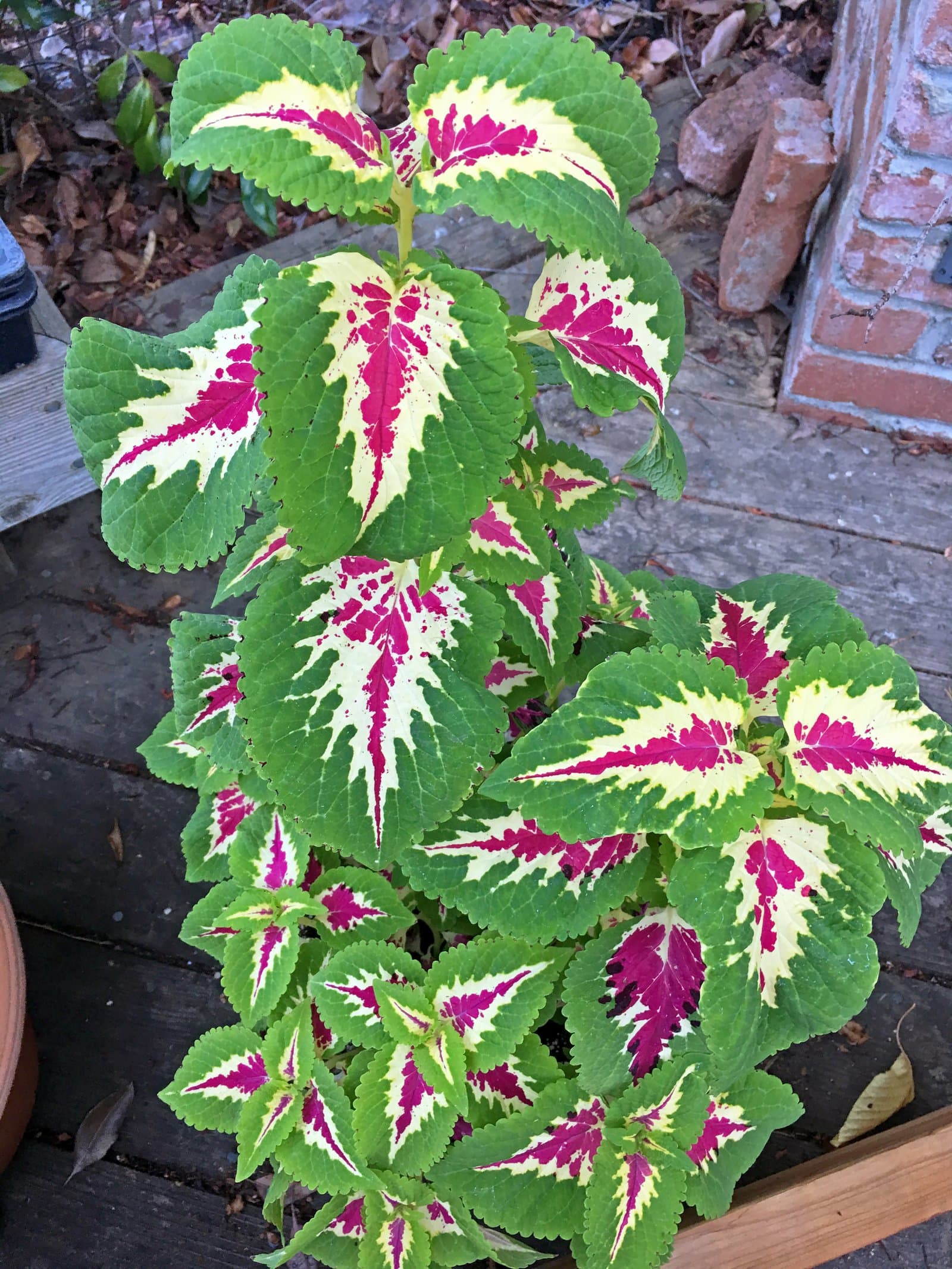 'Wizard Rose'. Photo: Don McCulley, CC BY-SA 4.0.
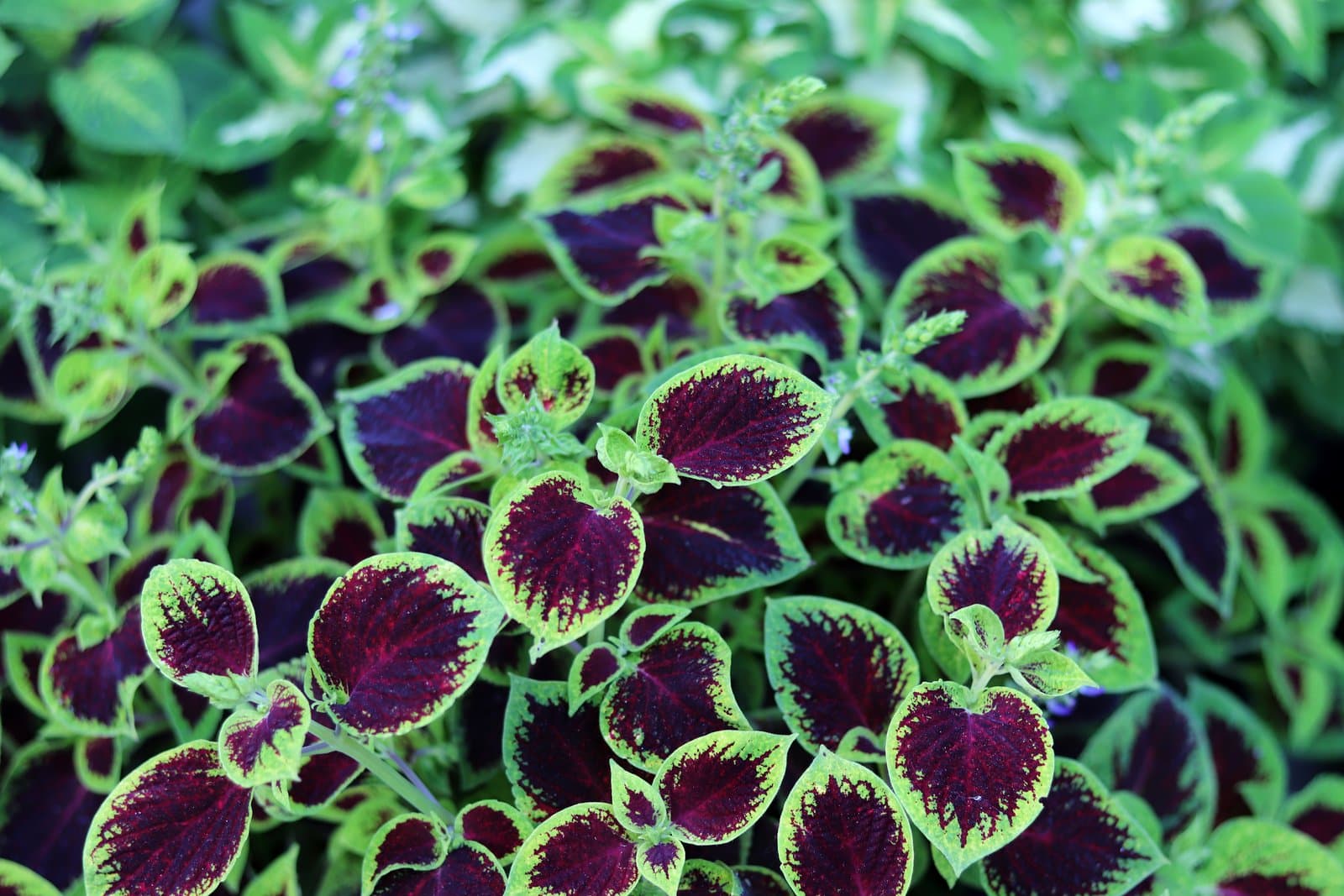
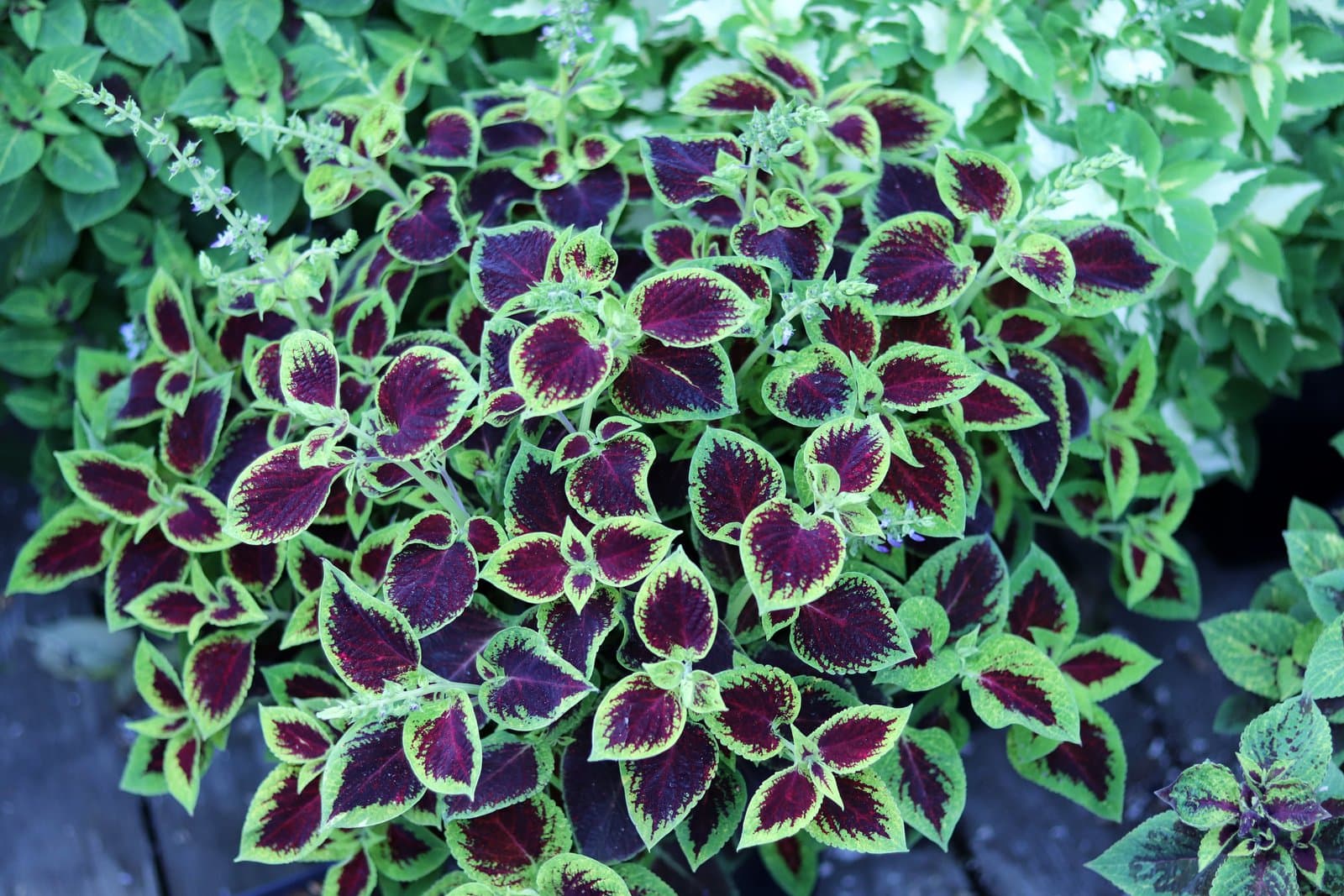
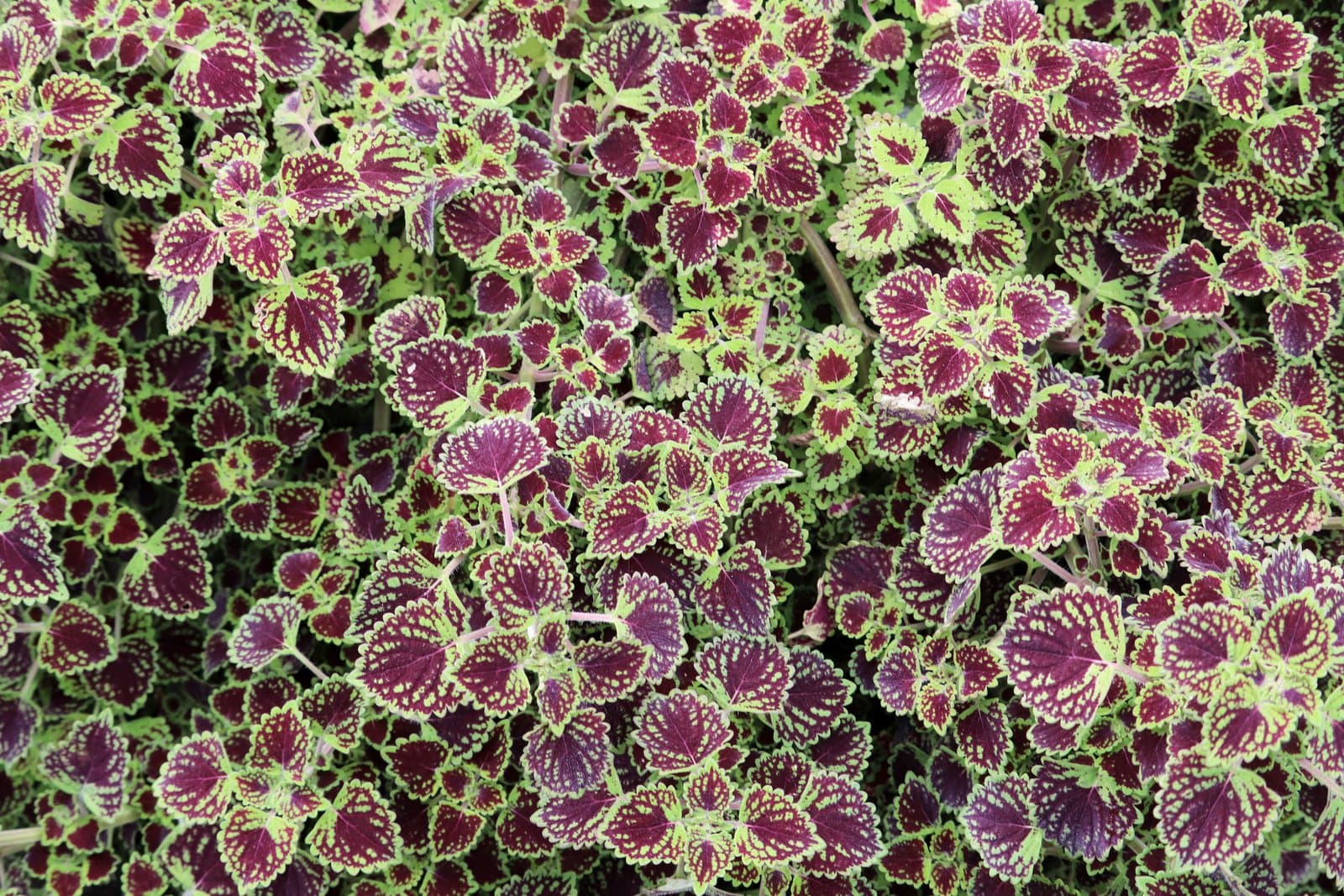 'ColorBlaze Chocolate Drop'. Photo: Don McCulley, CC BY-SA 4.0.
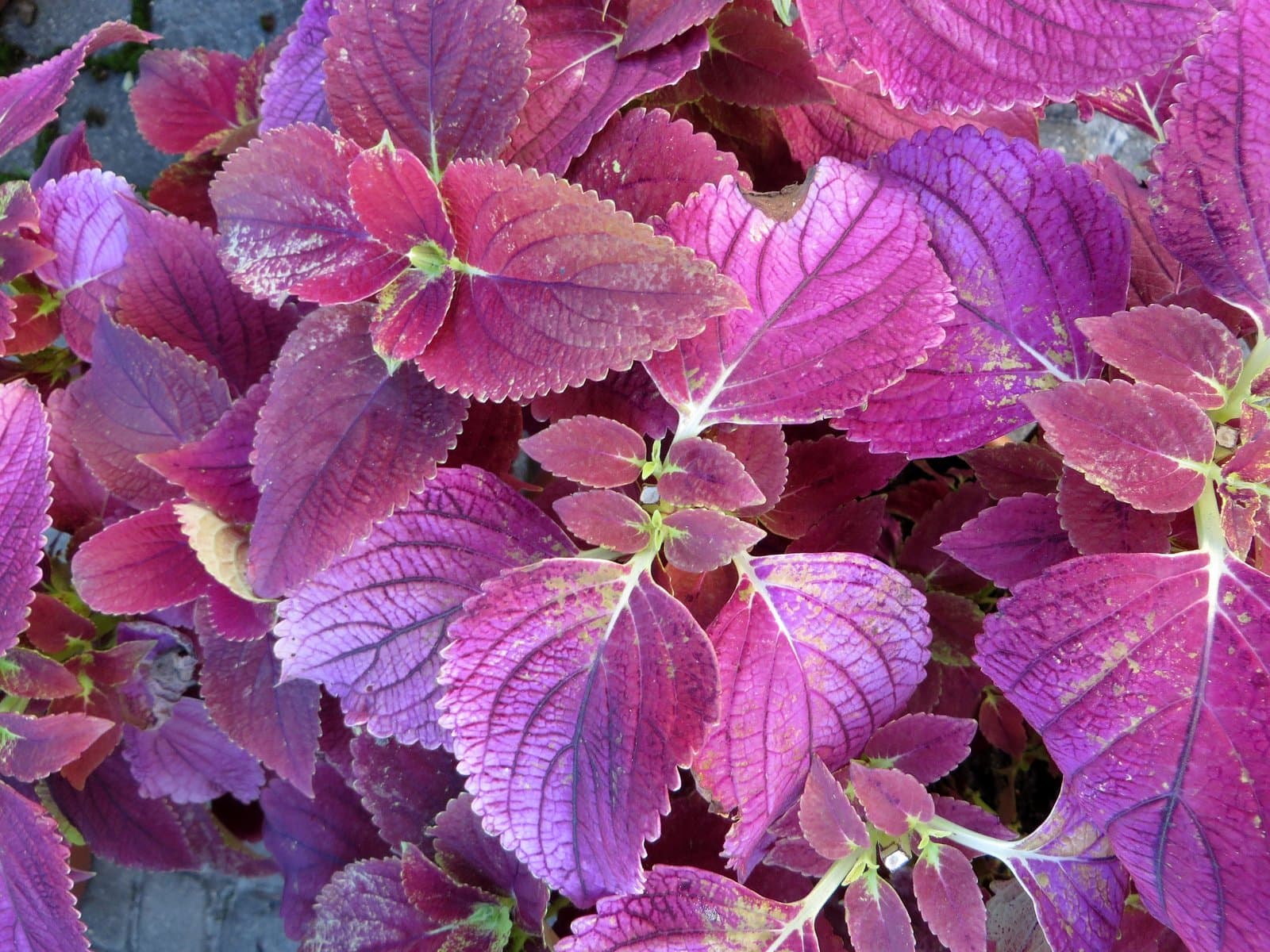 'Alabama'. Photo: AfroBrazilian: Aleksandrs Balodis, CC BY-SA 4.0.
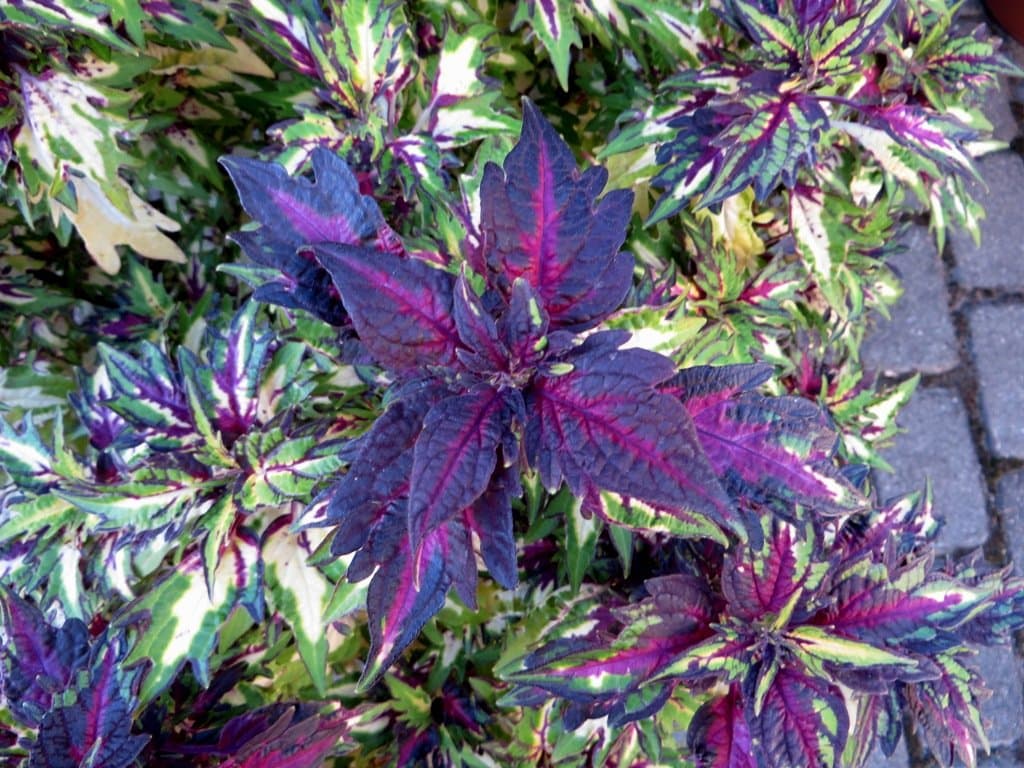 'Alligator Tears'. Photo: AfroBrazilian: Aleksandrs Balodis, CC BY-SA 4.0.
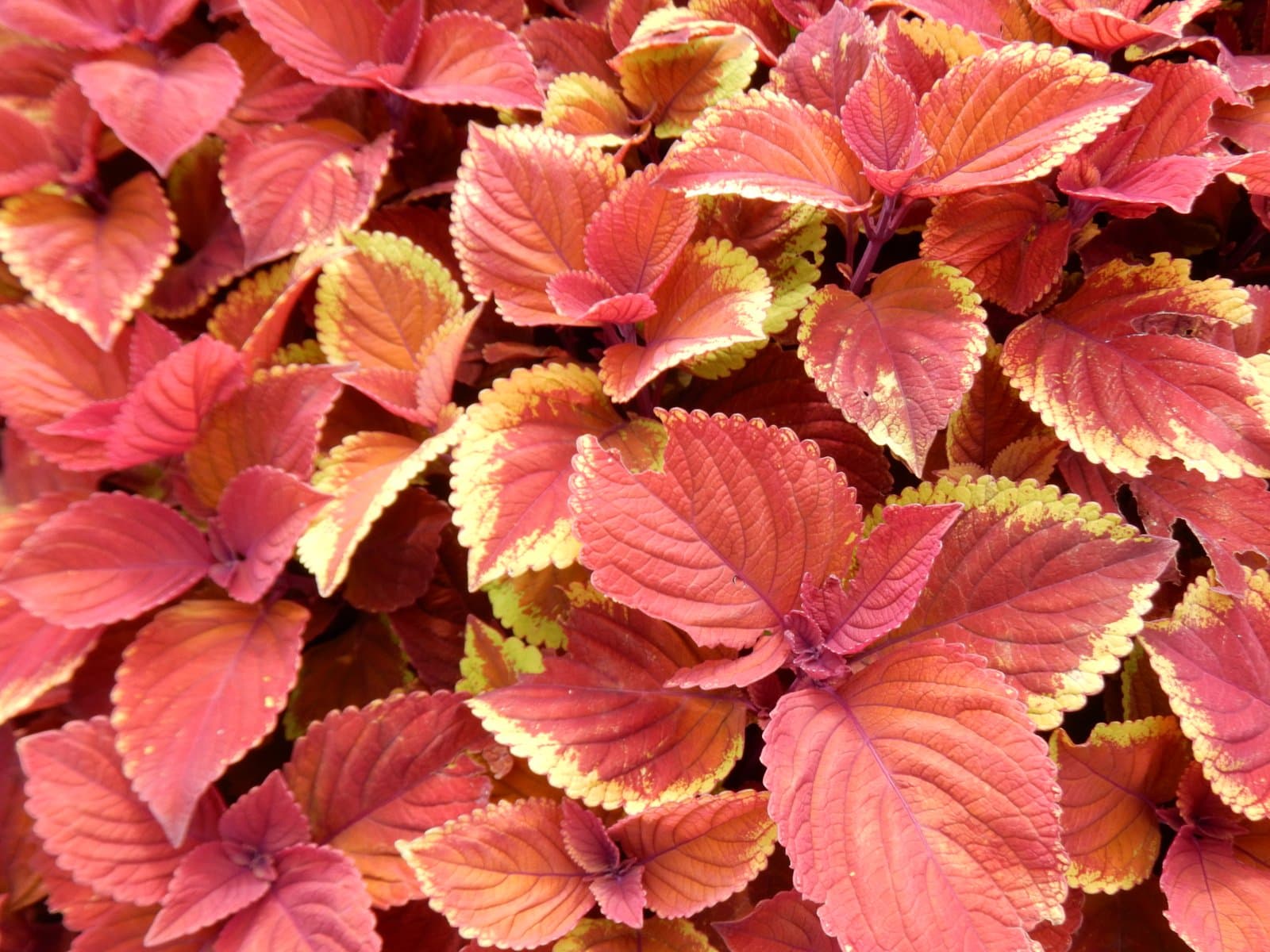 'ChargedUp Campfire'. Photo: Shuvaev, CC BY 4.0.
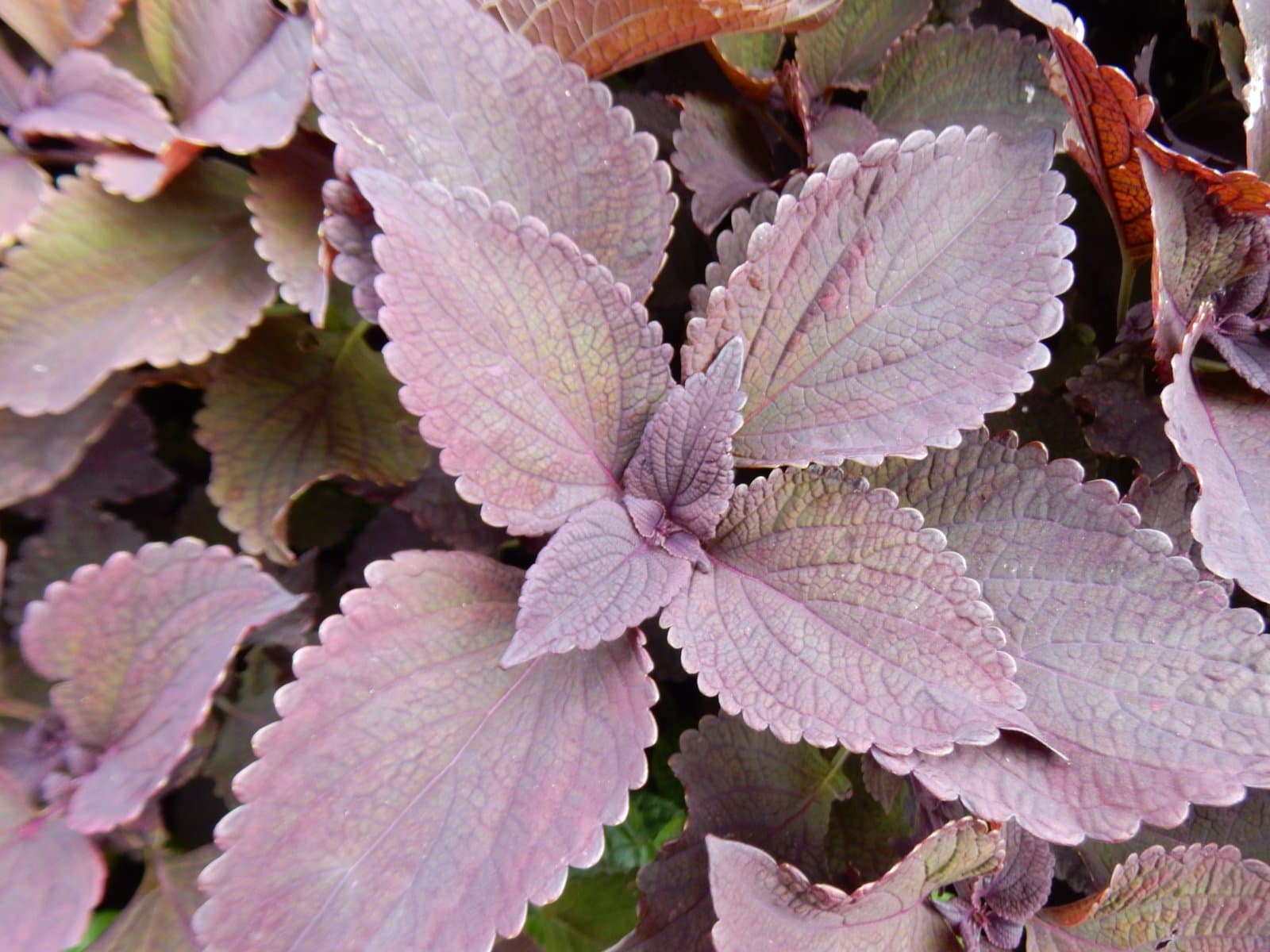 'ColorBlaze Dark Star'. Photo: Shuvaev, CC BY 4.0.
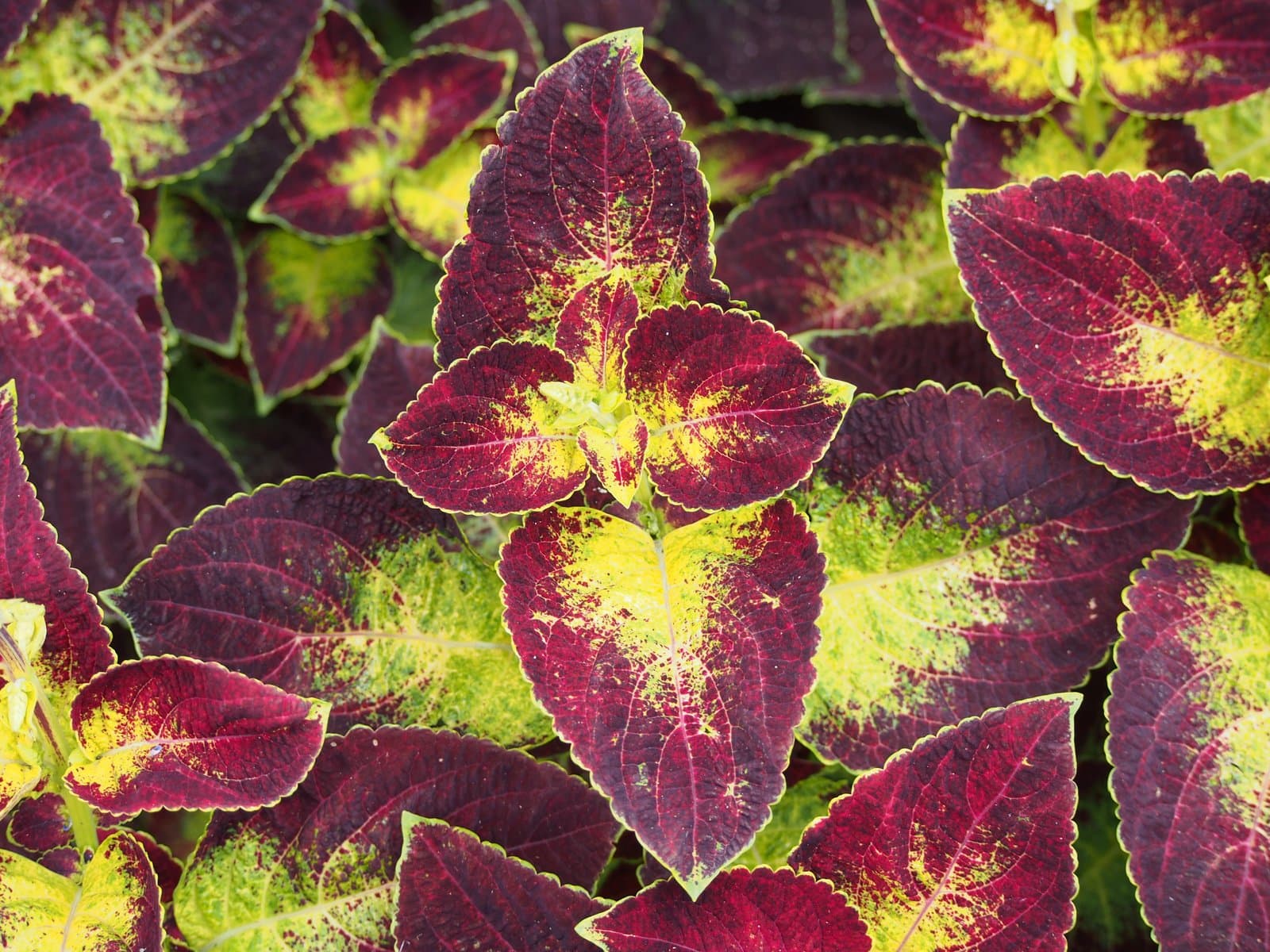 'ColorBlaze Dipt in Wine'. Photo: Agnieszka Kwiecień, Nova, CC BY-SA 4.0.
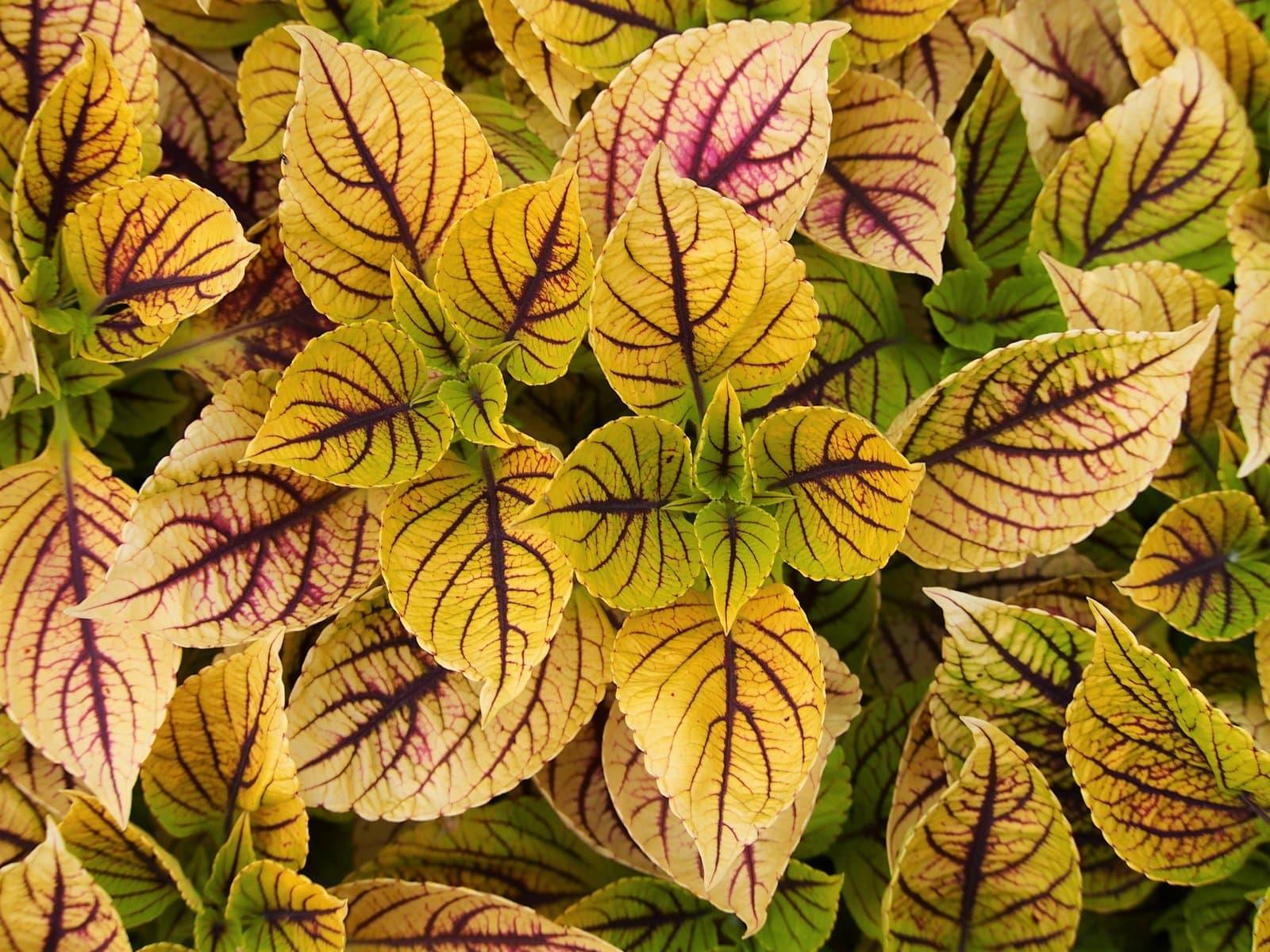 'Gay's Delight'. Photo: Agnieszka Kwiecień, Nova, CC BY-SA 4.0.
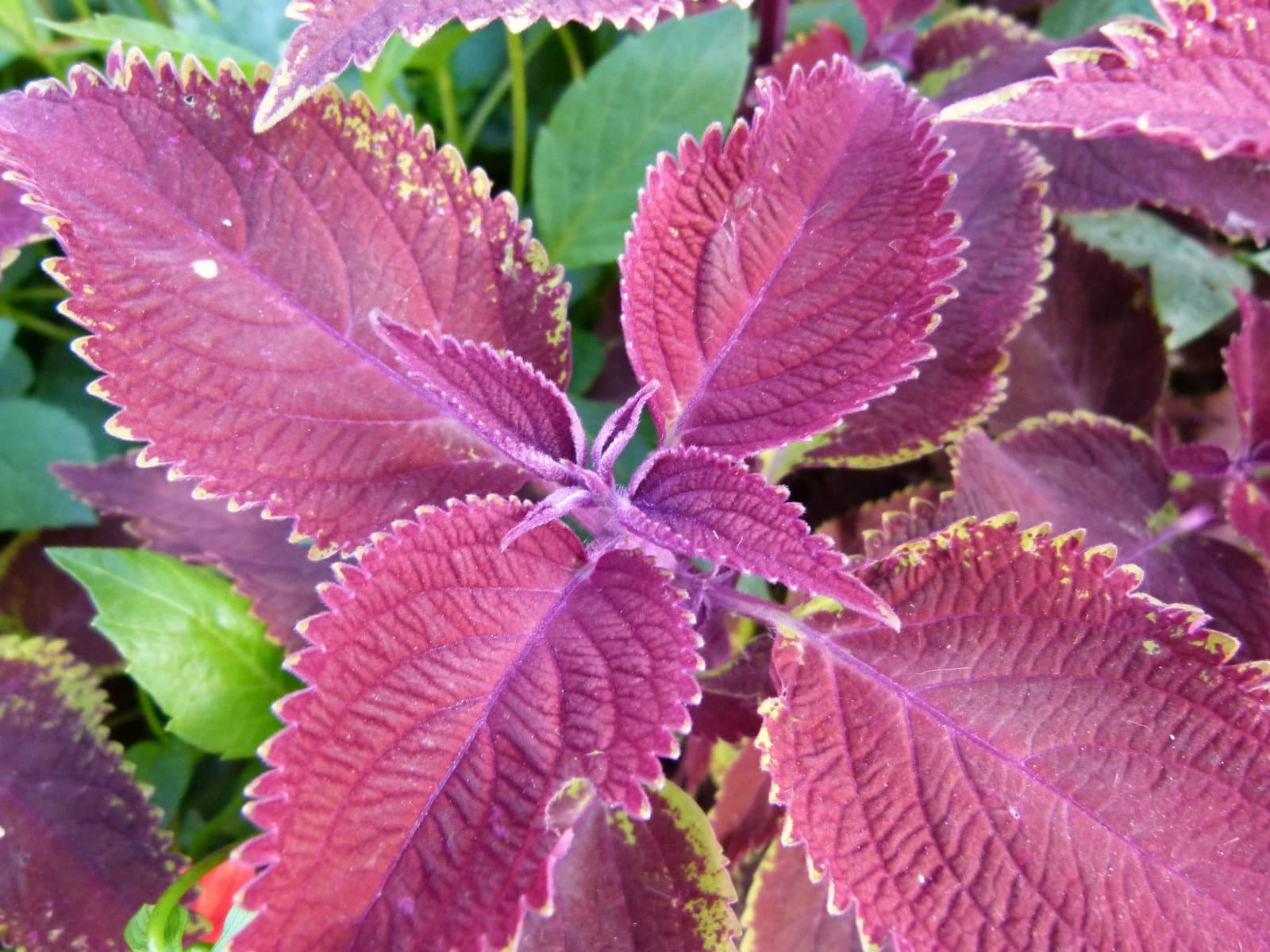 'Scarlett' - red leaves edged in gold. Photo: Dinkum, CC0.
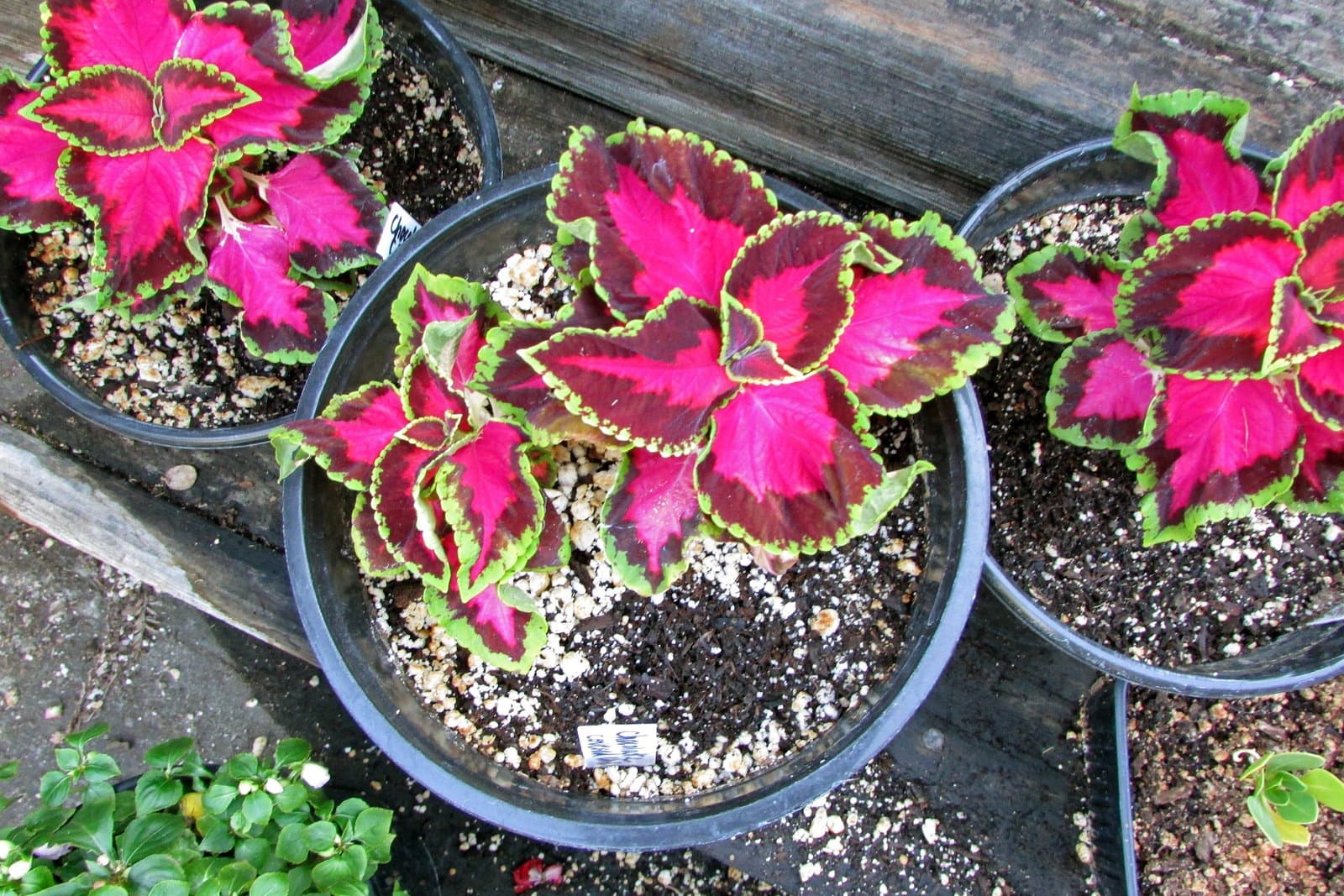 'Chocolate Covered Cherry' - cherry centres on dark chocolate leaves. Photo: Don McCulley, CC BY-SA 4.0.
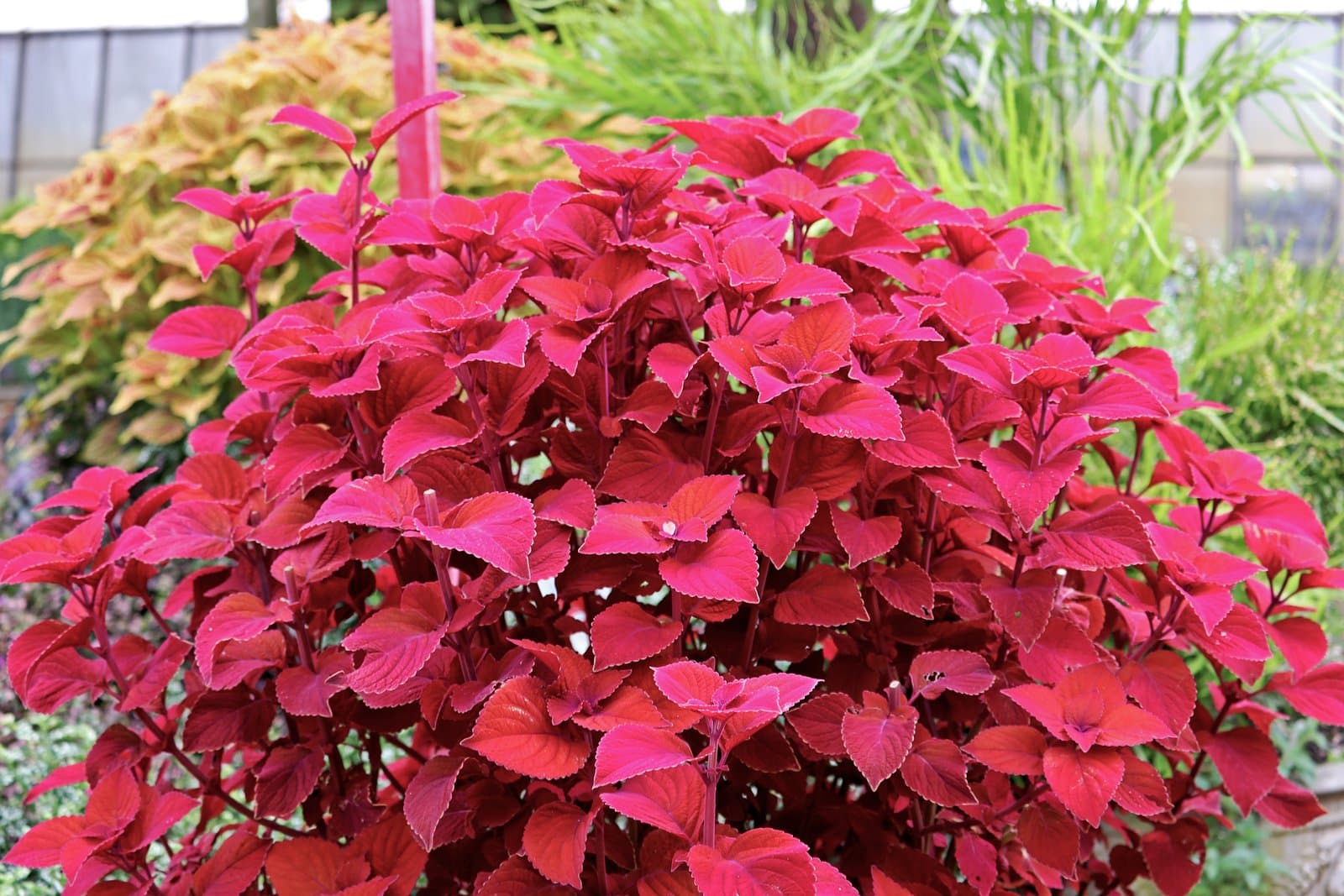 'ColorBlaze Sedona Sunset' - burnt orange, a sun-tolerant selection. Photo: Don McCulley, CC BY-SA 4.0.
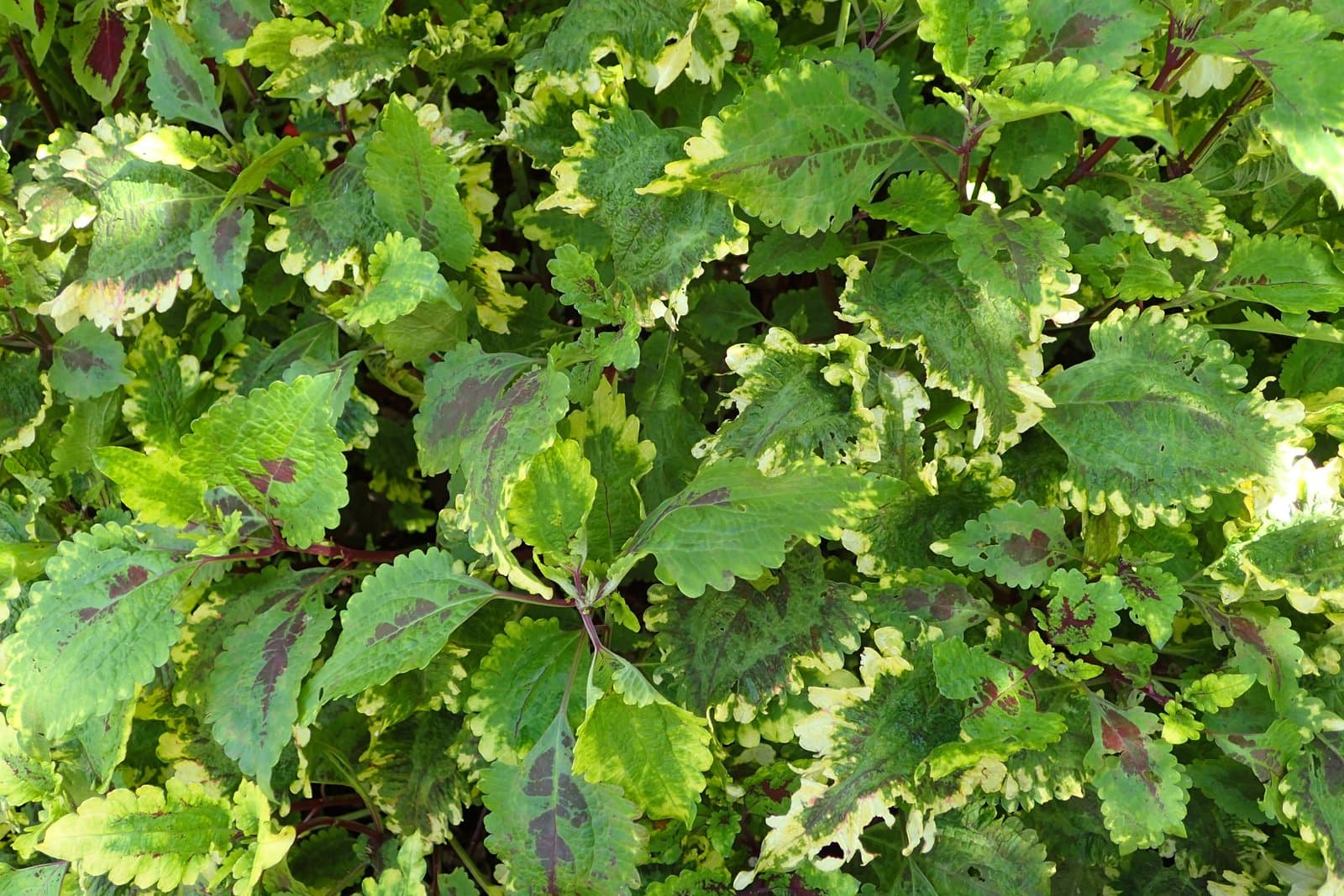 'Florida Sun Splash' - lime leaves splashed with burgundy. Photo: Krzysztof Ziarnek, Kenraiz, CC BY-SA 4.0.
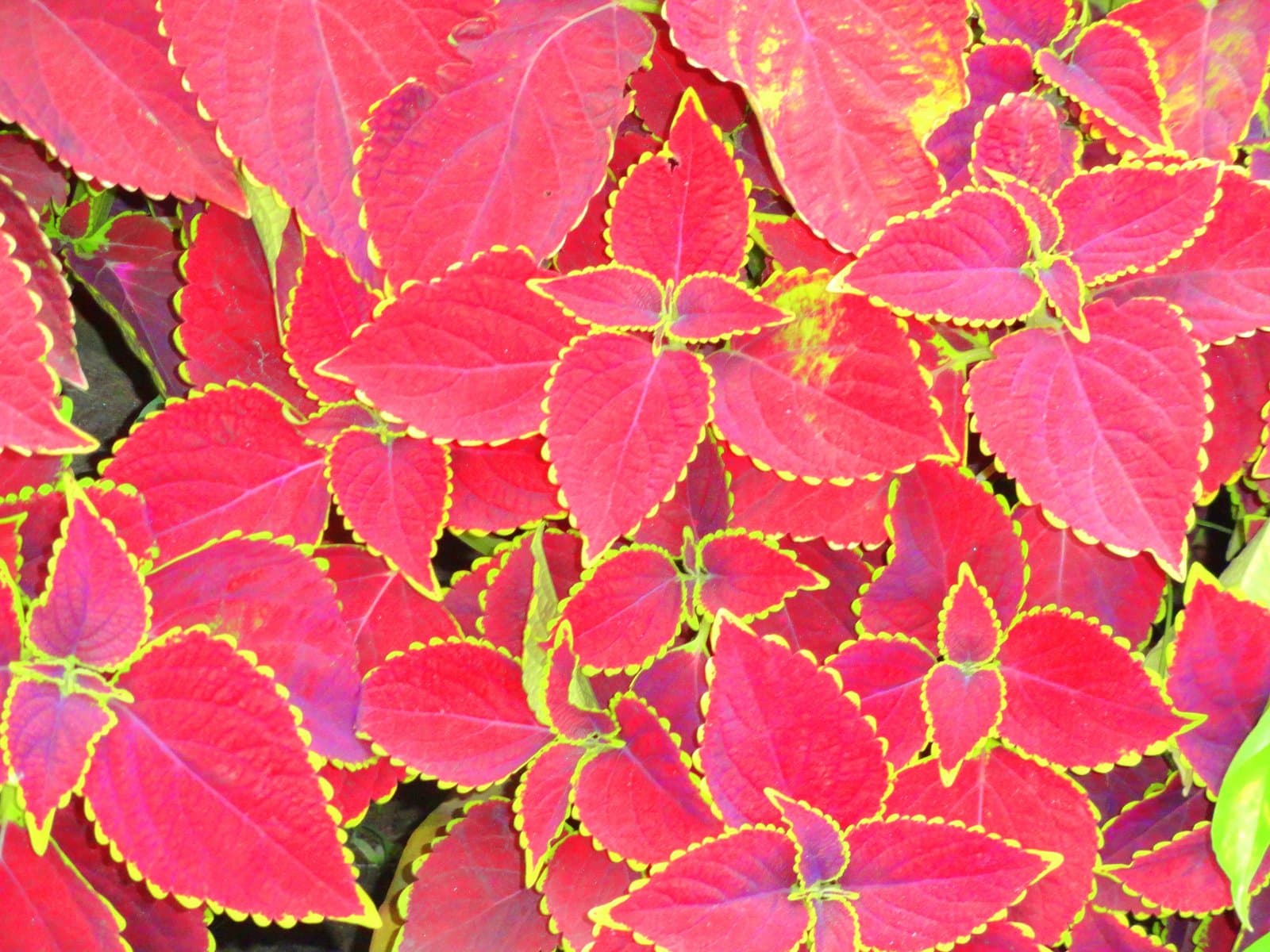 Coral-pink leaves with a lime edge. Photo: Monica Islam, CC BY-SA 4.0.
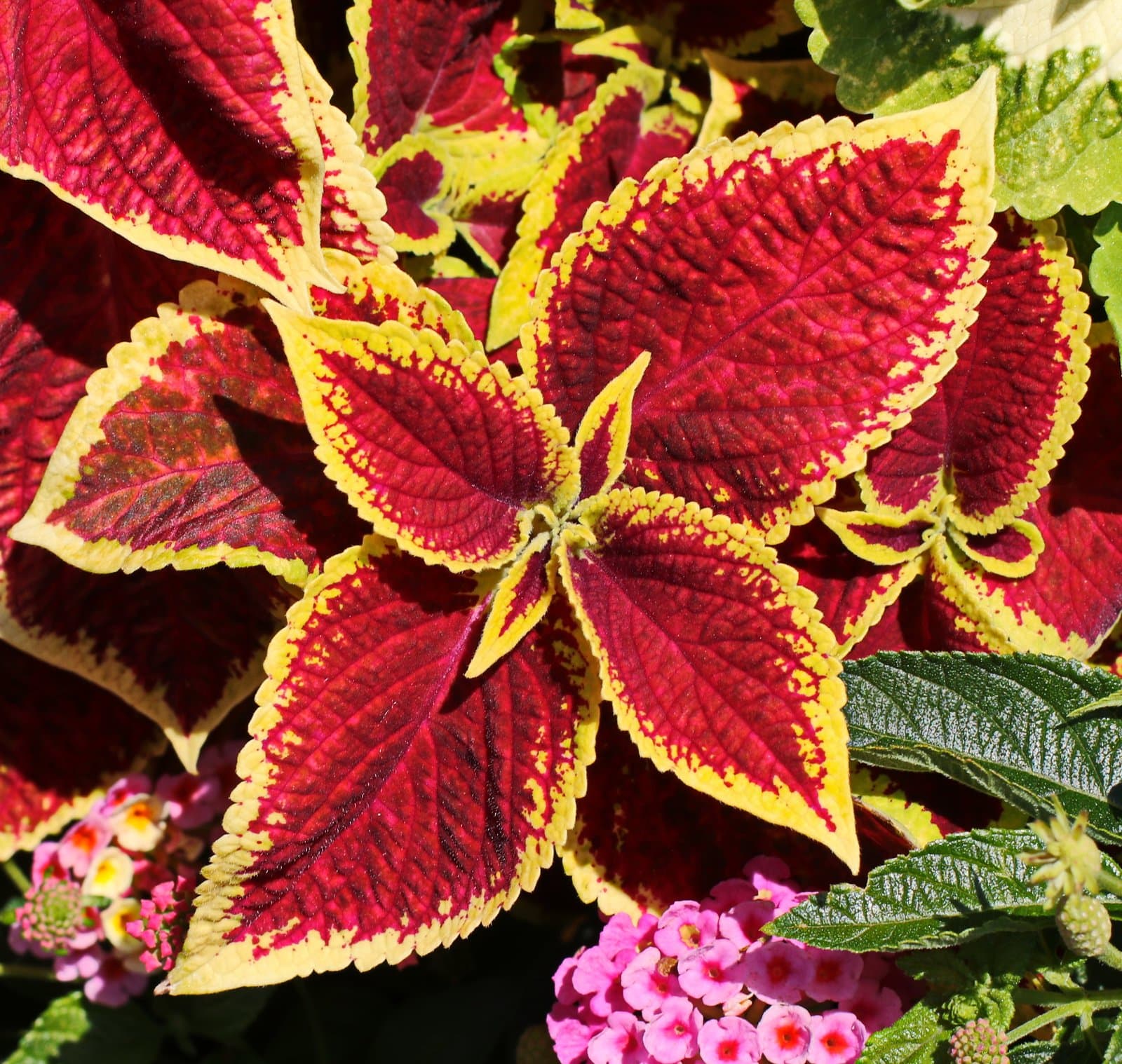 Red leaves with a lime margin. Photo: Kora27, CC BY-SA 4.0.
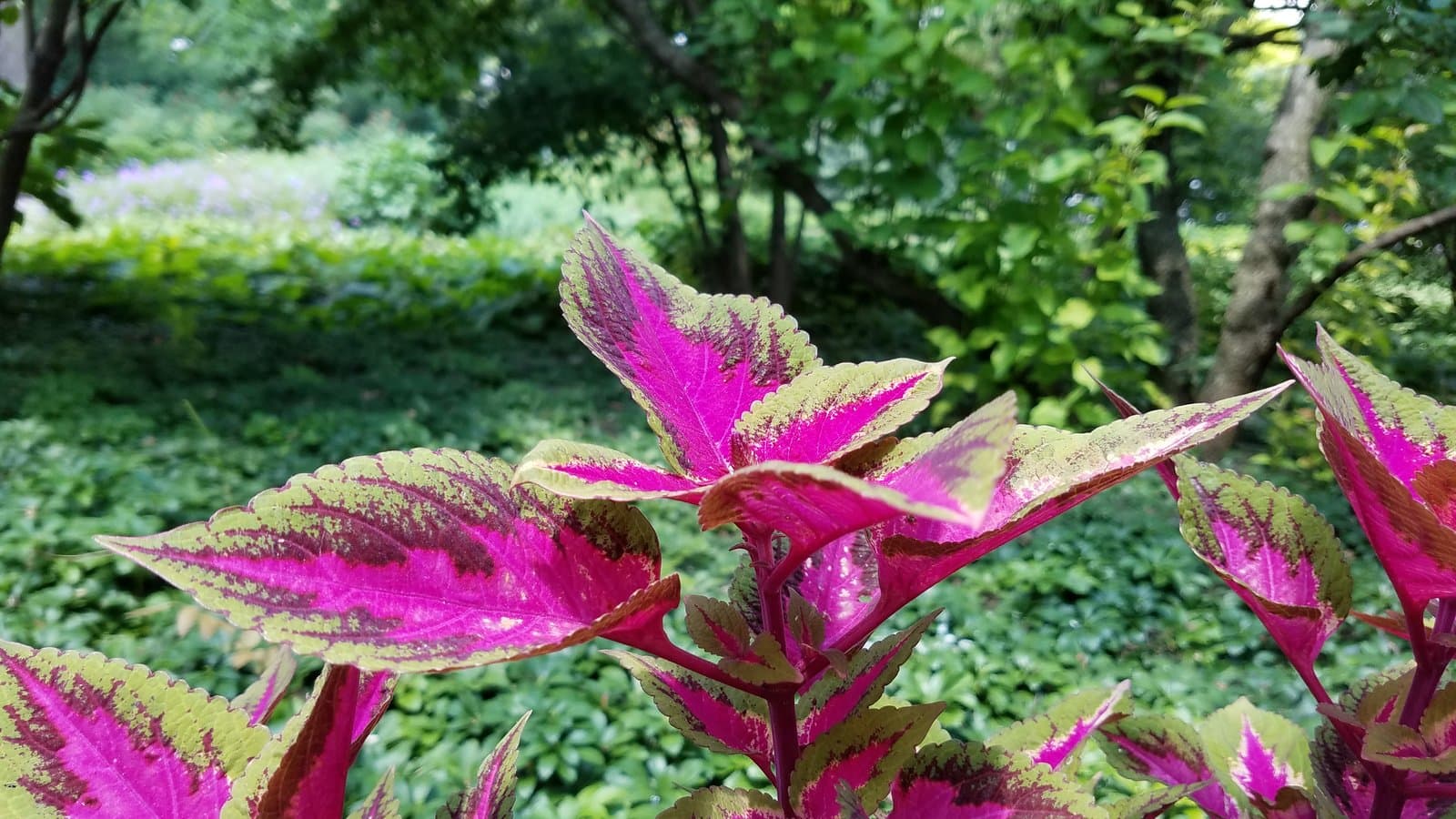 Magenta centres on green. Photo: Dan Keck from Ohio, CC0.
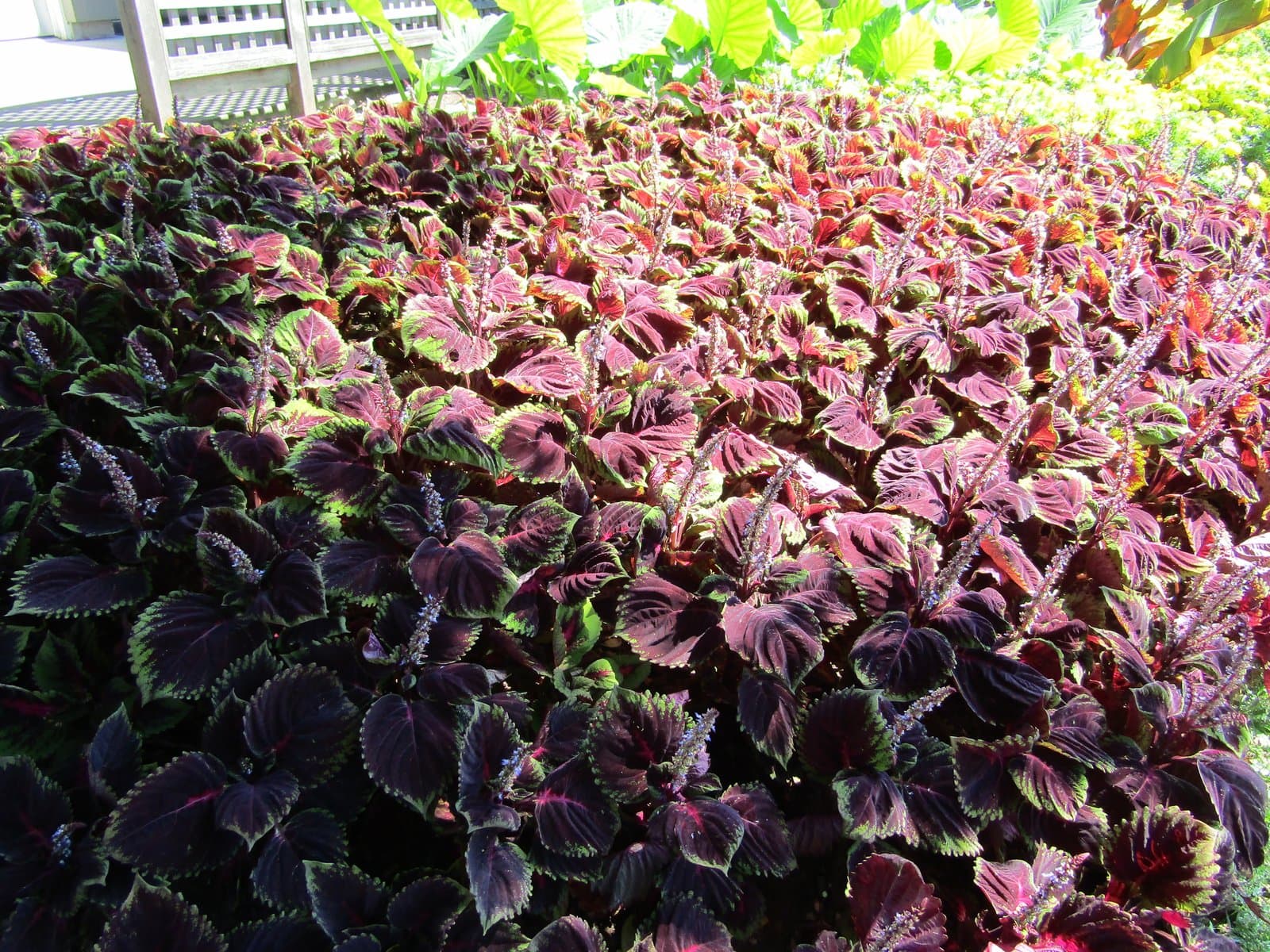 Pink speckled on green. Photo: Leonora (Ellie) Enking from East Preston, United Kingdom, CC BY-SA 2.0.
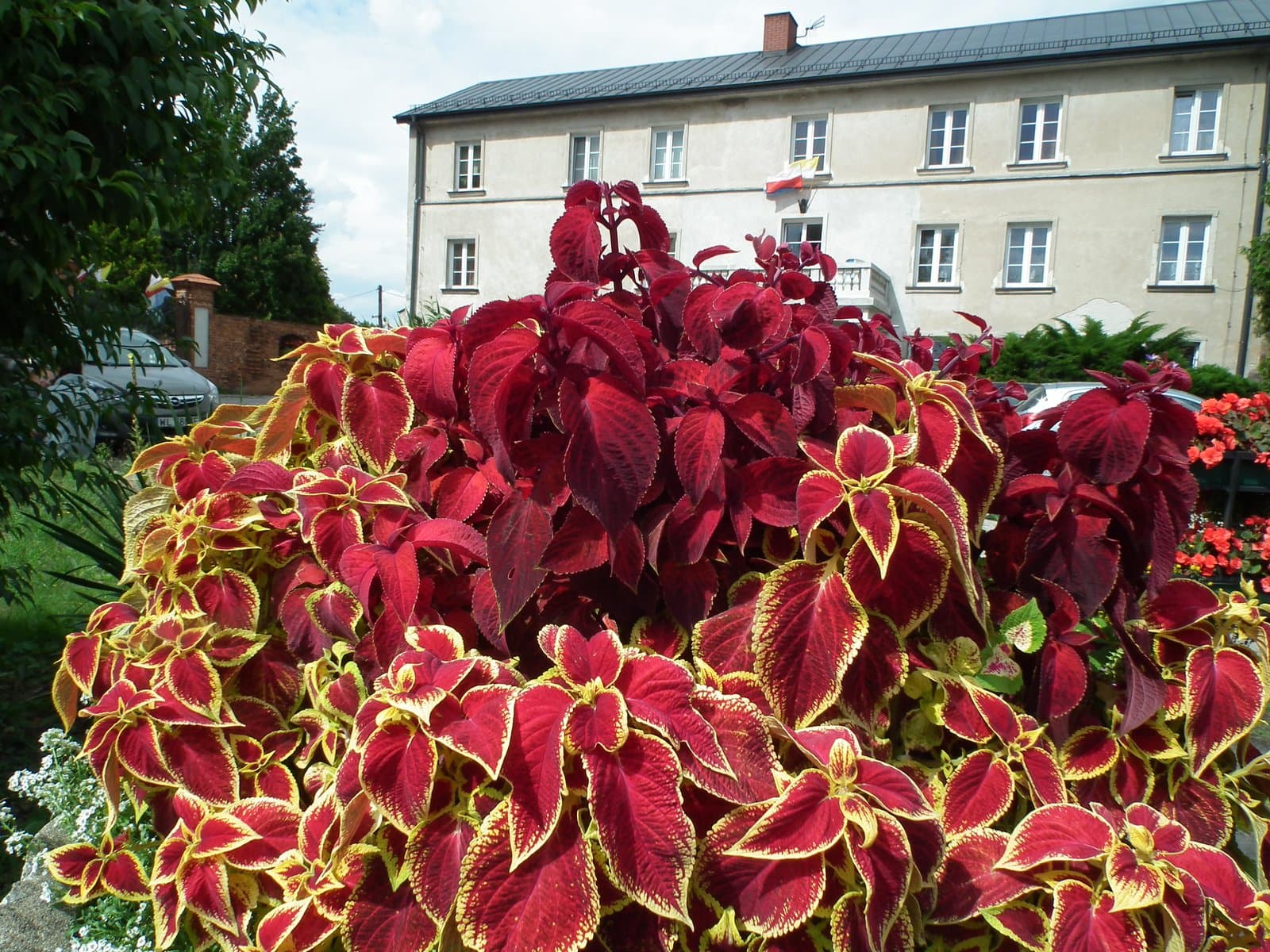 Red coleus massed as a bedding plant. Photo: MOs810, CC BY-SA 4.0.
 A mixed coleus bed showing the range of leaf colour. Photo: Gord Webster from Victoria, Canada, CC BY-SA 2.0.
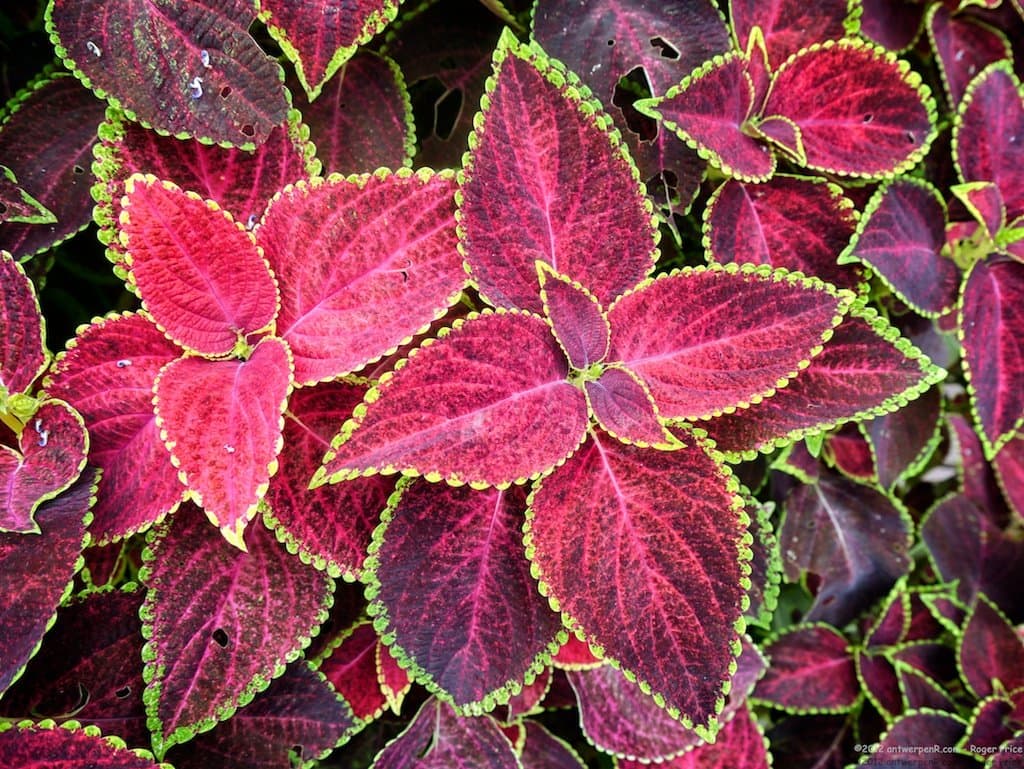 Mass planting in a public garden. Photo: Roger Price from Hong Kong, Hong Kong, CC BY 2.0.
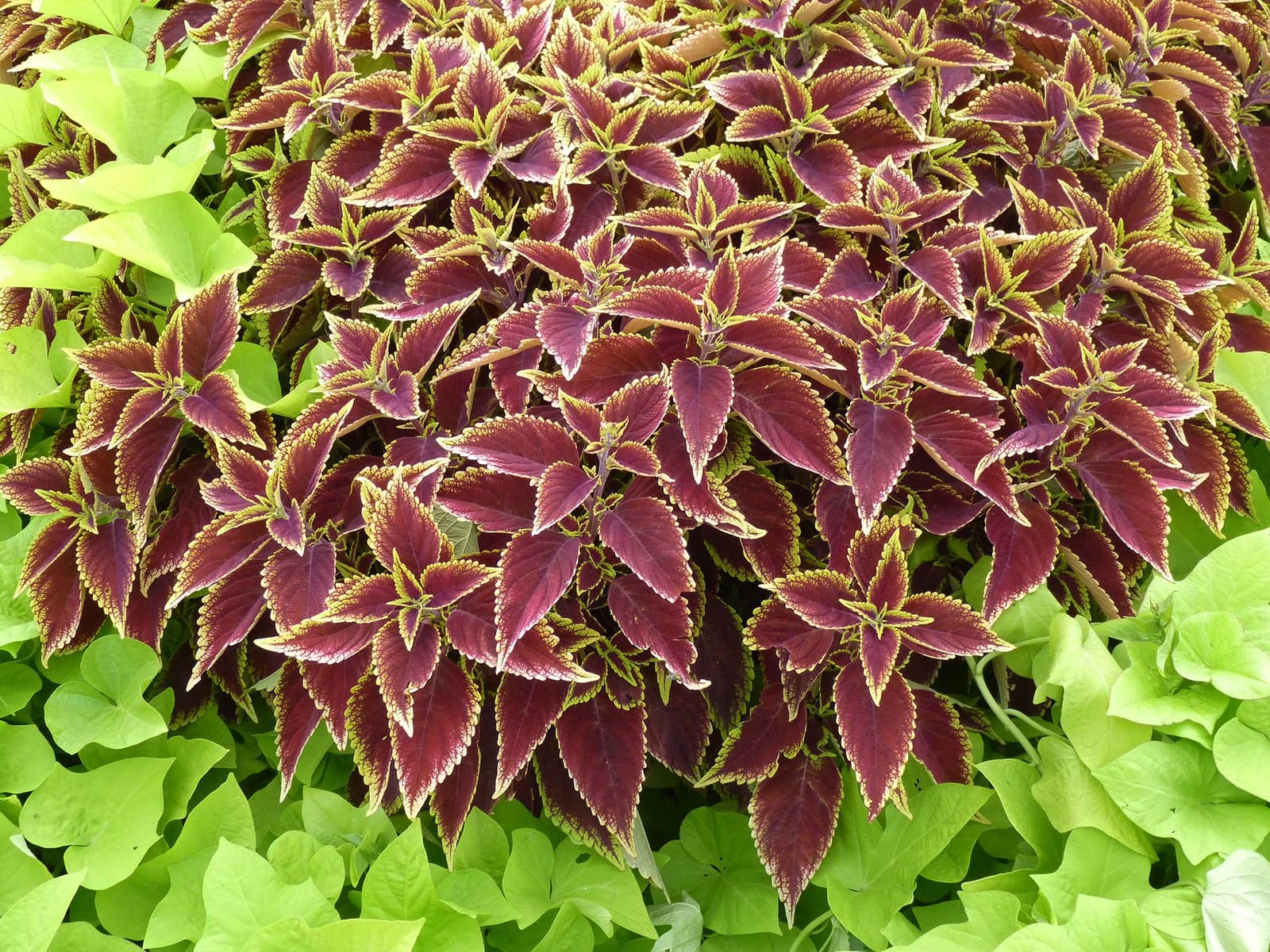 Rusty bronze leaves edged in gold. Photo: Bruce Emmerling, CC0.
Coleus is a tender perennial from Southeast Asia grown almost universally as a warm-season annual in temperate gardens. Its value lies entirely in its foliage, which spans an extraordinary range of colors - greens, reds, purples, yellows, oranges, and intricate multicolor patterns - making it one of the most versatile ornamental foliage plants for beds, borders, and containers.
Modern cultivars include compact dwarfs, large upright types, and trailing forms, with selections suited to deep shade as well as full sun. Pinching the central growing tip when plants reach 15–20 cm encourages lateral branching and a denser habit. Flowering stems appear in late summer and should be removed as they emerge to sustain vigorous leaf production. Coleus collapses at the first frost; stem cuttings root readily in water and can carry favorite cultivars through winter indoors under grow lights. It performs well in heat and humidity, benefits from a balanced liquid fertilizer through the growing season, and struggles in alkaline or compacted soils.
In the Philippines and other parts of Southeast Asia, where the plant is called mayana, leaves are applied as poultices to wounds, burns, skin inflammation, and insect stings - a traditional use documented across multiple regional folk medicine traditions.
Growing it indoors up north? See the indoor care guide - light, water, and the rhythm that keeps it flowering as a houseplant.Powdery mildew
White or grey powdery coating on leaves - usually starting on older growth in humid conditions or when nights cool.
Improve air circulation by thinning plants. Apply neem oil or potassium bicarbonate spray at first sign. Avoid overhead watering.
Downy mildew
Yellowing on top of leaves with grey-purple fuzz underneath. Spreads rapidly in humid conditions.
Remove affected leaves. Improve air circulation. Avoid overhead watering. Copper spray as preventive.
Root rot
Plants wilt, yellow, and stunt even in moist soil; lower stems and roots turn brown, soft, and mushy and the plant may collapse. Most common in heavy, wet, or poorly drained ground.
Improve drainage and stop overwatering, and never plant too deep. Lift and destroy badly affected plants along with the soil around the roots. Grow in raised or free-draining beds to prevent it returning.
Damping Off
Seedlings collapse at the soil line with thin, water-soaked stems; seeds may fail to emerge or rot before sprouting.
Sow in well-draining mix, avoid overwatering, and ensure good airflow. Remove affected seedlings and let the surface dry between waterings.
Botrytis (grey mould)
Grey fuzzy mould on petals and stems, worst in cool wet conditions.
Remove affected parts immediately. Improve air circulation. Avoid overhead watering. Apply copper fungicide if severe.
Fungal leaf spot
Brown or purplish spots on the leaves, often ringed with a yellow halo, that spread and merge in warm, humid, or wet weather; heavily spotted leaves yellow and drop early.
Pick off spotted leaves and clear fallen debris to remove overwintering spores. Improve air circulation by thinning, and water at the base so foliage dries quickly. If it persists, apply a copper- or sulfur-based fungicide at the first sign.
Fusarium wilt
Sudden wilting, brown streaks in stems, yellowing leaves. Affects sweet basil varieties most.
No cure. Remove and destroy plants. Do not replant in the same spot for 3+ years. Choose resistant varieties.