
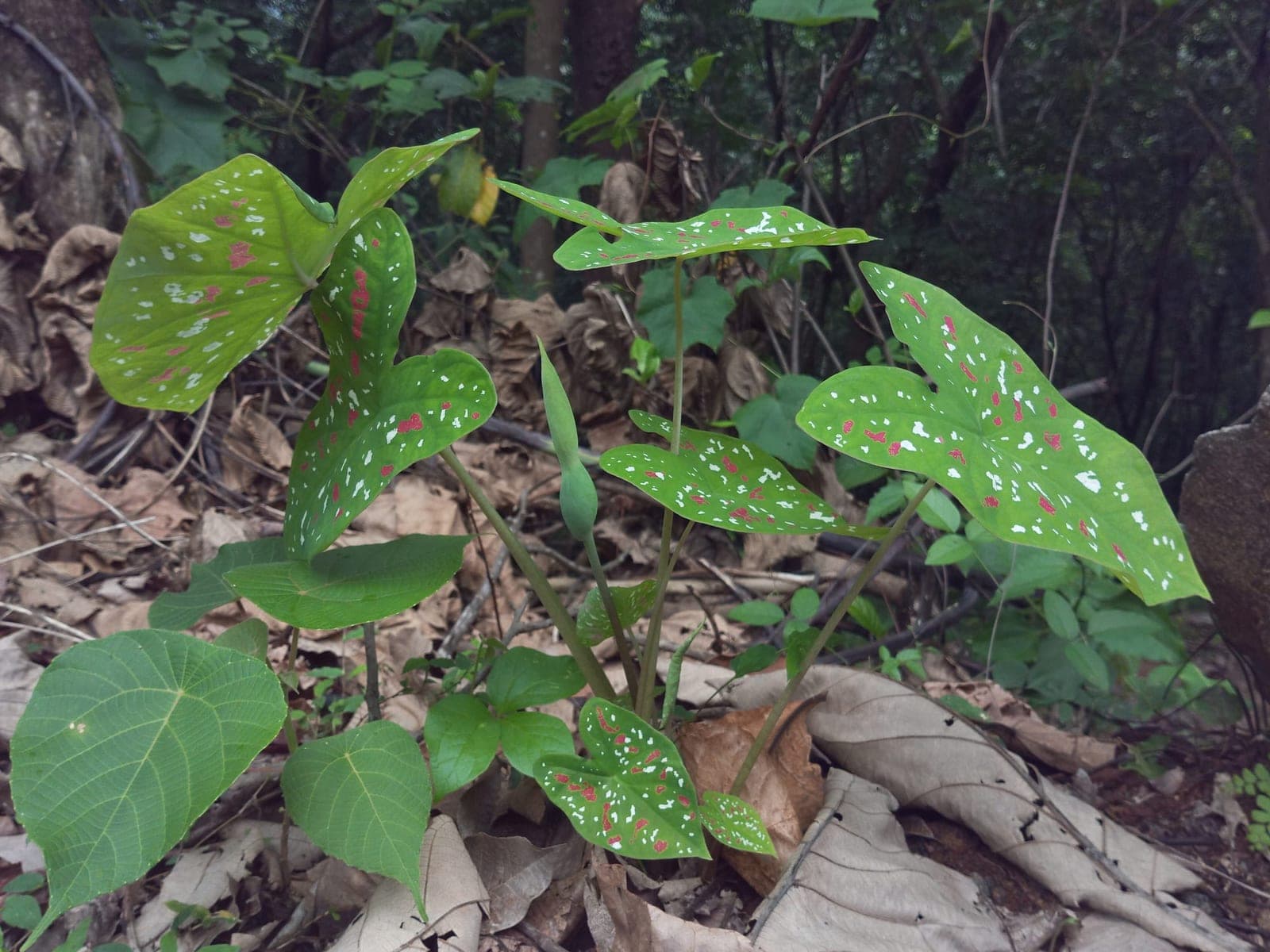
Caladium bicolor is a tuberous tropical perennial native to South America, grown for large, heart-shaped leaves patterned in combinations of white, pink, red, and green. Hundreds of cultivars exist, from broad fancy-leaved types to narrower strap-leaved forms that tolerate more direct sun. It performs well as a warm-season foliage accent in shade beds and containers.
Tubers require soil at or above 65°F to sprout reliably and will rot if planted too early in cold, wet ground. In zones 9b–11 they can remain in the ground year-round; in cooler zones they must be lifted after foliage dies back in fall and stored dry at 55–65°F through winter. Outside its native range, caladium has naturalized across the world's tropics and is classified as invasive in Hawaii, Guam, Palau, and several other Pacific island groups.
Root rot
Plants wilt, yellow, and stunt even in moist soil; lower stems and roots turn brown, soft, and mushy and the plant may collapse. Most common in heavy, wet, or poorly drained ground.
Improve drainage and stop overwatering, and never plant too deep. Lift and destroy badly affected plants along with the soil around the roots. Grow in raised or free-draining beds to prevent it returning.
Crown Rot
Lower leaves yellow and wilt; the base of the rosette turns brown and soft, sometimes with white fungal threads at the soil line. Plants collapse in wet conditions.
Remove and destroy affected plants. Improve drainage and avoid overhead watering. Do not mulch directly against the crown. Space plants for airflow and avoid replanting in the same wet spot.
Bacterial Soft Rot
Rhizomes turn mushy and foul-smelling; foliage yellows and pulls away easily at the base. Often follows borer damage or overly wet soil.
Cut away all soft tissue back to firm rhizome, let it dry, and dust the cut with sulfur. Improve drainage and avoid burying rhizomes. Destroy badly infected plants.
Fungal leaf spot
Brown or purplish spots on the leaves, often ringed with a yellow halo, that spread and merge in warm, humid, or wet weather; heavily spotted leaves yellow and drop early.
Pick off spotted leaves and clear fallen debris to remove overwintering spores. Improve air circulation by thinning, and water at the base so foliage dries quickly. If it persists, apply a copper- or sulfur-based fungicide at the first sign.
Botrytis (grey mould)
Grey fuzzy mould on petals and stems, worst in cool wet conditions.
Remove affected parts immediately. Improve air circulation. Avoid overhead watering. Apply copper fungicide if severe.
Dasheen Mosaic Virus
Leaves show irregular mosaic patterning, color streaking, vein feathering, and distortion. New growth may be stunted or malformed. Symptoms can be subtle and mistaken for normal cultivar variegation.
No cure. Remove and destroy infected plants immediately. Control aphid and thrips populations with insecticidal soap or reflective mulch to reduce spread. Source only certified virus-free tubers. Never propagate vegetatively from symptomatic material.