
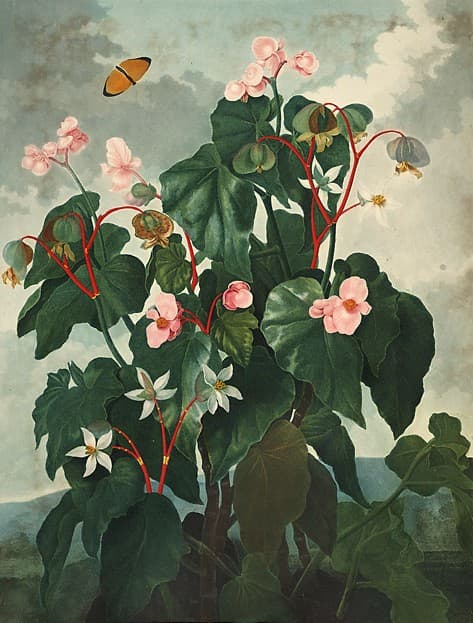
Begonia 'Little Brother Montgomery'
Begonia 'Little Brother Montgomery' is a cane-type begonia grown for its large, wing-shaped leaves - deep green above with prominent silver spotting - and pendant clusters of pink to coral flowers produced repeatedly through the warm months. It grows larger than many cane begonias and functions well as a container specimen, patio focal point, or shaded tropical border plant in frost-free climates.
In zones 10–11 it grows year-round; in cooler regions it is managed as a container plant and overwintered indoors above 50 °F. Bright indirect light or dappled shade suits it best - direct midday sun scorches the foliage. Good drainage is essential, as the fleshy canes and roots rot quickly in waterlogged soil. Feed monthly with a balanced liquid fertilizer during active growth and reduce applications in the cooler months. Leggy canes cut back to 6–8 in above the base will resprout, and stem cuttings root readily in water or moist perlite.
Begonia flowers are edible across the genus; the petals carry a mild sour-citrus flavor from naturally occurring oxalic acid and are used fresh as salad garnishes or plate accents.
Powdery mildew
White or grey powdery coating on leaves - usually starting on older growth in humid conditions or when nights cool.
Improve air circulation by thinning plants. Apply neem oil or potassium bicarbonate spray at first sign. Avoid overhead watering.
Botrytis (grey mould)
Grey fuzzy mould on petals and stems, worst in cool wet conditions.
Remove affected parts immediately. Improve air circulation. Avoid overhead watering. Apply copper fungicide if severe.
Root rot
Plants wilt, yellow, and stunt even in moist soil; lower stems and roots turn brown, soft, and mushy and the plant may collapse. Most common in heavy, wet, or poorly drained ground.
Improve drainage and stop overwatering, and never plant too deep. Lift and destroy badly affected plants along with the soil around the roots. Grow in raised or free-draining beds to prevent it returning.
Crown Rot
Lower leaves yellow and wilt; the base of the rosette turns brown and soft, sometimes with white fungal threads at the soil line. Plants collapse in wet conditions.
Remove and destroy affected plants. Improve drainage and avoid overhead watering. Do not mulch directly against the crown. Space plants for airflow and avoid replanting in the same wet spot.
Fungal leaf spot
Brown or purplish spots on the leaves, often ringed with a yellow halo, that spread and merge in warm, humid, or wet weather; heavily spotted leaves yellow and drop early.
Pick off spotted leaves and clear fallen debris to remove overwintering spores. Improve air circulation by thinning, and water at the base so foliage dries quickly. If it persists, apply a copper- or sulfur-based fungicide at the first sign.