
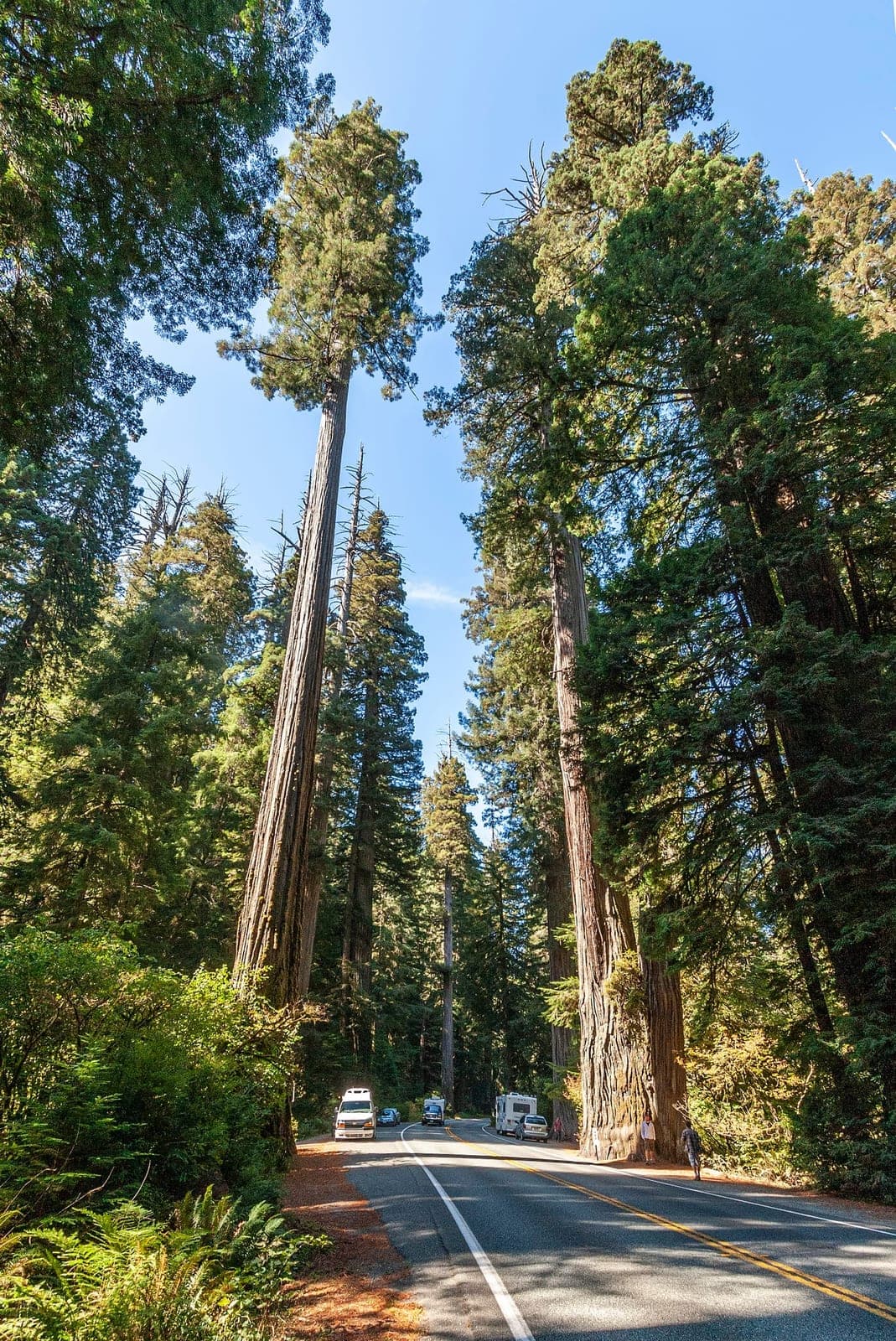
Sequoia sempervirens is the world's tallest tree species, native to the coastal fog belt of northern California and southern Oregon. In cultivation it typically reaches 40–100 ft within several decades, making it one of the most architecturally significant specimen trees available to gardeners in zones 7–9. Its cinnamon-red fibrous bark and flat, yew-like needles are ornamental year-round, and trees grown in open settings develop strikingly broad, buttressed bases.
The species evolved where summer fog supplements rainfall, and performance is best under similar conditions. Inland gardens require deep, consistent irrigation for the first three to five years until the root system is established. Redwoods are strongly resistant to fire, insects, and fungal decay due to high tannin and resin content. Unlike most conifers, they regenerate readily from root sprouts and epicormic buds after cutting or damage; a ring of new stems around a felled trunk is characteristic. Trees tolerate periodic shearing and can be maintained as a dense hedge or windbreak screen, though they are most effective left unpruned. Cold hardiness diminishes sharply below zone 7a, and prolonged hard freezes cause dieback. Grow in deep, well-drained, slightly acidic soil with a thick organic mulch layer to mimic duff conditions of the native forest floor. Avoid compacted or waterlogged sites.
Redwood groves support dense biodiversity, including the endangered marbled murrelet, which nests exclusively on the broad, moss-covered limbs of old-growth trees. The species sequesters exceptional amounts of carbon relative to its longevity, and old-growth stands generate significant fog drip that supplements local hydrology.
Phytophthora Root Rot
Wilting despite moist soil, yellowing leaves, stunted growth, and dark, decayed roots and crown tissue. Vines may collapse during hot weather.
Plant in well-draining soil and avoid waterlogging. Remove and destroy affected vines. Improve drainage with raised beds or amended soil and avoid overwatering.
Armillaria Root Rot
Thinning, yellowing canopy with progressive dieback; white, fan-shaped mycelial mats visible beneath bark at or just below the soil line; honey-colored mushroom clusters appearing at the trunk base or on surface roots in autumn.
No chemical cure exists. Improve drainage and avoid any injury to roots or trunk. Remove severely infected trees along with as much root material as possible. Do not replant susceptible species in the same spot.
Botryosphaeria Canker
Dark, sunken cankers on stems and major branches, most often occurring after drought stress or mechanical wounding. Bark peeled back from affected areas reveals brown, discolored wood beneath. Branch tips wilt and die back progressively inward.
Prune infected branches at least 6 inches below the visible canker margin using sterilized tools, and dispose of all cuttings away from the garden. Reduce plant stress by maintaining consistent irrigation during dry periods and avoiding bark wounds during maintenance. No curative fungicide is available; keeping plants vigorous is the primary preventive strategy.