
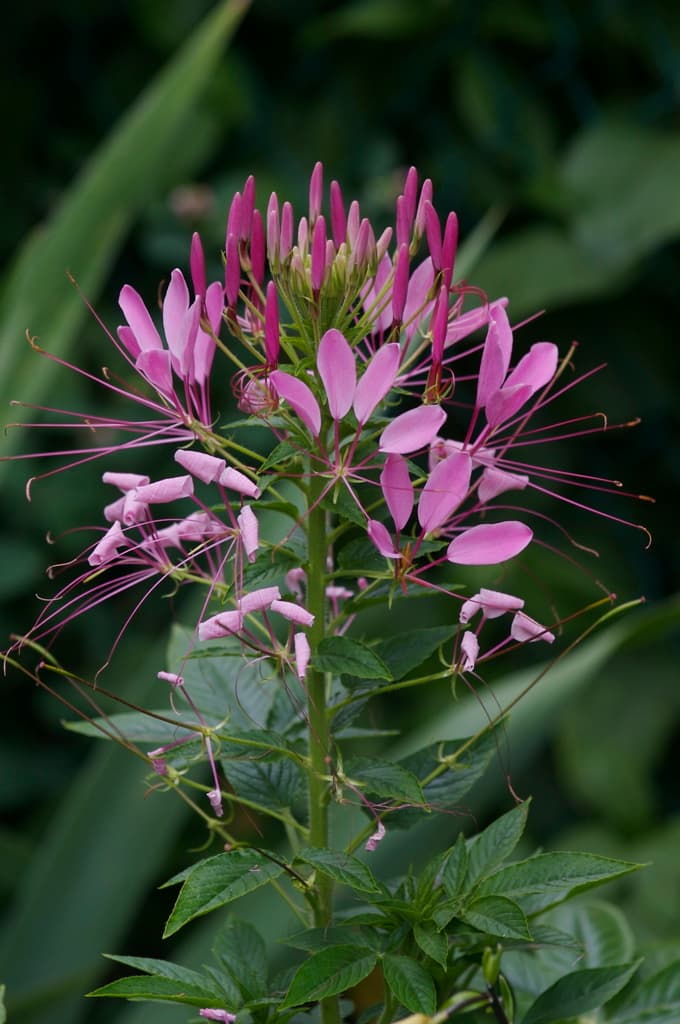
Spider flower earns its name from the long, spidery stamens that give each bloom a fireworks-like, wispy look, held in loose clusters atop tall, sturdy stems from midsummer until frost. Native to South America, it's a tender annual everywhere colder than a true tropical zone, but it grows fast from seed and reaches a bold, back-of-border height in a single season, making it a favorite vertical accent behind lower cottage-garden plantings.
Stems and leaf undersides carry small thorns, which is part of why deer and rabbits leave it alone. It self-seeds readily where happy, so let a few seed pods mature at the end of the season for volunteers the following year, or deadhead to limit spread. Once established it's quite drought tolerant and blooms right through summer heat with no deadheading required, though removing spent flower clusters tidies the plant and can extend the display.
Aphids
Aphididae →Clusters of small soft insects on new growth and flower buds.
Knock off with a strong jet of water. Ladybirds and lacewings are natural predators. Insecticidal soap as last resort.