
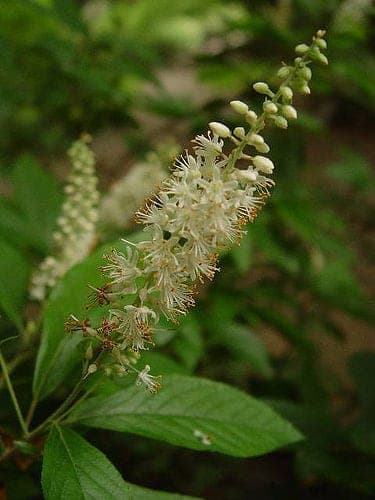
Cinnamon clethra is the tall, mountain-dwelling cousin of the more familiar summersweet. It is an understory shrub of Appalachian hardwood forests, and in good conditions it reaches the size of a small tree, with several stems rising to 8–20 ft. The name comes from the bark: on older stems it splits and peels in thin sheets to show cinnamon-colored wood beneath, which gives the plant real winter interest. From midsummer on, slender racemes of white bell-shaped flowers, 3–8 in long, open in a cone-shaped cluster and carry a lot of nectar for bees and other pollinators.
It can be told from Clethra alnifolia by its longer leaves, 3–8 in, without the deep teeth of summersweet's shorter leaf. In the wild it grows in cool, moist, acidic, humus-rich soil under open tree cover, and a garden site that copies that does best: part shade, steady moisture, a leafy mulch, and no waterlogged ground, since root rot is its main problem. Planted in a group at a woodland edge, it gives height and a long flowering window to a part-shade border.
Ecoregions:Eastern Temperate Forests
Phytophthora Root Rot
Wilting despite moist soil, yellowing leaves, stunted growth, and dark, decayed roots and crown tissue. Vines may collapse during hot weather.
Plant in well-draining soil and avoid waterlogging. Remove and destroy affected vines. Improve drainage with raised beds or amended soil and avoid overwatering.
Powdery mildew
White or grey powdery coating on leaves - usually starting on older growth in humid conditions or when nights cool.
Improve air circulation by thinning plants. Apply neem oil or potassium bicarbonate spray at first sign. Avoid overhead watering.