
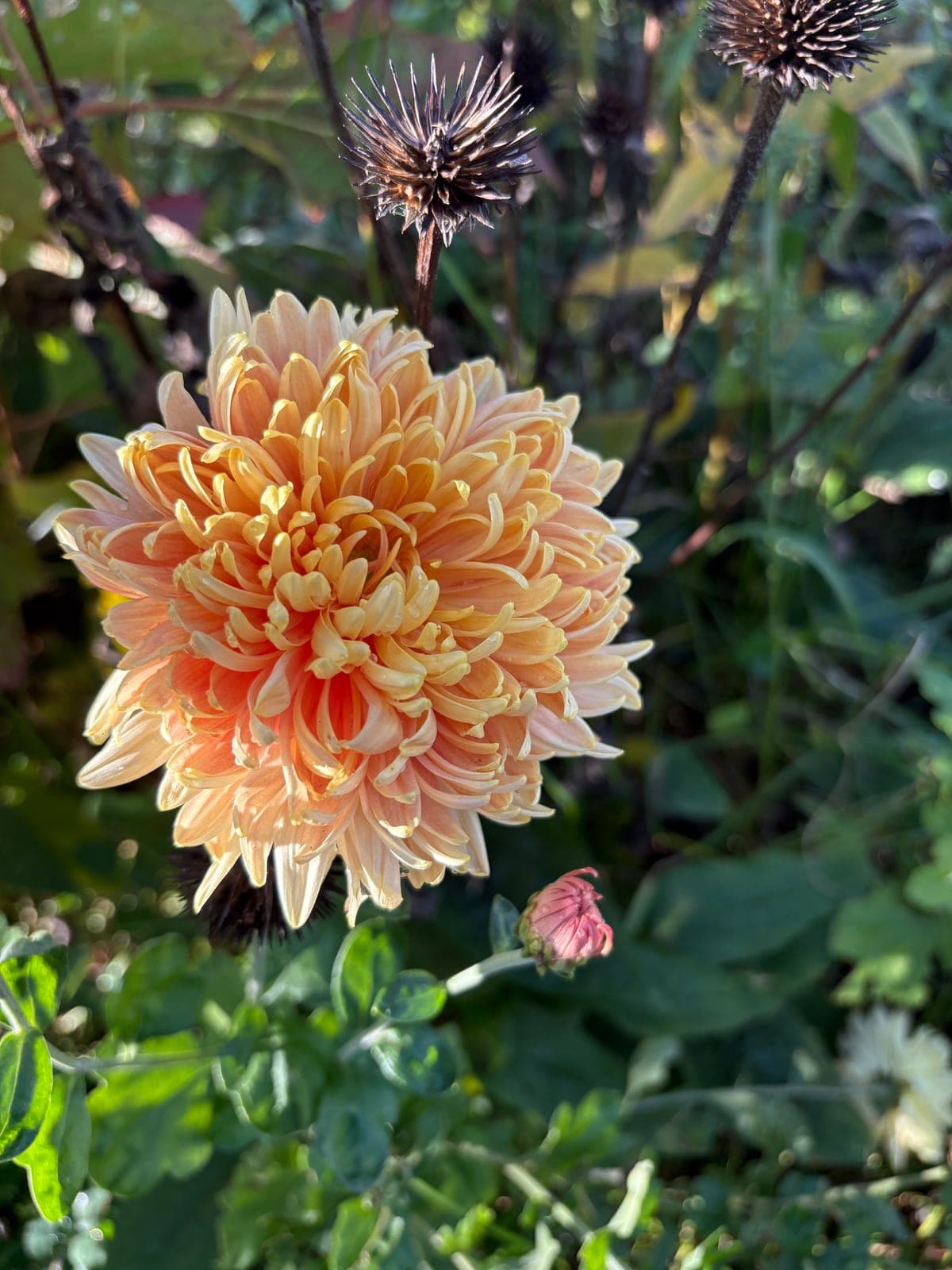
'Coppersmith', a copper-peach garden mum, in the author's garden
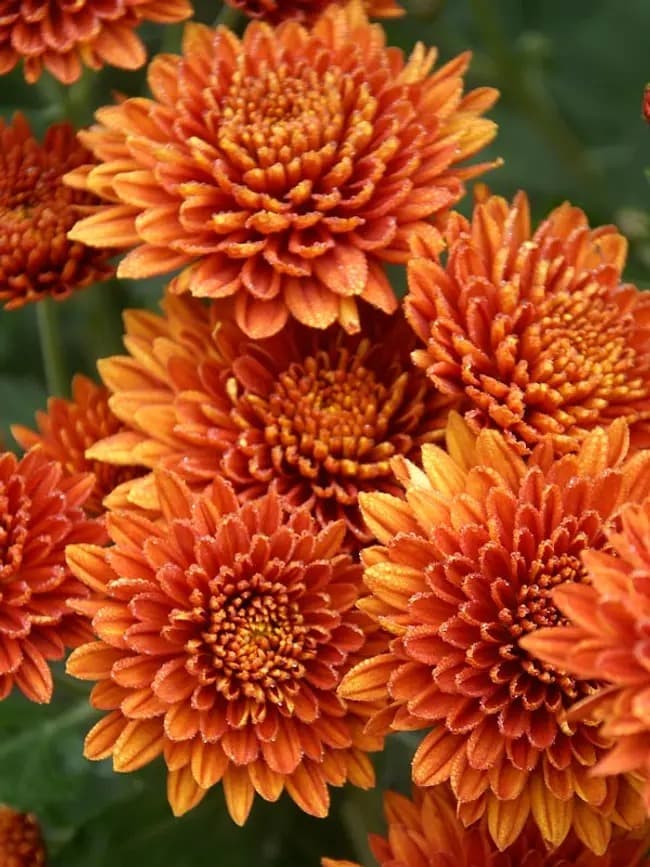
Garden chrysanthemum (Chrysanthemum × morifolium) is a complex hybrid derived from wild species native to China and northeastern Asia. It ranks among the most widely cultivated ornamental plants in the world, grown for dense late-season color in shades of white, yellow, orange, red, bronze, pink, lavender, and bicolor. Hundreds of cultivars range from compact cushion mounds to tall exhibition types.
Chrysanthemums are short-day plants: buds form only when nights exceed a critical length in late summer, with garden forms typically opening September through November. Repeated tip-pinching from late spring through mid-July is essential for compact, well-branched growth; later or absent pinching produces tall, floppy stems. Crowns tolerate cold well in dry, well-drained soil but frequently rot in heavy or wet conditions. Mulching crowns after cutback and dividing clumps every two to three years improves long-term survival. Soil pH between 6.0 and 6.5 suits most cultivars.
Flowers and young leaves have a centuries-long culinary history in China and Japan, used in teas, soups, and stir-fries. Traditional Chinese medicine employs chrysanthemum preparations for fever, headache, and eye inflammation. Research has identified luteolin, chlorogenic acid, and other flavonoids in the flowers; studies have examined antioxidant, anti-inflammatory, and antihypertensive properties.
Powdery mildew
White or grey powdery coating on leaves - usually starting on older growth in humid conditions or when nights cool.
Improve air circulation by thinning plants. Apply neem oil or potassium bicarbonate spray at first sign. Avoid overhead watering.
Botrytis (grey mould)
Grey fuzzy mould on petals and stems, worst in cool wet conditions.
Remove affected parts immediately. Improve air circulation. Avoid overhead watering. Apply copper fungicide if severe.
Rust
Orange to brown raised pustules on the undersides of leaves, with yellow spotting on the upper surface. Heavy infections cause leaves to yellow and drop.
Remove and destroy infected leaves. Avoid overhead watering and improve air circulation. Apply a sulfur or copper-based fungicide if it spreads. Clear plant debris in fall.
Chrysanthemum White Rust
Pale yellow to cream-colored spots on upper leaf surfaces with corresponding white to pinkish-white pustules (spore masses) on undersides. Severely affected leaves yellow, distort, and may drop. Distinguished from common rust by the white or cream color of the pustules rather than orange-brown.
Remove and bag all affected plant material immediately; do not compost. Apply a registered fungicide (myclobutanil, tebuconazole, or chlorothalonil) at first sign of infection and repeat on a 7–14 day schedule. Avoid overhead irrigation. This pathogen (Puccinia horiana) is a quarantine pest in many regions; check local reporting requirements before disposal.
Aster Yellows
Deformed, greenish flowers, stunted growth, and yellowed foliage. Flower centers may produce tufts of leafy growth instead of normal petals.
No cure. Remove and destroy infected plants immediately to stop spread. Control leafhoppers, which transmit the disease, and remove nearby weed hosts.
Verticillium Wilt
Lower leaves yellow and wilt, often on one side of the plant, with brown streaking in the stem and crown tissue when cut open. Plants are stunted and decline over the season.
Remove and destroy affected plants. Avoid planting in soil that has grown infected tomatoes, peppers, or other susceptible crops. Rotate beds and improve drainage; there is no cure once a plant is infected.
Fusarium wilt
Sudden wilting, brown streaks in stems, yellowing leaves. Affects sweet basil varieties most.
No cure. Remove and destroy plants. Do not replant in the same spot for 3+ years. Choose resistant varieties.
Fungal leaf spot
Brown or purplish spots on the leaves, often ringed with a yellow halo, that spread and merge in warm, humid, or wet weather; heavily spotted leaves yellow and drop early.
Pick off spotted leaves and clear fallen debris to remove overwintering spores. Improve air circulation by thinning, and water at the base so foliage dries quickly. If it persists, apply a copper- or sulfur-based fungicide at the first sign.
Root rot
Plants wilt, yellow, and stunt even in moist soil; lower stems and roots turn brown, soft, and mushy and the plant may collapse. Most common in heavy, wet, or poorly drained ground.
Improve drainage and stop overwatering, and never plant too deep. Lift and destroy badly affected plants along with the soil around the roots. Grow in raised or free-draining beds to prevent it returning.
Foliar Nematode (Chrysanthemum)
Angular brown to bronze patches bounded by leaf veins, beginning on lower leaves and moving upward as the season progresses. Affected leaves dry out and cling to the stem rather than dropping cleanly.
Remove and destroy all infested foliage. Avoid overhead irrigation; nematodes (Aphelenchoides ritzemabosi) spread through water films on leaf surfaces. Do not propagate from affected stock. No effective in-garden chemical treatment; prevention through clean planting material, strict sanitation, and dry foliage management is the primary strategy.