
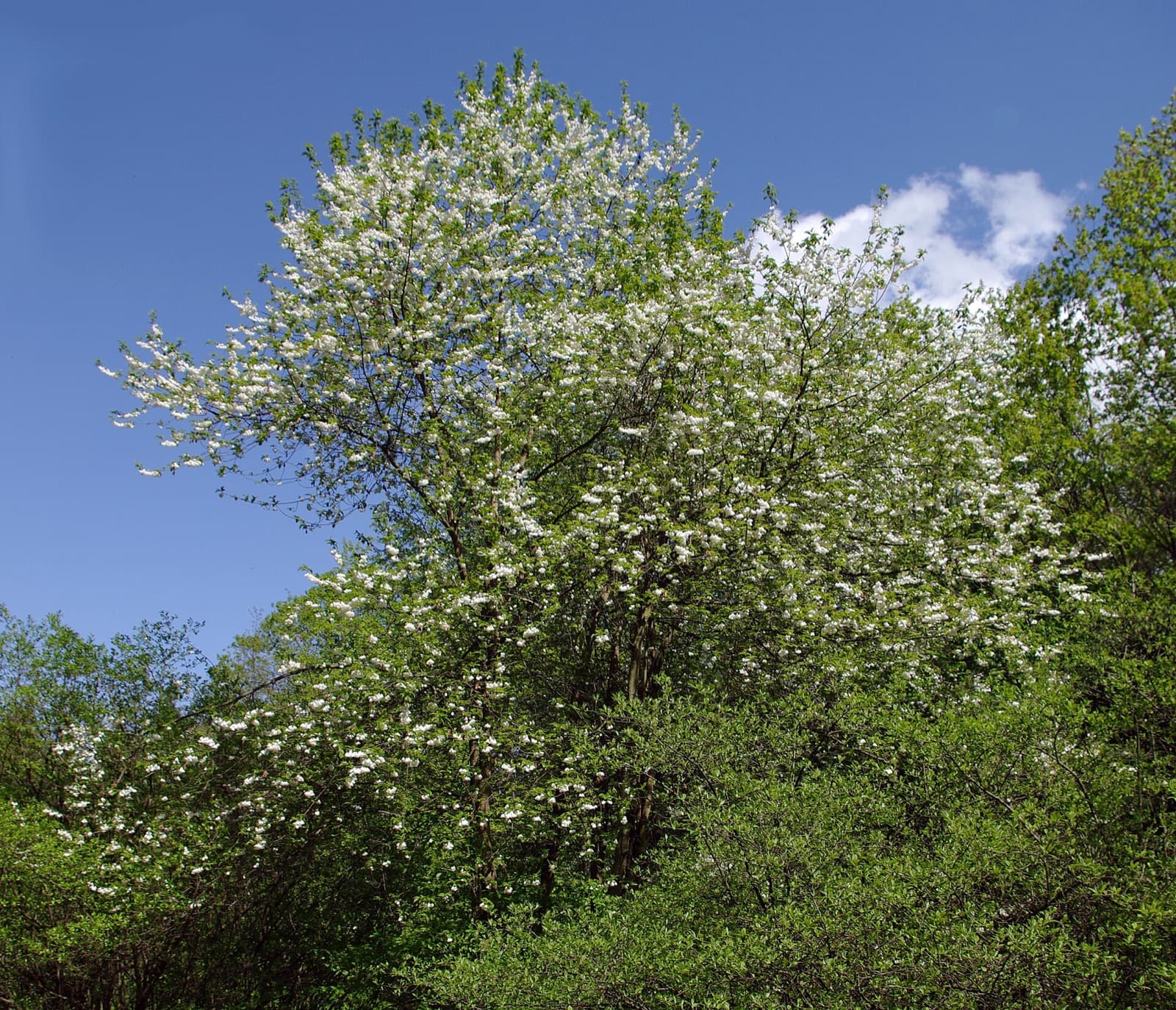
Carolina Silverbell (Halesia tetraptera) is a native deciduous understory tree from the southeastern United States. In mid-spring, clusters of pendant white bell-shaped flowers open before the leaves fully expand, draping the branches in white. Four-winged papery fruits follow and persist well into fall, adding seasonal texture after the leaves drop.
In the wild it grows along stream banks, moist ravines, and forested slopes through the Appalachians and Ozarks. It performs best in moist, well-drained, acidic soil under the light shade of a high canopy, though it tolerates full sun where soil moisture stays consistent. Mulching the root zone to 4 inches with shredded leaves mimics its forest-floor habitat and moderates soil temperature. It leafs out and flowers early in the season, so siting it away from frost pockets in zones 4–5 helps protect that year's flowers.
The early flowers are a meaningful pollen and nectar source for native solitary bees and emerging bumblebee queens before many other trees are in bloom. The winged seeds are taken by wild turkeys, white-footed mice, and various songbirds.
Ecoregions:Eastern Temperate Forests
Fungal leaf spot
Brown or purplish spots on the leaves, often ringed with a yellow halo, that spread and merge in warm, humid, or wet weather; heavily spotted leaves yellow and drop early.
Pick off spotted leaves and clear fallen debris to remove overwintering spores. Improve air circulation by thinning, and water at the base so foliage dries quickly. If it persists, apply a copper- or sulfur-based fungicide at the first sign.
Root rot
Plants wilt, yellow, and stunt even in moist soil; lower stems and roots turn brown, soft, and mushy and the plant may collapse. Most common in heavy, wet, or poorly drained ground.
Improve drainage and stop overwatering, and never plant too deep. Lift and destroy badly affected plants along with the soil around the roots. Grow in raised or free-draining beds to prevent it returning.
Botryosphaeria Canker
Dark, sunken cankers on stems and major branches, most often occurring after drought stress or mechanical wounding. Bark peeled back from affected areas reveals brown, discolored wood beneath. Branch tips wilt and die back progressively inward.
Prune infected branches at least 6 inches below the visible canker margin using sterilized tools, and dispose of all cuttings away from the garden. Reduce plant stress by maintaining consistent irrigation during dry periods and avoiding bark wounds during maintenance. No curative fungicide is available; keeping plants vigorous is the primary preventive strategy.