
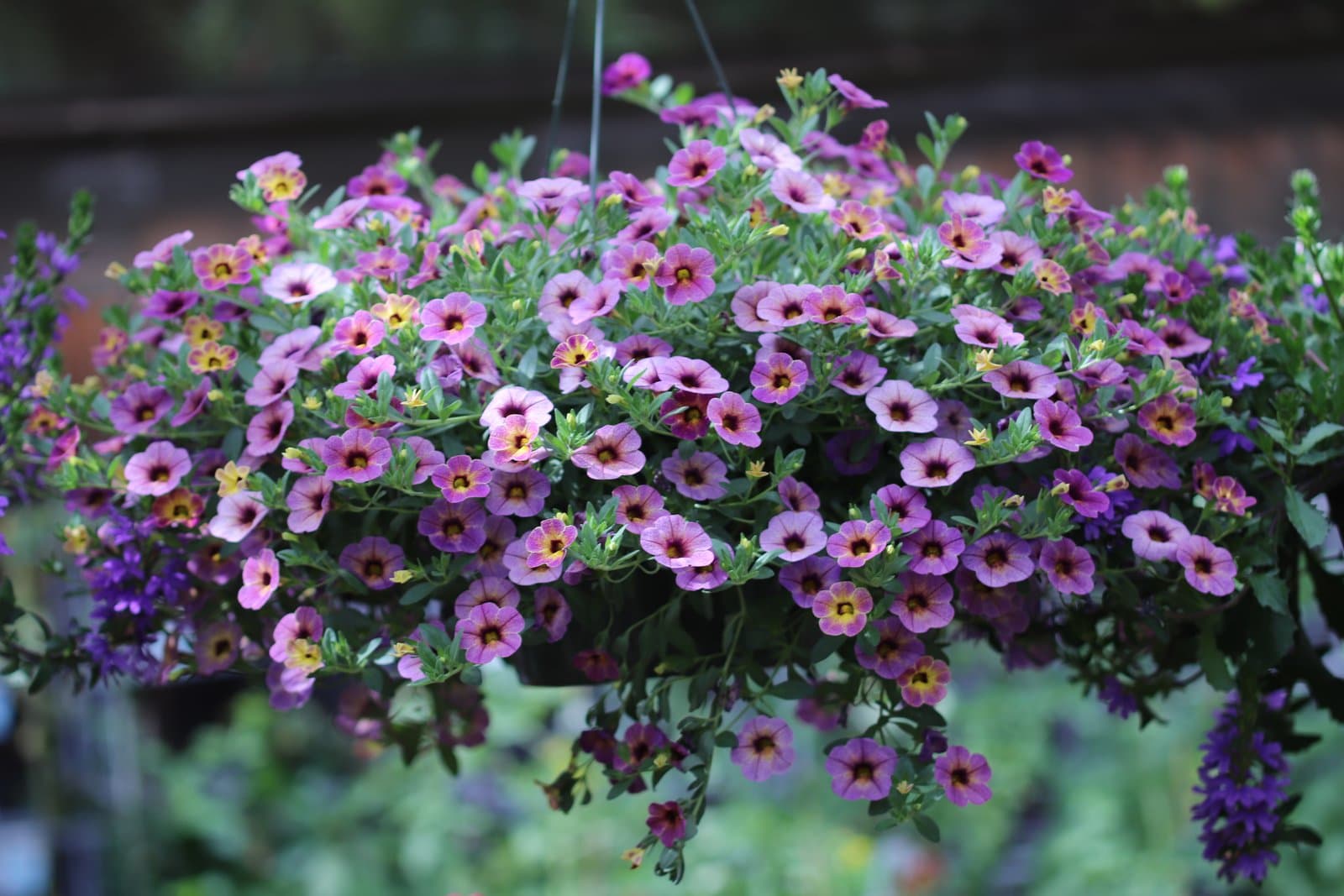
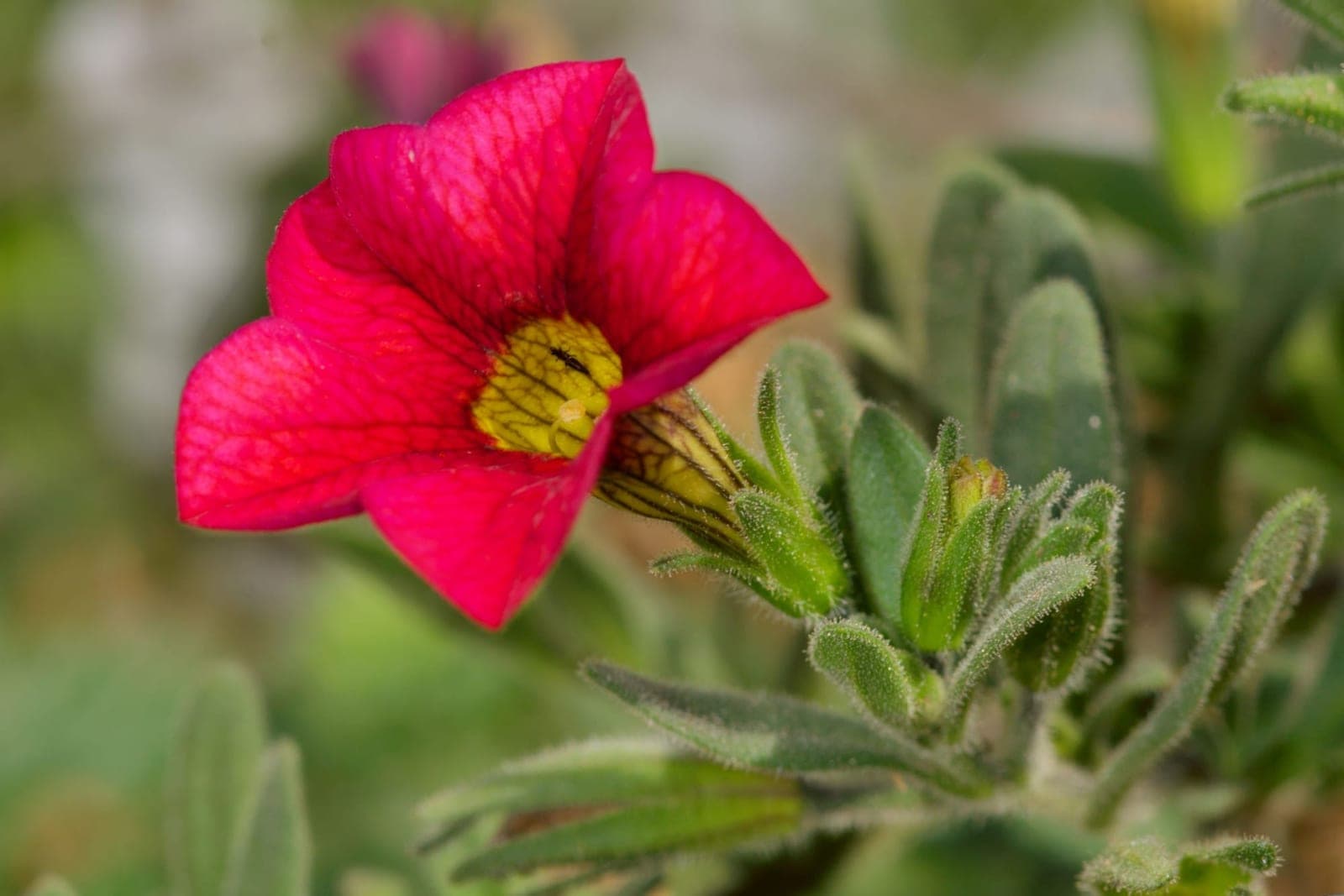
Calibrachoa is a genus of trailing, short-lived perennials in the nightshade family, native to scrub and open grasslands across southern Brazil, Peru, and Chile. Garden hybrids (Calibrachoa × hybrida) are treated as annuals in most temperate climates, producing masses of small funnel-shaped flowers in a wide color range continuously from spring through frost. They are among the most productive container and hanging-basket plants available.
Calibrachoa performs best in well-drained growing media at a slightly acidic pH of 5.5–6.0. When pH climbs above 6.0, iron becomes unavailable and plants develop interveinal chlorosis. Use an iron-supplemented, balanced liquid fertilizer every one to two weeks during the growing season. Plants are not frost-tolerant and should be brought indoors or replaced after the first frost in cold climates. In zones 9–11 they may overwinter outdoors and regrow the following year.
Stem cuttings root readily and can be taken in late summer to carry plants through winter indoors, providing free transplants the following spring.
Powdery mildew
White or grey powdery coating on leaves - usually starting on older growth in humid conditions or when nights cool.
Improve air circulation by thinning plants. Apply neem oil or potassium bicarbonate spray at first sign. Avoid overhead watering.
Botrytis (grey mould)
Grey fuzzy mould on petals and stems, worst in cool wet conditions.
Remove affected parts immediately. Improve air circulation. Avoid overhead watering. Apply copper fungicide if severe.
Root rot
Plants wilt, yellow, and stunt even in moist soil; lower stems and roots turn brown, soft, and mushy and the plant may collapse. Most common in heavy, wet, or poorly drained ground.
Improve drainage and stop overwatering, and never plant too deep. Lift and destroy badly affected plants along with the soil around the roots. Grow in raised or free-draining beds to prevent it returning.
Phytophthora Root Rot
Wilting despite moist soil, yellowing leaves, stunted growth, and dark, decayed roots and crown tissue. Vines may collapse during hot weather.
Plant in well-draining soil and avoid waterlogging. Remove and destroy affected vines. Improve drainage with raised beds or amended soil and avoid overwatering.
Damping Off
Seedlings collapse at the soil line with thin, water-soaked stems; seeds may fail to emerge or rot before sprouting.
Sow in well-draining mix, avoid overwatering, and ensure good airflow. Remove affected seedlings and let the surface dry between waterings.
Mosaic virus
Yellowing, mottled, or distorted leaves. No cure - spread by aphids.
Remove and destroy infected plants. Control aphid populations to prevent spread. Do not propagate from infected tubers.