
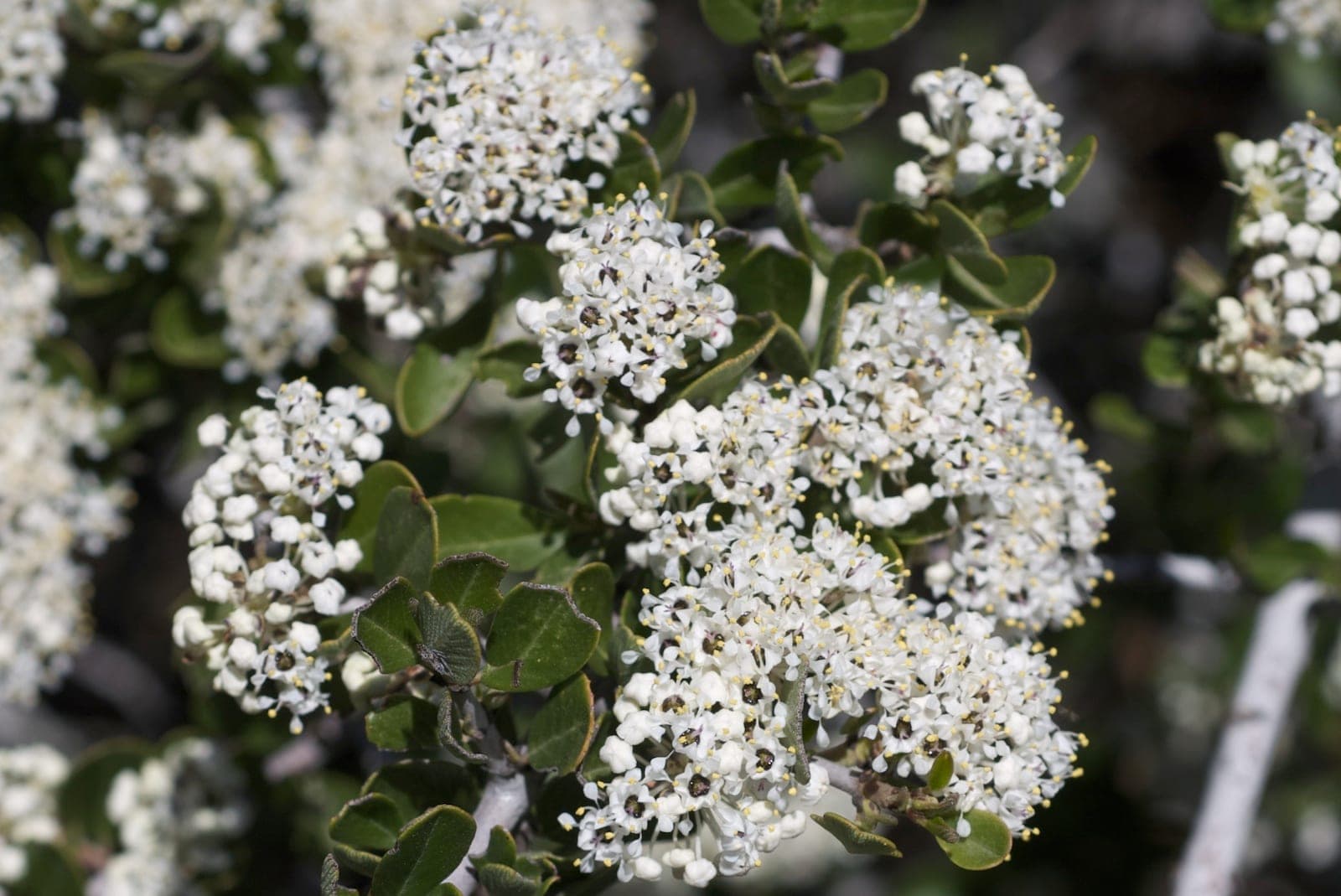
Ceanothus cuneatus is a dense, evergreen shrub native to California and southern Oregon chaparral, dry slopes, and oak woodland margins. It typically grows 4–9 feet tall with small wedge-shaped leaves and dense clusters of tiny white to pale lavender flowers from late winter through spring. It is one of the most reliable low-water shrubs for western gardens and among the richest early-season nectar sources in California's native plant palette.
Buckbrush is fire-adapted and resprouts from a basal burl after fire, a trait central to chaparral ecology. Like other ceanothus species, it fixes atmospheric nitrogen through root associations with Frankia bacteria, gradually improving poor soils. It establishes best from fall-planted container stock; seeds require scarification or smoke exposure to break dormancy. Once established, it tolerates virtually no summer irrigation. It performs poorly in clay and will decline rapidly from root rot if drainage is inadequate or irrigation is applied in summer. Neutral to slightly acidic, fast-draining sandy or rocky soils are ideal.
The dense, somewhat thorny branching provides nesting cover and escape habitat for birds. Native bumble bees, sweat bees, and other native pollinators rely heavily on its early pollen and nectar. Deer browse young plants but typically avoid mature specimens.
Ecoregions:Northwestern Forested MountainsMarine West Coast ForestMediterranean California
Phytophthora Root Rot
Wilting despite moist soil, yellowing leaves, stunted growth, and dark, decayed roots and crown tissue. Vines may collapse during hot weather.
Plant in well-draining soil and avoid waterlogging. Remove and destroy affected vines. Improve drainage with raised beds or amended soil and avoid overwatering.
Root rot
Plants wilt, yellow, and stunt even in moist soil; lower stems and roots turn brown, soft, and mushy and the plant may collapse. Most common in heavy, wet, or poorly drained ground.
Improve drainage and stop overwatering, and never plant too deep. Lift and destroy badly affected plants along with the soil around the roots. Grow in raised or free-draining beds to prevent it returning.
Powdery mildew
White or grey powdery coating on leaves - usually starting on older growth in humid conditions or when nights cool.
Improve air circulation by thinning plants. Apply neem oil or potassium bicarbonate spray at first sign. Avoid overhead watering.