
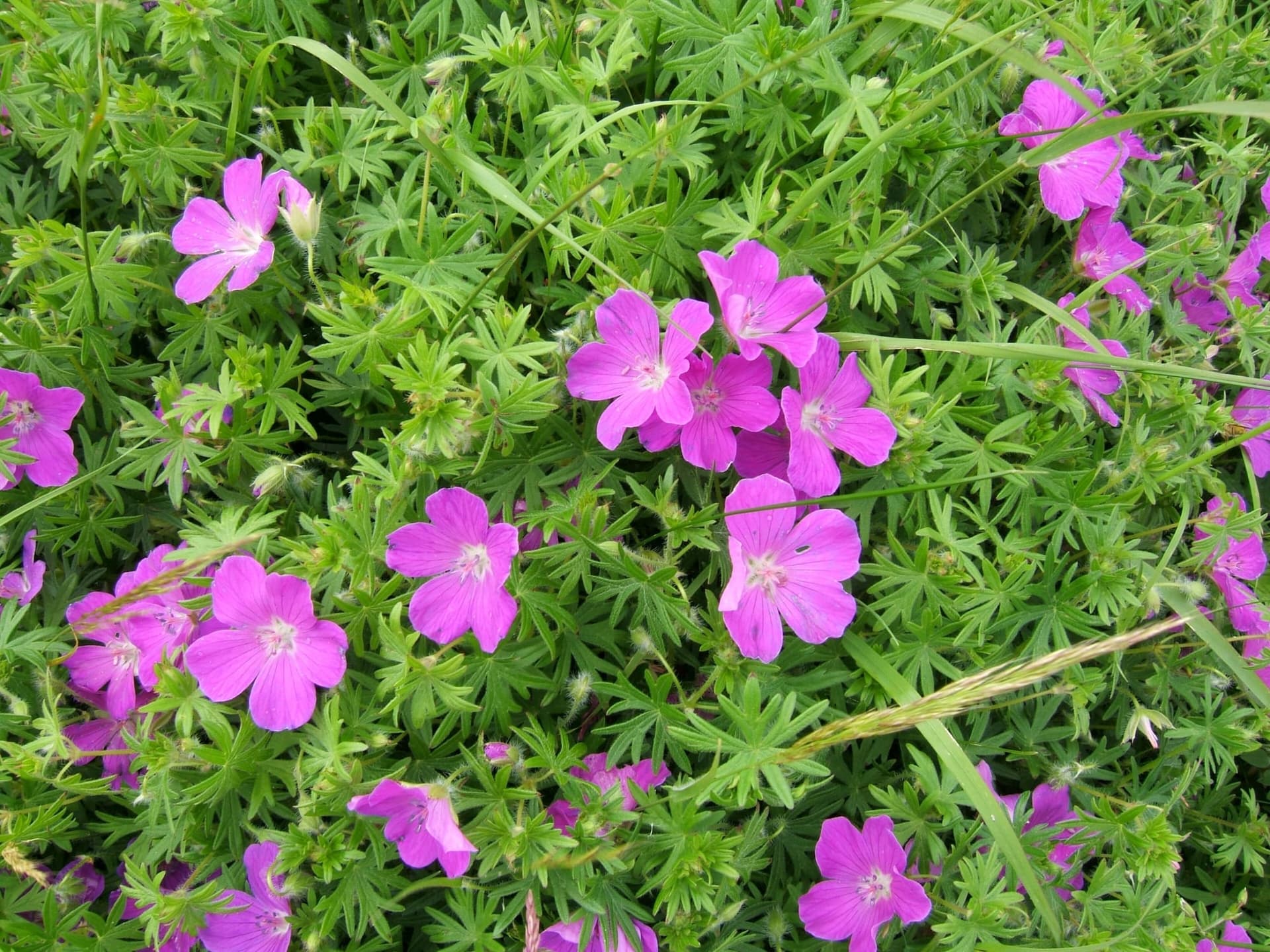
Geranium sanguineum is a low-mounding perennial native to Europe and western Asia, recognized as the county flower of Northumberland. It produces magenta-pink flowers over a long season from late spring through midsummer, and its deeply lobed leaves turn vivid crimson-red in autumn, the coloring behind both the Latin epithet and the common name.
It establishes readily in well-drained soil and becomes drought tolerant once rooted. Plants spread slowly into tidy clumps without becoming invasive. Cutting back by one-third after the main flush of flowers encourages a second round of bloom and keeps the mound compact. Dense foliage suppresses weeds effectively. It tolerates light shade but flowers most freely in full sun. In cold climates it dies back fully and re-emerges reliably from the rootstock.
Roots and leaves contain significant tannin levels. Eastern European folk medicine traditions used the plant as an astringent for digestive complaints and applied it topically to wounds.
Bacterial Blight of Geranium
Small water-soaked or brown spots with yellow halos on leaves, V-shaped yellow wedges along leaf margins, wilting, and blackened stems.
Remove and destroy infected plants; avoid overhead watering and handling wet foliage. Use clean tools and disease-free cuttings, and space plants for airflow. No chemical cure once infected.
Rust
Orange to brown raised pustules on the undersides of leaves, with yellow spotting on the upper surface. Heavy infections cause leaves to yellow and drop.
Remove and destroy infected leaves. Avoid overhead watering and improve air circulation. Apply a sulfur or copper-based fungicide if it spreads. Clear plant debris in fall.
Fungal leaf spot
Brown or purplish spots on the leaves, often ringed with a yellow halo, that spread and merge in warm, humid, or wet weather; heavily spotted leaves yellow and drop early.
Pick off spotted leaves and clear fallen debris to remove overwintering spores. Improve air circulation by thinning, and water at the base so foliage dries quickly. If it persists, apply a copper- or sulfur-based fungicide at the first sign.
Powdery mildew
White or grey powdery coating on leaves - usually starting on older growth in humid conditions or when nights cool.
Improve air circulation by thinning plants. Apply neem oil or potassium bicarbonate spray at first sign. Avoid overhead watering.