
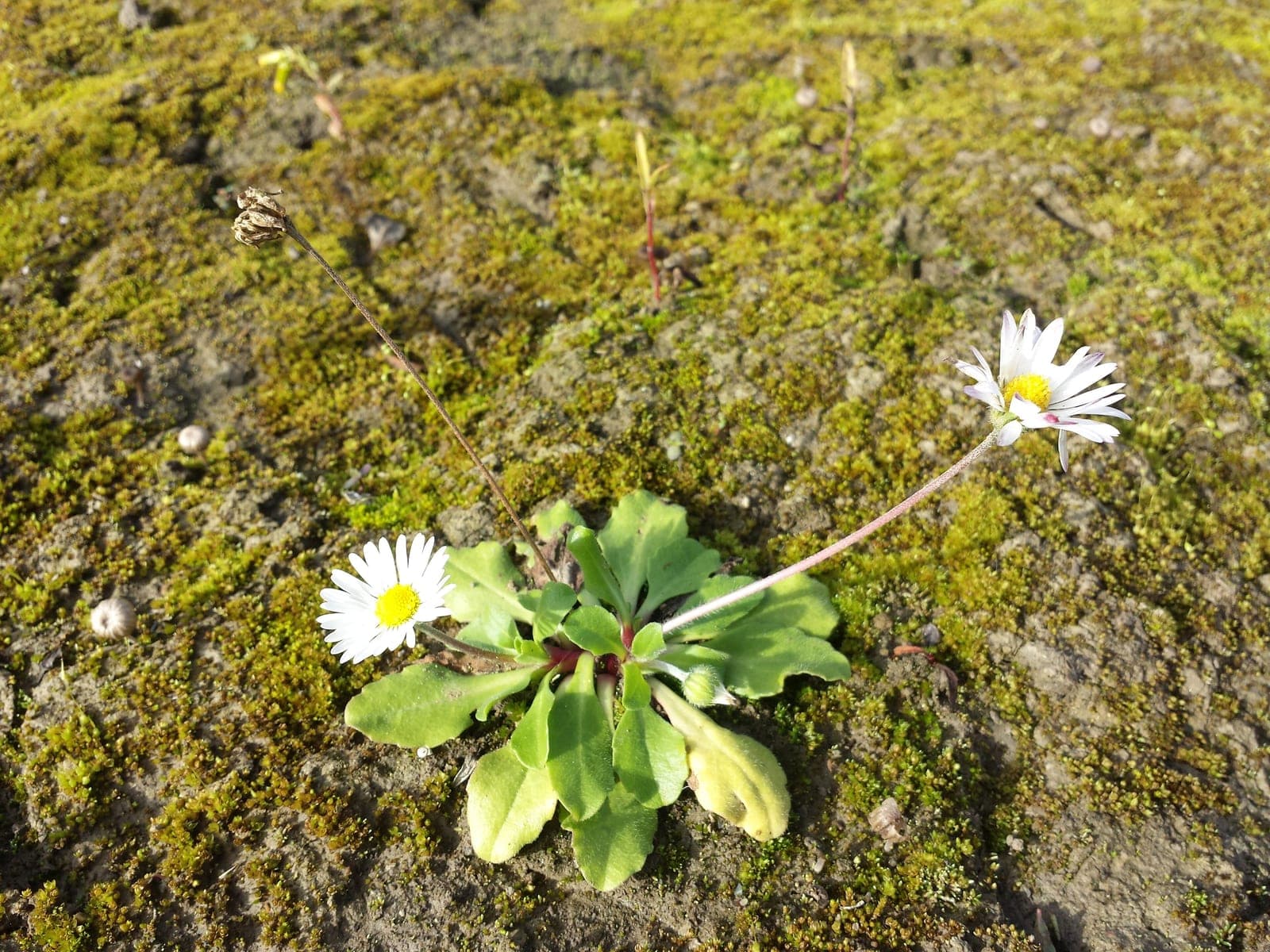
Bellis perennis 'Super Enorma' is a cultivated selection of the English daisy grown for its fully double white flower heads, which can reach 2 inches across - substantially larger than the straight species. It is widely used in spring bedding schemes and containers alongside other cool-season plants, producing a dense, mounded habit with long-stemmed blooms held well above the foliage.
This is a cool-season plant that declines once summer heat sets in, so timing determines success. In zones 6–8, sow seed in late summer, overwinter the rosettes under light mulch, and expect bloom from early spring into early summer. In cooler zones, start indoors 8–10 weeks before the last frost date and set out as a spring annual. Plants prefer fertile, consistently moist soil with good drainage. Afternoon shade extends the bloom period in zones 7–8, and a slightly acidic to neutral pH suits them well.
The wild species Bellis perennis has a long record in European herbal tradition. Young leaves and open flowers are edible and used in spring salads and as garnish. Historically, preparations from the plant were applied to bruises and minor wounds and taken for coughs and upper-respiratory complaints, effects attributed partly to its saponin and flavonoid content.
Powdery mildew
White or grey powdery coating on leaves - usually starting on older growth in humid conditions or when nights cool.
Improve air circulation by thinning plants. Apply neem oil or potassium bicarbonate spray at first sign. Avoid overhead watering.
Botrytis (grey mould)
Grey fuzzy mould on petals and stems, worst in cool wet conditions.
Remove affected parts immediately. Improve air circulation. Avoid overhead watering. Apply copper fungicide if severe.
Crown Rot
Lower leaves yellow and wilt; the base of the rosette turns brown and soft, sometimes with white fungal threads at the soil line. Plants collapse in wet conditions.
Remove and destroy affected plants. Improve drainage and avoid overhead watering. Do not mulch directly against the crown. Space plants for airflow and avoid replanting in the same wet spot.
Damping Off
Seedlings collapse at the soil line with thin, water-soaked stems; seeds may fail to emerge or rot before sprouting.
Sow in well-draining mix, avoid overwatering, and ensure good airflow. Remove affected seedlings and let the surface dry between waterings.
Aster Yellows
Deformed, greenish flowers, stunted growth, and yellowed foliage. Flower centers may produce tufts of leafy growth instead of normal petals.
No cure. Remove and destroy infected plants immediately to stop spread. Control leafhoppers, which transmit the disease, and remove nearby weed hosts.
Fungal leaf spot
Brown or purplish spots on the leaves, often ringed with a yellow halo, that spread and merge in warm, humid, or wet weather; heavily spotted leaves yellow and drop early.
Pick off spotted leaves and clear fallen debris to remove overwintering spores. Improve air circulation by thinning, and water at the base so foliage dries quickly. If it persists, apply a copper- or sulfur-based fungicide at the first sign.
Root rot
Plants wilt, yellow, and stunt even in moist soil; lower stems and roots turn brown, soft, and mushy and the plant may collapse. Most common in heavy, wet, or poorly drained ground.
Improve drainage and stop overwatering, and never plant too deep. Lift and destroy badly affected plants along with the soil around the roots. Grow in raised or free-draining beds to prevent it returning.