
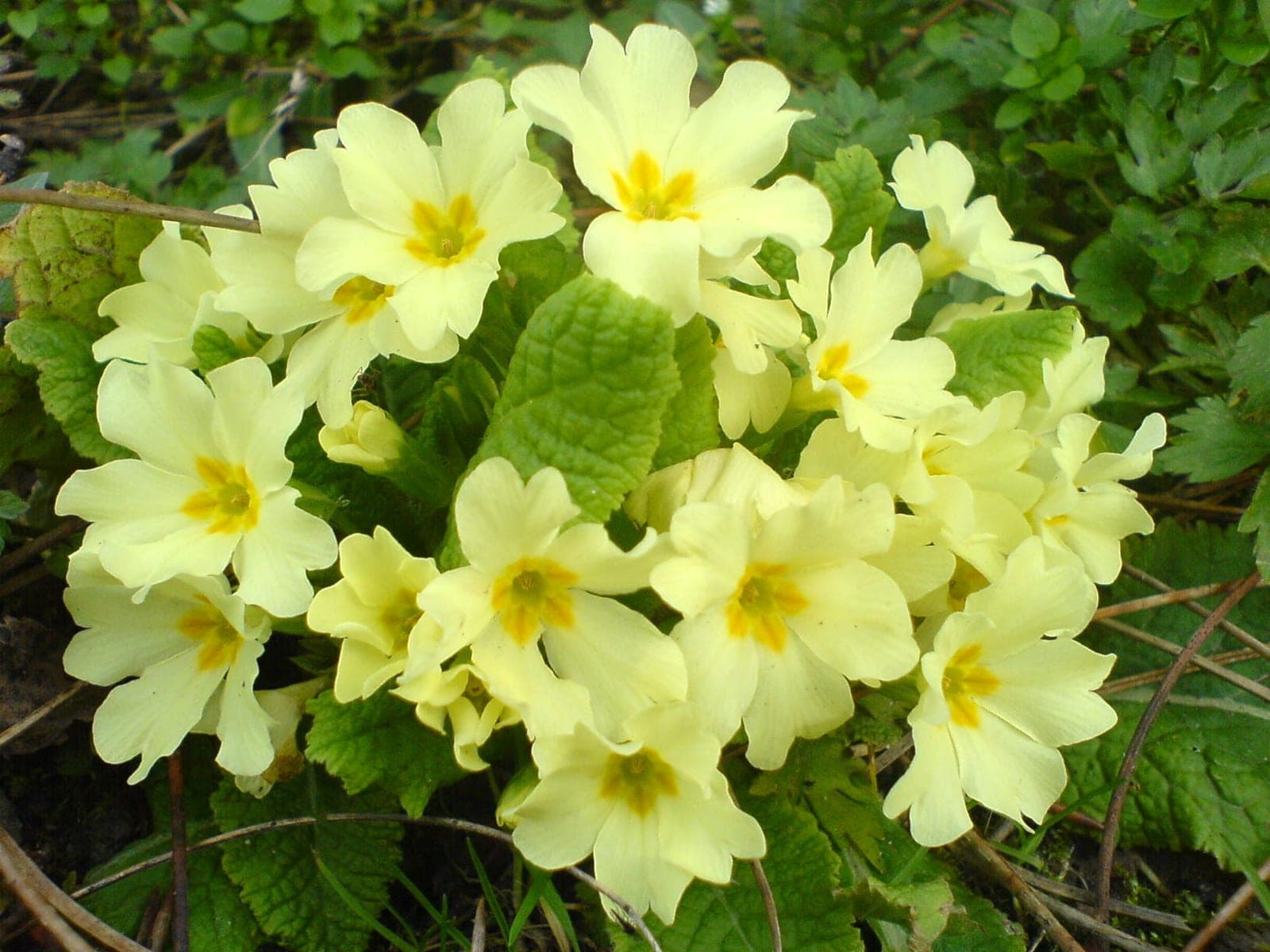
English primrose (Primula vulgaris) is a low-growing perennial native to woodland edges and hedgerows across western and southern Europe. The wild form bears pale yellow flowers; cultivars span white, pink, red, and purple. It naturalizes readily under deciduous trees and suits shaded borders, cottage gardens, and containers.
Primula vulgaris thrives in cool, moist conditions and declines in summer heat. In zones 7 and 8, afternoon shade is essential to prevent die-back; in zones 5 and 6, a sunnier spring position is tolerable. Soil should be humus-rich and consistently moist but not waterlogged, with a pH of 6.0–6.5. A layer of leaf-mold mulch conserves moisture and moderates root temperature. Clumps become congested over three to four years and benefit from regular division. In mild-winter climates, plants begin producing as early as late January.
Flowers and young leaves are edible. Flowers are used in salads, crystallized for confectionery, or made into wine and flavored vinegars; young leaves are eaten as a pot herb. Root preparations appear throughout European herbalism as an expectorant for respiratory complaints, with the root containing saponins and salicylates. Flowers were traditionally used as a mild sedative and headache remedy.
Botrytis (grey mould)
Grey fuzzy mould on petals and stems, worst in cool wet conditions.
Remove affected parts immediately. Improve air circulation. Avoid overhead watering. Apply copper fungicide if severe.
Powdery mildew
White or grey powdery coating on leaves - usually starting on older growth in humid conditions or when nights cool.
Improve air circulation by thinning plants. Apply neem oil or potassium bicarbonate spray at first sign. Avoid overhead watering.
Crown Rot
Lower leaves yellow and wilt; the base of the rosette turns brown and soft, sometimes with white fungal threads at the soil line. Plants collapse in wet conditions.
Remove and destroy affected plants. Improve drainage and avoid overhead watering. Do not mulch directly against the crown. Space plants for airflow and avoid replanting in the same wet spot.
Root rot
Plants wilt, yellow, and stunt even in moist soil; lower stems and roots turn brown, soft, and mushy and the plant may collapse. Most common in heavy, wet, or poorly drained ground.
Improve drainage and stop overwatering, and never plant too deep. Lift and destroy badly affected plants along with the soil around the roots. Grow in raised or free-draining beds to prevent it returning.
Damping Off
Seedlings collapse at the soil line with thin, water-soaked stems; seeds may fail to emerge or rot before sprouting.
Sow in well-draining mix, avoid overwatering, and ensure good airflow. Remove affected seedlings and let the surface dry between waterings.
Fungal leaf spot
Brown or purplish spots on the leaves, often ringed with a yellow halo, that spread and merge in warm, humid, or wet weather; heavily spotted leaves yellow and drop early.
Pick off spotted leaves and clear fallen debris to remove overwintering spores. Improve air circulation by thinning, and water at the base so foliage dries quickly. If it persists, apply a copper- or sulfur-based fungicide at the first sign.
Aster Yellows
Deformed, greenish flowers, stunted growth, and yellowed foliage. Flower centers may produce tufts of leafy growth instead of normal petals.
No cure. Remove and destroy infected plants immediately to stop spread. Control leafhoppers, which transmit the disease, and remove nearby weed hosts.
Downy mildew
Yellowing on top of leaves with grey-purple fuzz underneath. Spreads rapidly in humid conditions.
Remove affected leaves. Improve air circulation. Avoid overhead watering. Copper spray as preventive.