
PL. —Asarina procumbensBotanical illustration — drop image
Asarina procumbens

Creeping Snapdragon

SummerFall
7a9bHardiness zone
Peak bloom windowZone 6b · frost-offset weeks
Winter
Not in bloom
Spring
In bloom
Summer
Peak bloom
Fall
Peak bloom
Peak bloom
In bloom
Background

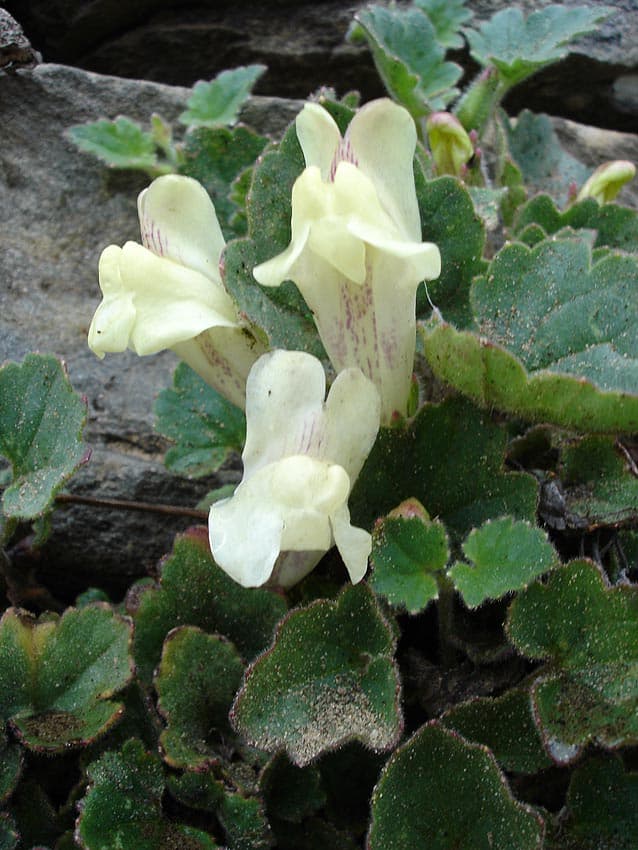
Asarina procumbens is a low, trailing perennial native to rocky limestone outcrops in the Pyrenees of France and Spain. It produces soft, sticky-hairy stems that press close to the ground and pale yellow snapdragon-like flowers with purple-veined throats from spring through summer. In zones 7–9 it overwinters as a perennial; in colder regions it is grown as a half-hardy annual.

The plant spreads by rooting where stems contact soil and is well suited to dry stone walls, rocky banks, troughs, and the edges of raised beds. It performs best in well-drained, alkaline to neutral soil with moderate moisture and good air circulation. A pH of 7.0–7.5 suits it; amend heavy clay with grit before planting. Rich, wet soils promote stem and crown rot and reduce flowering. In zones 7–8, a light layer of grit mulch around the crown improves winter survival.

Care guide
SunPart shade to full sun
WaterModerate
SoilWell-drained, alkaline, gritty or rocky
Spacing12–18 in
Height4–8 in
Zone7a – 9b
Seasonal tasks
winter
sowSow seeds indoors on the soil surface without covering; seeds need light to germinate. Maintain 65–70°F until germination.
spring
watchCheck stems where they contact soil for early signs of rot; lift and redirect any congested growth to improve air circulation.
sowTransplant hardened seedlings into gritty, well-drained soil in their final position after the last frost date.
summer
watchMonitor foliage for powdery mildew during warm, dry spells; avoid overhead watering and thin stems if growth is dense.
fall
cutTrim back leggy or spent stems after the main flowering flush to encourage fresh growth and continued low coverage.
watchBefore hard frosts, apply a light layer of grit around the crown to protect overwintering root zones in zones 7–8.